
Quick Answer
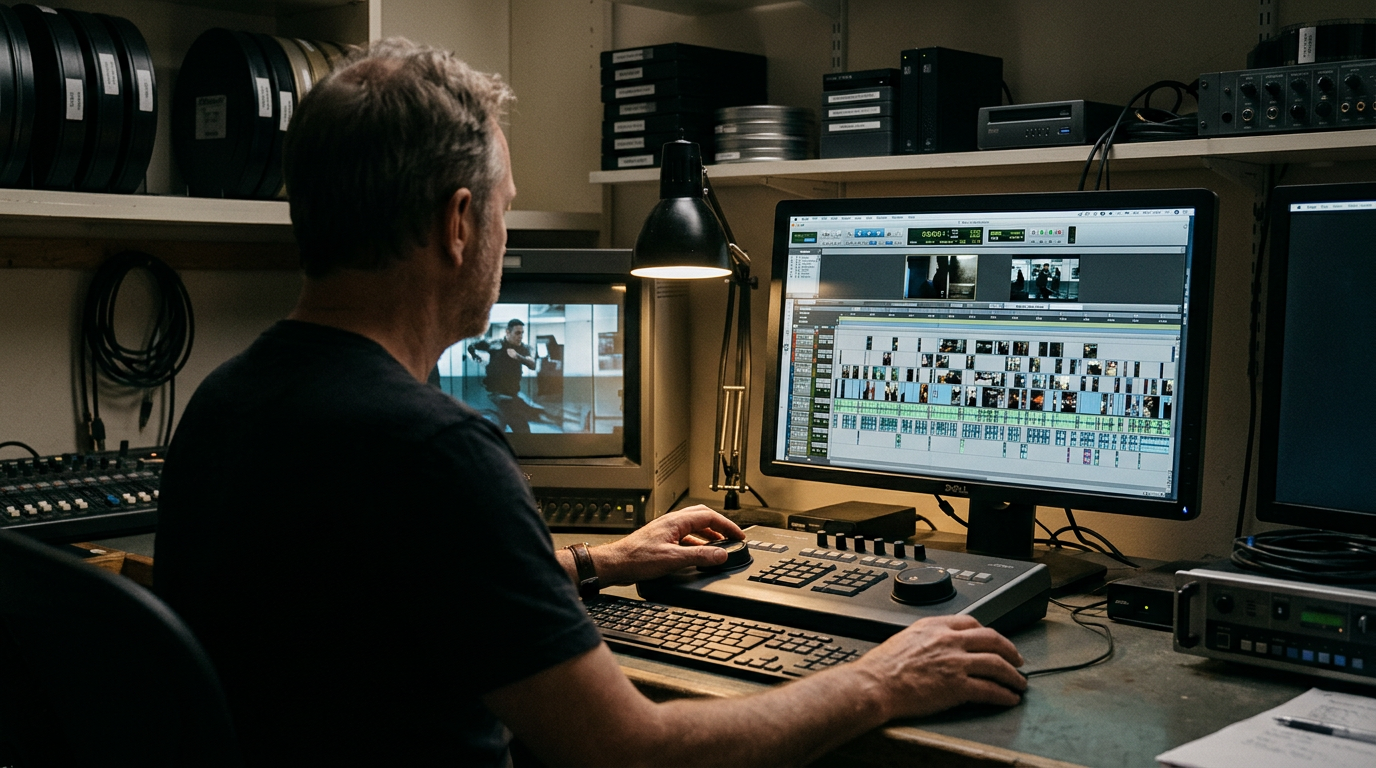
Films are now much faster, with shots lasting just a few seconds instead of over ten. This change reflects how filmmaking has adapted to our brains, matching the pace of our attention and making movies more engaging for modern audiences.
In a hurry? TL;DR
- 1English-language films drastically reduced average shot length from 12s (1930s) to 2.5s (2014), an 80% decrease.
- 2This rapid cutting mimics natural human attention patterns, engaging viewers through high-speed cognitive processing.
- 3Modern films use quick cuts to maintain focus, a shift from earlier static, long-take styles.
- 4Audiences have developed higher visual literacy, easily interpreting scenes from shorter, more dynamic shots.
- 5Digital editing software significantly enabled the trend of rapid-fire, shorter shots.
- 6Filmmakers now use editing rhythm to synchronize with the audience's biological attention rhythms.
Why It Matters
It's surprising that films have become so much faster, making our brains work harder to keep up.
Cinema has undergone a radical physiological shift: in the last century, English-language films have become significantly faster, with the average shot length plummeting from 12 seconds in 1930 to just 2.5 seconds by 2014.
Key Evolution Metrics
- 1930s Average Shot Length: 12 seconds
- 2014 Average Shot Length: 2.5 seconds
- Decrease in Duration: Approximately 80 percent
- Contemporary Outliers: Action films often average under 2 seconds per shot
Why It Matters: This shift represents a fundamental change in how the human brain processes visual narrative, moving from theatrical observation to high-speed cognitive pattern matching.
The Cutting Edge of Research
James Cutting, a psychologist at Cornell University, spearheaded the most definitive research into this phenomenon. His team analysed over 150 high-grossing films released between 1935 and 2005. They discovered that film editing has evolved to mimic the natural patterns of human attention.
Unlike the static, stage-like presentations of the early sound era, modern films use rapid cuts to maintain a grip on the viewer's focus. This isnt just about shortening attention spans; it is a sophisticated refinement of visual rhythm.
The Evolution of Visual Literacy
In the 1930s, filmmakers like Jean Renoir or Orson Welles often relied on deep focus and long takes. The camera acted as a stationary observer, allowing the audience to choose where to look within a frame. A twelve-second shot was standard because audiences needed time to digest the spatial layout of a room and the physical relationship between actors.
By contrast, modern audiences possess a much higher level of visual literacy. We no longer need a slow pan to understand that a character has entered a room. A flash of a door handle followed by a tight close-up of a face is enough for our brains to bridge the gap.
According to Cutting’s study, modern editing often follows a mathematical pattern known as 1/f fluctuations, or pink noise. This is the same pattern found in many natural systems, suggesting that film editors have intuitively learned to sync their cuts with the biological rhythms of human attention.
The Impact on Storytelling
This acceleration has practical consequences for how stories are told. While action sequences benefit from the increased kinetic energy, some critics argue that the emotional depth of a performance can be lost in the shuffle.
- Spatial Awareness: Rapid cutting can make it harder for audiences to understand the geography of a scene.
- Performance: Actors now have less time to build a continuous emotional arc within a single take.
- Sensory Overload: Constant visual stimulus can lead to viewer fatigue, a common complaint in modern superhero cinema.
Despite these concerns, the data shows no sign of the trend reversing. As we become more accustomed to processing fragmented information through social media and multitasking, the 2.5-second shot may eventually feel slow.
Which film has the shortest average shot length?
While it varies by year, action films like Mad Max: Fury Road or Resident Evil: The Final Chapter are notorious for having average shot lengths well under two seconds.
Do all modern directors follow this trend?
No. Directors like Wes Anderson, Alfonso Cuarón, and Steve McQueen frequently use long takes, sometimes exceeding ten minutes, as a deliberate stylistic choice to contrast with the modern norm.
Why were shots so long in the 1930s?
Technology played a massive role. Early sound cameras were bulky, encased in soundproof booths called blimps, making them difficult to move. Additionally, filmmakers were still transitioning from the language of theatre, where scenes played out in real-time.
Key Takeaways
- Visual Speed: Film shots are nearly five times shorter today than they were in the 1930s.
- Natural Rhythms: Modern editing patterns closely mimic biological attention spans.
- Digital Influence: The move to digital editing drastically lowered the barrier to high-frequency cutting.
- Visual Literacy: Humans have become significantly faster at decoding visual information over the last century.
The screen hasn't just gotten brighter; it has gotten faster, demanding a level of cognitive agility that would have left a 1930s cinema-goer dizzy.
Frequently Asked Questions
Sources & References
- 1PLOS BiologyThis research by James E. Cutting and others, published in PLoS ONE in 2011, tracks the historical changes in shot lengths and camera movement in American films from 1935 to 2010, noting a significant decrease over time.journals.plos.org
 WikipediaThis Wikipedia entry defines average shot length (ASL) and provides historical data points, noting the significant decrease in ASL in English-language films from the 1930s to the 21st century, often citing James Cutting's work.en.wikipedia.org