
Quick Answer
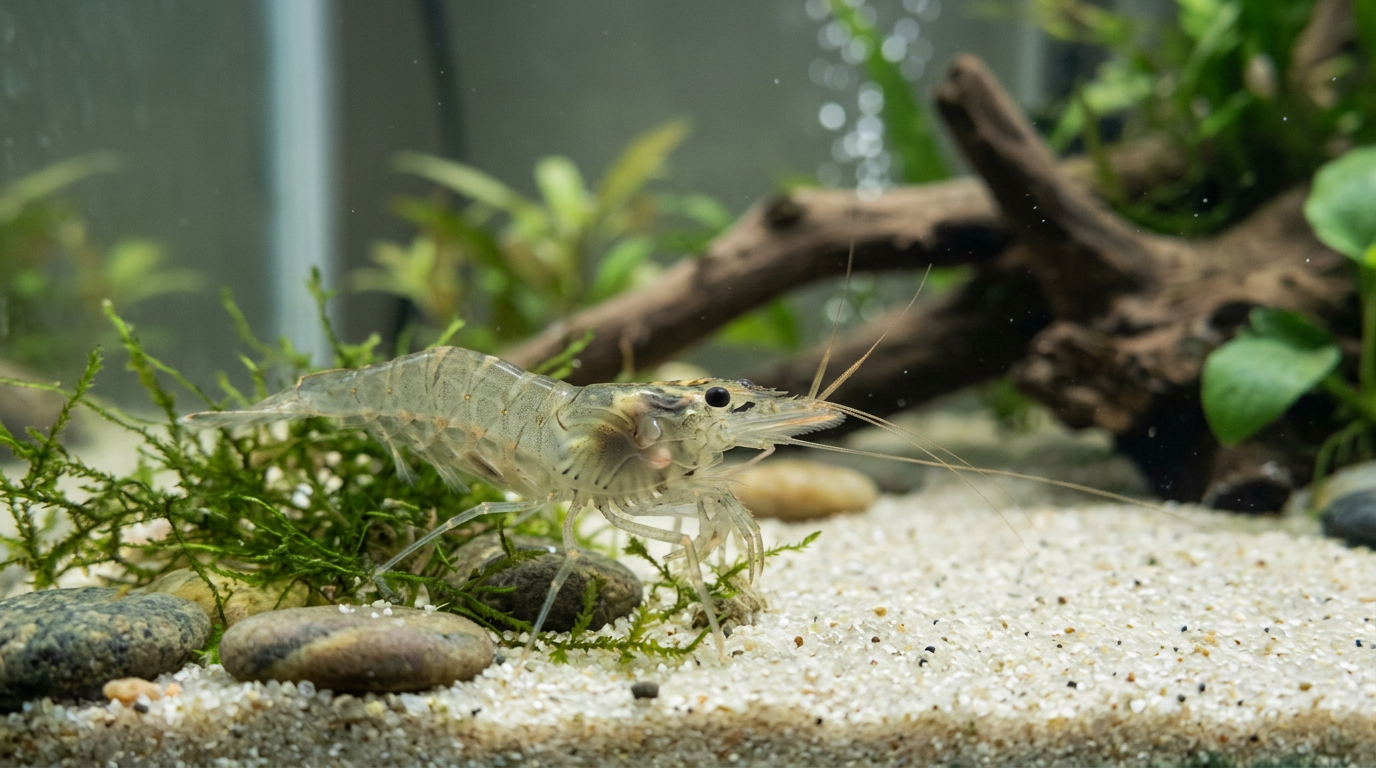
A shrimp's heart is located in its head, nestled just behind its eyes. This unusual placement means a shrimp's most vital organs are all bundled together in its most protected area. It's a clever evolutionary trick, keeping everything crucial safe and sound.
In a hurry? TL;DR
- 1A shrimp's heart is located in its cephalothorax (fused head and body), protected by thick exoskeleton just behind the eyes.
- 2This central location keeps vital organs like the brain and stomach safe within the most armored part of the shrimp.
- 3Shrimp have an open circulatory system; their heart pumps hemolymph directly into the body cavity, not through veins and arteries.
- 4The hemolymph bathes organs for nutrient/oxygen delivery, then returns to the heart through openings called ostia.
- 5Shrimp hearts beat rapidly, between 200-300 bpm, to efficiently circulate hemolymph in their open system.
- 6This anatomy prioritizes vital organ protection, allowing survival even if appendages or tail are injured.
Why It Matters
It's surprising that a shrimp's heart is found in its head, tucked away in a protected zone with its brain and stomach.
A shrimp's heart is located in its head, specifically within the cephalothorax. This placement ensures the organ remains protected by the thickest part of the creature's exoskeleton, situated just behind the eyes.
- Heart Location: Cephalothorax (fused head and body)
- Protection: Thick chitinous carapace
- Circulatory System: Open (no veins or arteries)
- Pulse Rate: 200 to 300 beats per minute
- Survival Strategy: Essential organs centralized for safety
Why It Matters: Understanding crustacean anatomy reveals how evolution prioritises the protection of vital organs by centralising them in the most armored part of the body.
The Cephalothorax Command Centre
To understand why a shrimp's heart is in its head, you have to look at their body plan. Unlike humans, who have a distinct head, neck, and torso, shrimp possess a fused head and thorax known as the cephalothorax. From the outside, it looks like their head, but biologically, it is a high-density equipment room for their entire life support system.
The heart is positioned dorsally, meaning it sits toward the back of this head-section, shielded by a hard shell called the carapace. It is not alone in this cramped quarters; the stomach, brain, and gonads are all packed into the same region. This design means that while a shrimp's tail—the part humans usually eat—is almost entirely muscle for swimming, its head is the actual engine room.
The Open-Loop System
Shrimp do not have the complex highway of veins and arteries found in mammals. Instead, they utilise an open circulatory system. According to marine biologists at the University of California, Santa Cruz, the shrimp heart pumps hemolymph—the crustacean equivalent of blood—directly into the body cavity.
Rather than being piped through vessels, this fluid simply washes over the organs to deliver oxygen and nutrients. The heart then draws the fluid back in through small holes called ostia. This method is remarkably efficient for small organisms, though it would fail to support the blood pressure requirements of larger land animals.
Survival by Design
The evolutionary logic is simple: the head is the most defended part of the shrimp. By housing the heart behind the eyes and under the thickest layer of chitin, the shrimp ensures that a minor injury to its appendages or tail is not immediately fatal. If a predator nibbles on the tail, the shrimp can still survive. If the head is compromised, the game is over instantly.
Compared to other marine life like octopuses, which have three separate hearts, or the jellyfish, which has no heart at all, the shrimp represents a middle ground of extreme efficiency. It relies on a single, fast-pulsing pump to keep its hemolymph moving at high speeds, often reaching several hundred beats per minute during high-stress flight responses.
Practical Implications
- Culinary Awareness: This is why removing the head of a shrimp (deheading) removes almost all internal organs, leaving behind only the clean muscle of the tail and the digestive tract (the vein).
- Research Utility: Toxicologists often monitor shrimp heart rates to test water quality. A spike in the pulse of these head-mounted hearts can indicate the presence of heavy metals or pollutants in the environment.
- Evolutionary Study: The cephalothorax serves as a blueprint for many other crustaceans, including lobsters and crabs, which follow a similar internal mapping.
Interesting Connections
- Blue Blood: Because they use copper instead of iron to carry oxygen, their blood is technically blue, though it looks clear to the naked eye.
- The Stomach: A shrimp’s stomach is also in its head, and some species even have teeth inside their stomachs to grind food.
- No Pulse in the Tail: If you ever see a shrimp tail twitching after the head is removed, it is purely a muscular reaction; the circulatory pump is already gone.
Does it hurt the shrimp to have its heart so close to its brain?
No, the proximity is a matter of packaging. The brain and heart are separated by membranes and are perfectly integrated into the cephalothorax's layout.
Do all crustaceans have hearts in their heads?
Most decapods, including lobsters and crayfish, share this cephalothorax structure, meaning their hearts are also located in the chest-head fusion area.
How fast does a shrimp's heart beat?
It varies by species and activity, but it generally ranges between 200 and 300 beats per minute, significantly faster than a human heart.
Key Takeaways
- Anatomy: The heart sits in the cephalothorax, protected by the carapace.
- Circulation: Shrimp use an open system where hemolymph bathes the organs directly.
- Protection: Vital organs are centralised in the most armored part of the body.
- Biological Function: The tail is for movement; the head is for survival and metabolic processing.
- Efficiency: This compact design allows shrimp to be incredibly agile while maintaining a high metabolic rate.
Frequently Asked Questions
Sources & References
 WikipediaThis source defines the cephalothorax in crustaceans as containing the heart and other vital organs, supporting the claim that a shrimp's heart is located in this head-like region.en.wikipedia.org
- WikipediaThis source confirms that the shrimp's heart is located in its head, specifically within the cephalothorax, which is the fused head and thorax region.en.wikipedia.org