
Quick Answer
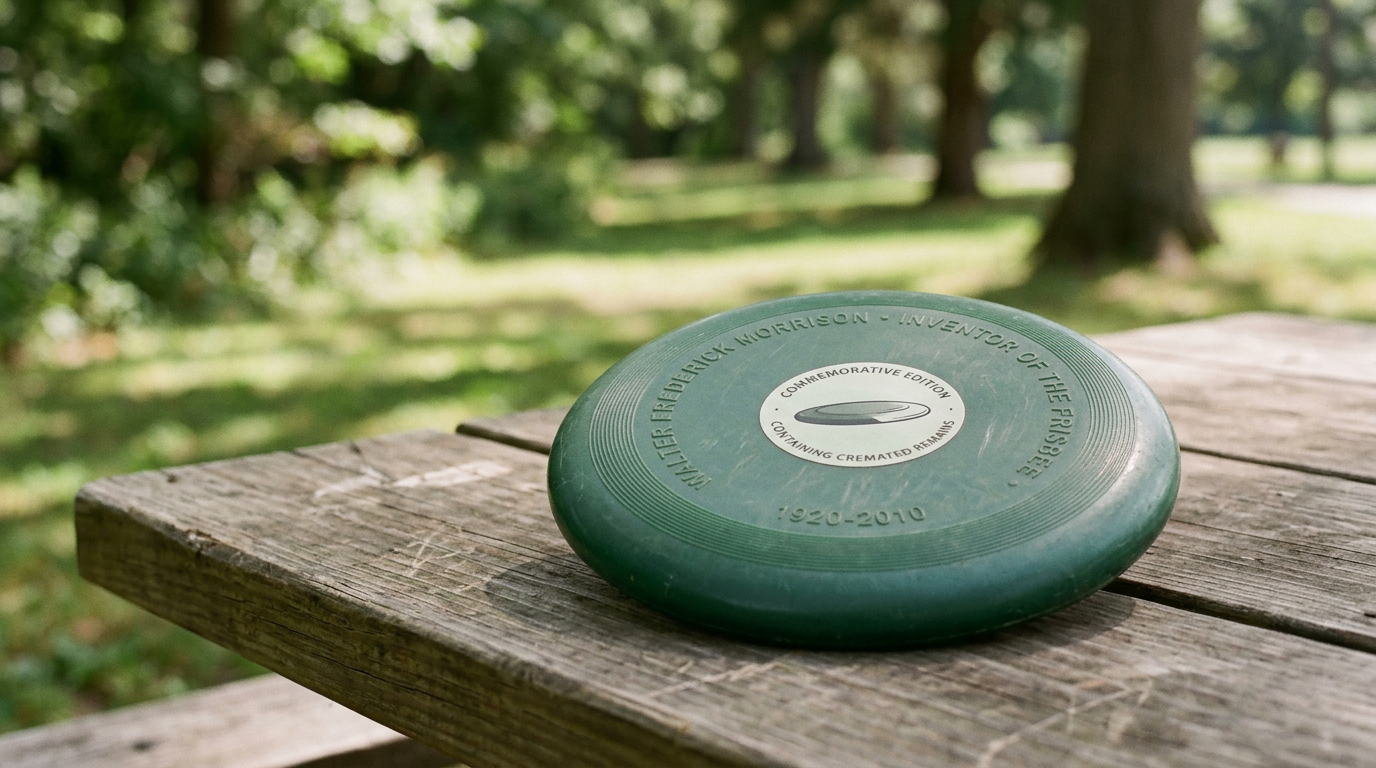
Walter Frederick Morrison, the inventor of the Frisbee, had some of his ashes turned into commemorative Frisbees after his death. It's a wonderfully eccentric and fitting tribute to the man who brought us such a beloved and playful pastime, a truly unique way to keep his legacy soaring.
In a hurry? TL;DR
- 1Walter Frederick Morrison, inventor of the Frisbee, fulfilled a unique final request by having some of his ashes incorporated into commemorative Frisbees.
- 2Morrison's journey began with selling a cake tin for profit, leading to the creation of the "Pluto Platter" which was later rebranded as the Frisbee by Wham-O.
- 3Over 300 million Frisbees were sold during Morrison's lifetime, establishing the toy as a significant cultural and sporting item.
- 4The creation of ash-infused Frisbees involved a special high-heat molding process to integrate cremated remains into the plastic.
- 5This practice, known as creative memorialization, allows individuals to be remembered through unique, lasting tributes beyond traditional methods.
Why It Matters
It's quite a peculiar and fitting tribute that the inventor of the Frisbee had some of his ashes incorporated into a batch of the very flying discs he created.
Walter Frederick Morrison, the inventor of the modern Frisbee, was cremated in 2010, and his family fulfilled his final request by molding his ashes into a limited run of commemorative flying discs. These rare collectibles turned the creator into the very object that defined his life and career.
Key Facts and Figures
- Inventor: Walter Frederick Morrison (1920–2010)
- Original Name: The Pluto Platter
- Acquisition: Wham-O purchased the rights in 1957
- Post-Mortem Production: A limited number of discs containing ashes were distributed to family and friends
- Total Career Sales: Over 300 million Frisbees sold during his lifetime
The Man Who Launched a Million Discs
The story of the Frisbee did not begin in a corporate boardroom, but on a beach in California. In 1937, Morrison and his future wife, Lucile, were offered 25 cents for a cake tin they were tossing back and forth. Realising that a five-cent tin could fetch a 400 percent profit, Morrison spotted a business opportunity.
He eventually refined the design using Tenite plastic, creating the Pluto Platter to capitalise on the post-war obsession with UFOs. When Wham-O bought the rights in 1957, they rebranded it the Frisbee, a nod to the Frisbie Pie Company tins that New England college students had been throwing for decades. Unlike other backyard toys of the era, the Frisbee became a genuine sporting staple, spawning disc golf and Ultimate.
A Literal Final Tribute
When Morrison passed away at age 90, his son, Rich Morrison, confirmed to the Associated Press that his father’s ashes had been mixed into the plastic formula for a special batch of discs. The process involved a high-heat moulding technique to ensure the cremated remains were fully integrated into the material.
This request was more than a stunt. It reflected Morrison’s lifelong dedication to the physics of flight and the joy of the game. According to his son, the family even joked that the inventor would finally have his wish of being caught by a professional player or landing on a roof where he could spend eternity.
Engineering the Afterlife
The integration of human remains into consumer products is rare, primarily due to the technical challenges of maintaining material integrity. Whereas standard plastic polymers require specific temperature ranges to remain durable, the introduction of bone ash acts as a filler.
Real World Implications
- Collectors Market: The ash-infused discs are among the most sought-after items in the disc sports community, though they rarely appear at public auctions.
- Cultural Legacy: The story cemented the Frisbee as a lifestyle rather than just a toy, highlighting the deep emotional connection between inventors and their work.
- Environmental Impact: Using plastic as a vessel for remains creates a nearly permanent monument, as the polymers take hundreds of years to degrade.
Can you actually throw the ash-infused Frisbees?
Yes, they were manufactured to be fully functional, though most recipients keep them as display pieces rather than using them for a game of catch.
Did Wham-O sell these to the public?
No. The discs containing Morrison’s ashes were a private run intended for his inner circle and dedicated collectors within the disc golf community.
Why did he choose this method?
Morrison was known for his sense of humour and his obsession with his invention. He reportedly told his children, "That way, we can play with him."
Key Takeaways
- Physical Legacy: Morrison’s ashes were mixed into the plastic of commemorative Frisbees in 2010.
- Market Impact: Wham-O’s acquisition of Morrison's Pluto Platter in 1957 turned a beach toy into a global phenomenon.
- Lasting Presence: With over 300 million units sold, the Frisbee remains one of the most successful toys in history.
- A Poetic End: The inventor’s choice reflects a rare dedication to one's craft, ensuring the creator and the creation are permanently linked.
Morrison’s final act remains one of the most eccentric and fitting exits in American industrial history. He didn't just leave behind a patent; he ensured he would always be part of the flight.
Frequently Asked Questions
Sources & References
 The New York TimesThis obituary for Walter Frederick Morrison confirms that after his death, his ashes were mixed into a limited number of commemorative Frisbees, fulfilling his wish.nytimes.com
- 2Walter Isaacson BiographyThis archived Los Angeles Times obituary for Walter Fred Morrison details his wish to have his ashes molded into commemorative Frisbees and confirms his family carried out this plan.web.archive.org