
Quick Answer
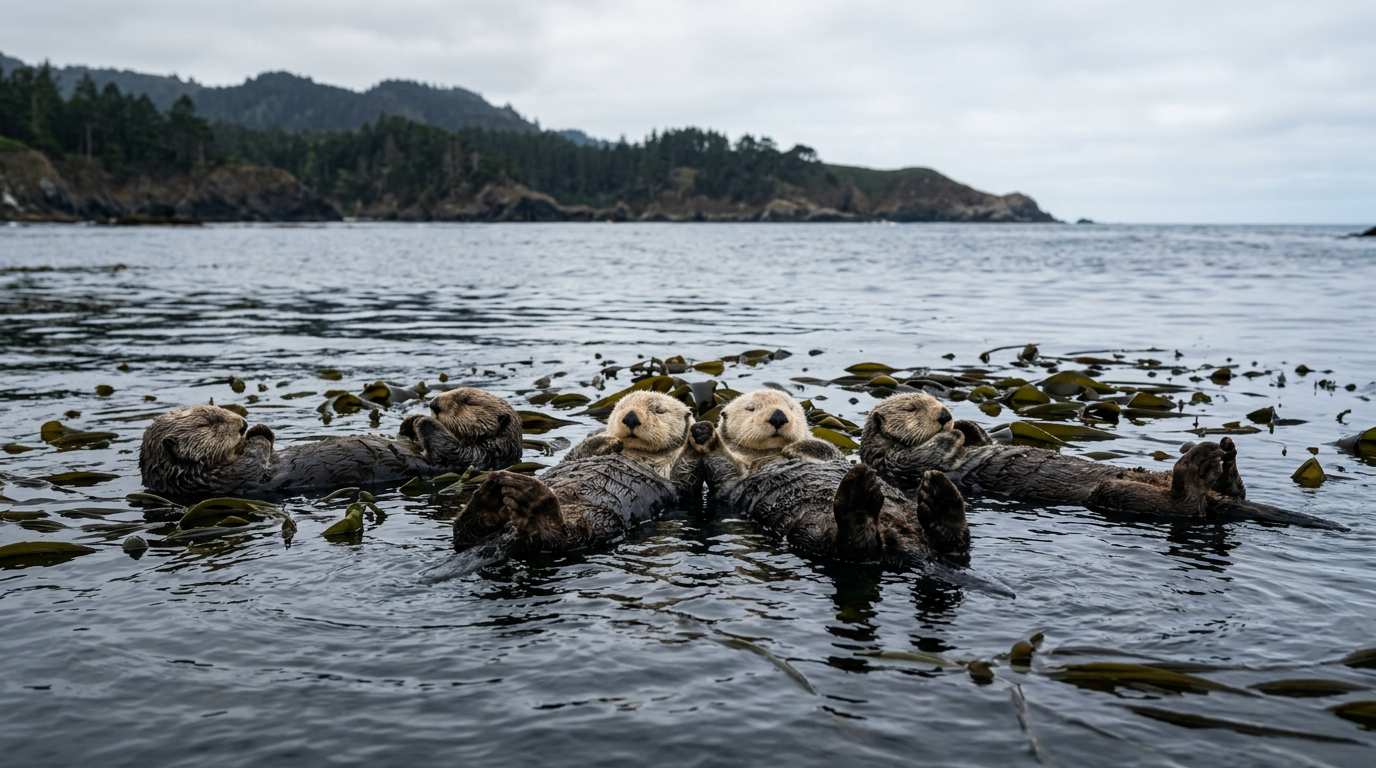
Sea otters famously hold hands when they sleep to avoid drifting apart in the water. This charming behaviour is crucial for their survival; it keeps them together in safe havens and prevents them from getting lost in strong ocean currents, making it easier for them to stay in familiar territories and find food.
In a hurry? TL;DR
- 1Sea otters hold hands while sleeping to form 'rafts,' preventing them from drifting apart in ocean currents.
- 2This hand-holding behavior, known as rafting, is a survival tactic for vulnerable sea otters in their aquatic environment.
- 3Otters also wrap themselves in kelp fronds as a primary anchor, supplementing the physical connection of paw-holding.
- 4Rafting conserves energy by keeping otters together, reducing metabolic costs and the need to search for their colony.
- 5Hand-holding is most common between mothers and pups or bonded pairs, ensuring they stay in safe, nutrient-rich areas.
- 6This behavior highlights the mechanical necessity of social bonds for sea otter survival in turbulent waters.
Why It Matters
It's fascinating that sea otters hold hands while sleeping as a practical way to avoid being separated by ocean currents.
Sea otters frequently hold paws while resting to form living rafts, a social grooming and survival tactic that prevents individuals from drifting away in strong ocean currents. This behaviour, known as rafting, allows them to stay together in protected kelp forests during their most vulnerable state.
The Rafting Strategy
- Raft Size: Groups can range from two otters to over 1,000 individuals in large colonies.
- Primary Function: Hand-holding acts as a physical anchor against tide and wind.
- Anchoring: They also wrap themselves in giant kelp fronds to stay moored to the sea floor.
- Social Structure: Rafts are typically segregated by sex, with males and females sleeping in separate groups.
- Energy Conservation: Maintaining a group structure reduces the metabolic cost of finding the colony after a sleep cycle.
Why It Matters
This behaviour is a rare example of marine mammals using physical connection as a navigational tool, proving that social bonds are a mechanical necessity for survival in turbulent waters.
The Mechanics of the Otter Raft
Sea otters lack the thick blubber found in other marine mammals like seals or whales. Instead, they rely on the densest fur in the animal kingdom and a high-octane metabolism to stay warm. Because they must eat 25 percent of their body weight daily, sleep is a precious resource that cannot be wasted drifting into the open mouth of the Pacific.
According to researchers at the Monterey Bay Aquarium, this hand-holding behaviour is most frequently observed between mothers and pups or within bonded pairs. By interlocking paws, they ensure that the group remains in the safe, nutrient-rich shallows rather than being pulled into deeper, predator-dense waters.
Unlike sea lions that haul out onto rocks to sleep, sea otters are almost entirely aquatic. This makes them unique among lutrines. Because they sleep on their backs to keep their fur dry and buoyant, they are at the mercy of the surface tension and wind. The raft acts as a collective anchor, increasing the surface area of the group to make it more stable than a single floating body.
The Kelp Connection
While hand-holding is the most iconic version of this behaviour, it is actually the secondary safety measure. The primary method involves Macrocystis pyrifera, or giant kelp. Otters will wrap long strands of the seaweed around their bodies like a seatbelt.
In areas where kelp is sparse, the reliance on physical contact increases. This is where the hand-holding becomes vital. It is a biological workaround for a lack of environmental anchors.
The Social Cost of Drifting
A study published in the journal Marine Mammal Science notes that male otters often establish territories that include the resting areas of several females. If a female drifts out of this territory while sleeping, she may be intercepted by a rival male. Thus, hand-holding serves a reproductive purpose as well as a safety one, maintaining the integrity of the harem or the bachelor group.
Practical Applications and Observations
- Wildlife Photography: Professional photographers often wait for slack tide, as this is when otters are most likely to link up and settle into a raft.
- Conservation Efforts: Tracking the size and location of rafts helps biologists determine the health of the local kelp ecosystem.
- Rescue Operations: When rehabilitating orphaned pups, rescuers use otters to teach them the rafting technique, as a pup that cannot anchor itself will not survive the night in the wild.
Interesting Connections
- Etymology: The word otter comes from the Old English otor, originating from the Proto-Indo-European root wed, meaning water.
- Tool Use: Beyond hand-holding, otters are one of the few non-primate species to use tools, often keeping a favourite rock in a skin pouch under their arm to crack open shellfish.
- Density: A sea otter has up to one million hairs per square inch, which provides the buoyancy necessary to float while sleeping.
Do all otters hold hands?
No, this behaviour is specific to sea otters. River otters typically sleep on land in dens called holts and do not face the risk of drifting away in ocean currents.
Does it happen in captivity?
Yes, the famous viral video of otters holding hands was filmed at the Vancouver Aquarium. Even in the absence of strong currents, the instinct to remain physically connected to a mate or companion remains strong.
What happens if they let go?
If an otter loses its grip and isn't wrapped in kelp, it will slowly drift with the surface current. In the wild, this usually results in the otter waking up and having to swim back to the colony, a process that wastes vital calories.
Key Takeaways
- Physical Link: Hand-holding is a survival mechanism to prevent drifting during sleep.
- Rafting: Groups can number in the thousands, providing safety through numbers.
- Kelp Anchors: Seaweed acts as a natural mooring line, often used in conjunction with hand-holding.
- Density Matters: Their buoyant fur allows them to float effortlessly on their backs.
- Energy Management: Staying in one place is essential for an animal with such a high metabolic demand.
Frequently Asked Questions
Sources & References
 WikipediaThis source confirms that sea otters often rest in groups called rafts, sometimes holding paws, to prevent drifting, and that they also wrap themselves in kelp fronds for anchorage.en.wikipedia.org
 Smithsonian OceanThis source states that sea otters often wrap themselves in kelp while resting to keep from floating away and that groups can consist of a few to hundreds of individuals.ocean.si.edu