
Quick Answer
Butterflies can taste with their feet, thanks to special sensors on their legs. This is interesting because it allows them to check if a plant is safe and nutritious enough for their future caterpillars before laying their eggs.
In a hurry? TL;DR
- 1Butterflies taste plants using chemoreceptors located on their feet (tarsi).
- 2This 'foot-tasting' allows butterflies to identify suitable host plants for egg-laying.
- 3Butterflies drum or scratch leaves with their feet to release plant chemicals for detection.
- 4These foot sensors are highly sensitive, helping butterflies detect specific phytochemicals crucial for caterpillar survival.
- 5This adaptation evolved as a survival mechanism to ensure offspring are laid on the correct, non-toxic food source.
- 6Foot-tasting is distinct from nectar-sipping, with specialized receptors for precise plant identification.
Why It Matters
It's quite surprising that butterflies essentially use their feet as a sophisticated tasting mechanism to ensure their future offspring have the right food.
Butterflies use their feet to taste the world. They possess chemoreceptors on their tarsi that detect chemical signatures, allowing them to identify specific host plants before laying their eggs.
Quick Facts and Figures
- Receptor Type: Contact chemoreceptors (sensilla)
- Location: The tarsi (distal parts of the legs)
- Sensitivity: Up to 200 times more sensitive than human taste buds
- Primary Purpose: Oviposition (egg-laying) site selection
- Detection Method: Drumming or scratching the leaf surface
The Mechanics of Tarsal Tasting
While humans rely on tongues and nasal passages to process flavour, butterflies have outsourced their palate to their extremities. This biological adaptation is not about enjoying a meal; it is a survival mechanism designed to protect their offspring.
When a butterfly lands on a leaf, it performs a rapid drumming motion with its front legs. This action releases chemicals from the plant's cuticle, which the sensors on the butterfly’s feet then interpret. Unlike other insects that might taste through antennae, the butterfly requires direct physical contact to confirm if a plant is toxic or nutritious.
The Evolutionary Necessity of Foot-Tasting
The stakes of this sensory input are incredibly high. Most caterpillars are specialists, meaning they can only eat one or two specific types of plants. If a mother butterfly lays her eggs on the wrong leaf, the larvae will likely starve to death.
Researchers at the University of California, Irvine, have found that these sensors are finely tuned to detect specific phytochemicals. By scratching the leaf, the butterfly forces the plant to reveal its chemical identity. If the feet detect the right blend of glucosinolates or alkaloids, the butterfly receives a neurological green light to deposit its eggs.
How Butterflies Process Flavour
Unlike the mouthparts, which are used primarily for sipping nectar through a proboscis, the feet are the primary diagnostic tool. A study published in the journal Nature Communications identified specific gustatory receptor genes that are expressed exclusively in the legs of the Heliconius butterfly.
These receptors are far more sophisticated than the simple sweet-or-sour binary of human taste. They can distinguish between complex molecular structures, ensuring that the butterfly does not mistake a poisonous lookalike for a suitable host.
Practical Scenarios
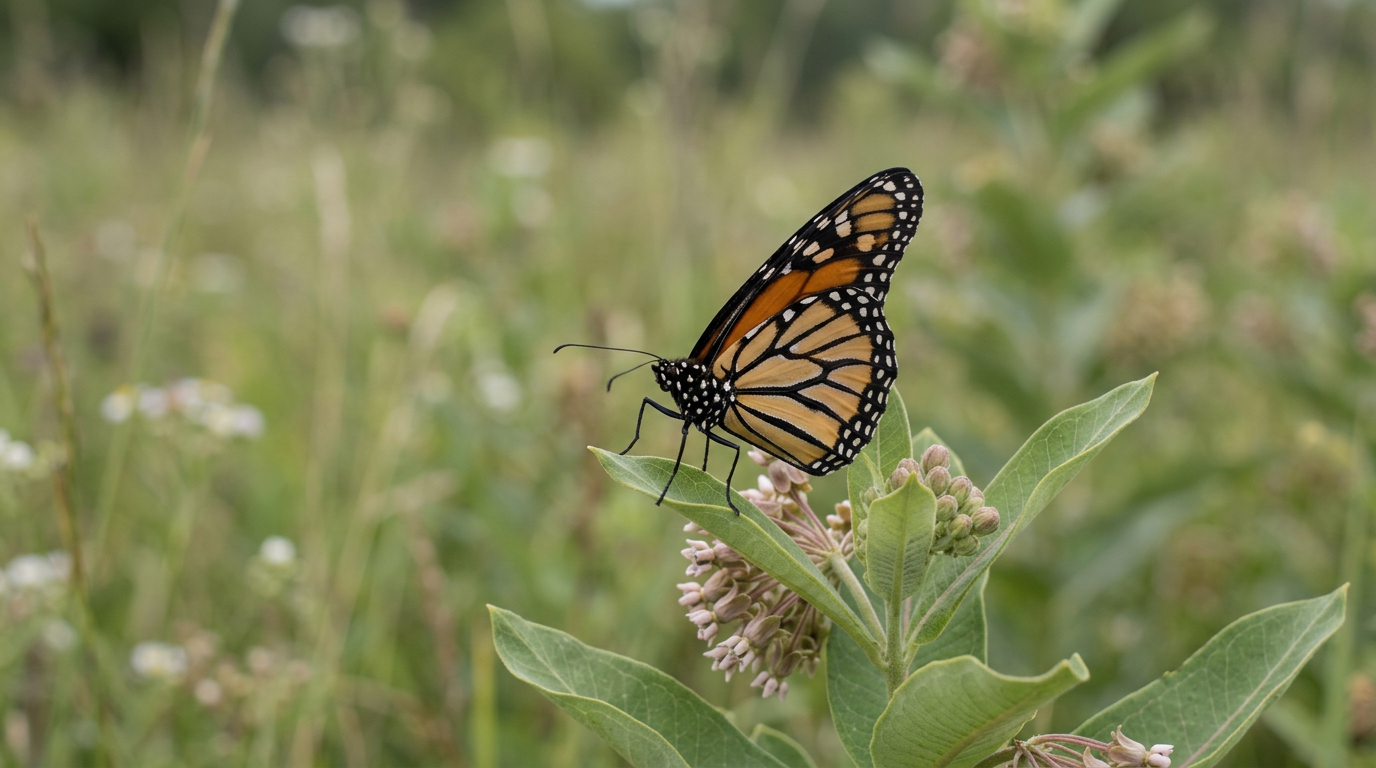
- Garden Selection: A Monarch butterfly landing on milkweed uses its feet to verify the concentration of cardenolides, which will eventually make its caterpillars toxic to predators.
- Avoiding Competition: Some species can detect the chemical signals left by previous butterflies, helping them avoid laying eggs on a plant that is already overcrowded.
- Identifying Toxins: If a butterfly lands on a plant treated with certain pesticides, the tarsal sensors provide an immediate warning to flee before the insect ingests any toxins.
Interesting Connections
- Nectar Intake: While they taste with their feet, they still eat with their mouths. The proboscis acts like a straw to drink liquid nutrients.
- Bee Comparison: Honeybees also have taste receptors on their feet, but they use them primarily to locate sugar sources rather than egg-laying sites.
- Etymology: The word butterfly may stem from the Old English butere, possibly because of the yellow colour of common species or the ancient belief that they stole butter.
Do butterflies have tongues?
They have a proboscis, which is a long, tube-like structure used for drinking nectar. It does not have the same taste bud density as their feet.
Can they taste sugar with their feet?
Yes, they can detect the presence of sugars to determine if a flower is worth investigating for nectar, though their primary use is plant identification for eggs.
Do all insects taste with their feet?
No. While many insects have sensory hairs on their legs, butterflies and certain fly species have the most highly developed tarsal taste systems.
Key Takeaways
- Survival Tool: Tasting with feet is a critical step in the reproductive cycle.
- Precision: The sensors can detect chemical variations that are invisible to the naked eye.
- Specialist Diet: Caterpillars are picky eaters, making the mother's foot-tasting ability essential for the species' survival.
- Evolution: This trait is a result of a long-standing chemical war between plants and the insects that consume them.
The next time you see a butterfly drumming its legs on a leaf, it isn't dancing. It is conducting a sophisticated chemical analysis to ensure the next generation survives.
Frequently Asked Questions
Sources & References
 WikipediaBackground and contexten.wikipedia.org
 Scientific AmericanScientific research and analysisscientificamerican.com
 BBCReporting and verificationbbc.co.uk
- WikipediaThis source explains that butterflies use chemoreceptors, particularly on their tarsi (feet), to taste plants and determine their suitability for laying eggs.en.wikipedia.org