
Quick Answer
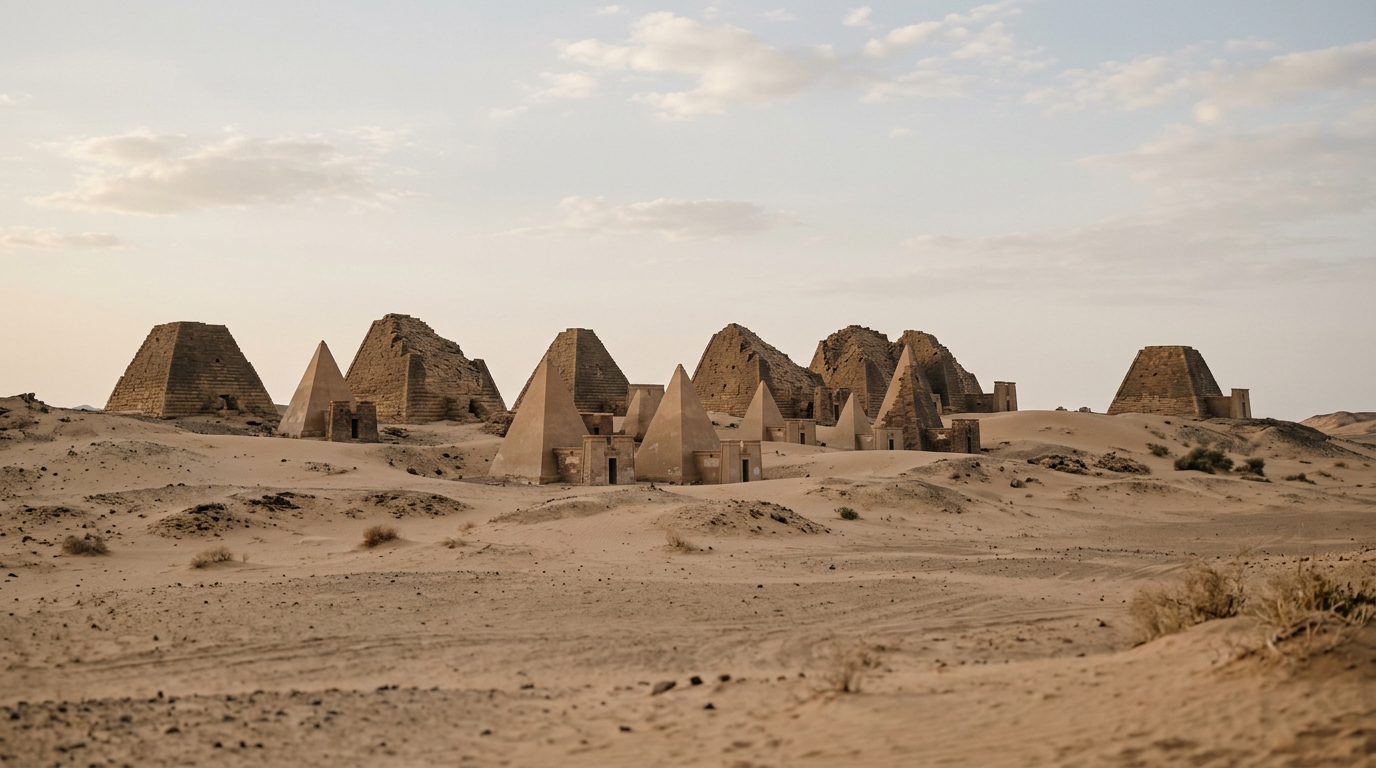
Sudan actually has more ancient pyramids than Egypt, boasting around 200 to 250! These impressive tombs were built by the Kingdom of Kush, a powerful African civilisation, between 1,700 and 2,700 years ago. It's a fascinating reminder that ancient wonders aren't confined to just one famous country.
In a hurry? TL;DR
- 1Sudan boasts 200-250 ancient pyramids, significantly more than Egypt's count.
- 2These Nubian pyramids were built by the Kingdom of Kush as royal tombs between 2,700 and 1,700 years ago.
- 3Concentrated at sites like Meroë, these pyramids are steeper and smaller than Egyptian counterparts.
- 4The Kingdom of Kush was a powerful Black African empire that once conquered Egypt, influencing its own pyramid-building.
- 5Nubian pyramid construction prioritized volume with smaller, more frequent monuments over massive, long-term projects.
- 6Discovering Sudan's pyramids challenges the traditional Egypt-centric view of ancient Nile Valley architectural innovation.
Why It Matters
Sudan's pyramids, far outnumbering Egypt's, demonstrate the significant, often overlooked, achievements of the ancient Kingdom of Kush.
Sudan is home to roughly 200 to 250 ancient pyramids, a total that more than doubles the count found in neighbouring Egypt. These structures were built by the rulers of the Kingdom of Kush between 2,700 and 1,700 years ago to serve as royal tombs.
The Core Facts
- Total Pyramids: 200–250 in Sudan versus approximately 118–138 in Egypt.
- Primary Location: Meroë, an ancient city on the east bank of the Nile.
- Origin Period: 700 BC to 300 AD.
- Architectural Style: Nubian pyramids are steeper and smaller than Giza’s monuments.
- Purpose: Funerary monuments for the Kings and Queens of Kush.
Why It Matters
This fact challenges the Nile Valley hierarchy that places Egypt at the centre of all architectural innovation, revealing a sophisticated Black African empire that flourished long after the Egyptian Old Kingdom faded.
The Forgotten Empire of Kush
While the Great Pyramid of Giza dominates the global imagination, the desert sands of northern Sudan hold a denser collection of monuments. The Kingdom of Kush was a powerhouse of the ancient world, at one point even conquering Egypt to install the 25th Dynasty, often called the Black Pharaohs.
The Nubian pyramids are concentrated in three main sites: El-Kurru, Nuri, and Meroë. Unlike the broad, sloping sides of the Egyptian structures, Nubian pyramids are narrow and sharp, rising at angles of roughly 70 degrees. They were not built to house the bodies of the dead within the masonry itself; instead, the royalty were buried in chambers beneath the structures.
Evidence and Archaeological Context
Archaeologists from the University of Khartoum and international teams have spent decades documenting these sites. According to research published by the British Museum, the Meroitic period saw a distinct departure from Egyptian artistic styles, blending local African aesthetics with Pharaonic traditions.
The discrepancy in numbers is partly due to the scale. The Egyptian pyramids were massive state undertakings that spanned decades. In contrast, the Kushite kings opted for volume. By building smaller, more frequent monuments, they were able to commemorate a higher number of royals over a longer period of activity.
The Meroë Distinction
Meroë was the final capital of the Kushite Empire. It was a major iron-smelting hub, often referred to as the Birmingham of Africa by historians. This industrial wealth funded the construction of over 40 pyramids in the royal cemetery alone.
Unlike other ancient sites, many of these structures suffered damage in the 1830s. Italian treasure hunter Giuseppe Ferlini used explosives to blast the tops off many pyramids in a search for gold. While he found a hoard of jewellery belonging to Queen Amanishakheto, he caused irreparable structural damage to the site.
Real-World Implications
The modern recognition of Sudan’s pyramids is shifting the tourism landscape in East Africa. While Egypt handles millions of visitors, the Sudanese sites remain largely isolated. This provides a rare opportunity for archaeologists to study pristine burial chambers that have not been modernised for mass foot traffic.
Why are Sudan’s pyramids smaller than Egypt’s?
The Kushite builders focused on height and steepness rather than sheer mass. They also lacked the massive labour force and centralised bureaucracy that the Old Kingdom of Egypt utilised for the Giza plateau.
Are there still undiscovered pyramids in Sudan?
Yes. Satellite imagery and ground-penetrating radar continue to reveal foundations of smaller tombs and temples buried beneath the shifting sands of the Sahara.
Why isn't Sudan as famous for pyramids as Egypt?
Political instability and a lack of infrastructure have kept international tourism low. Additionally, for much of the 20th century, Western archaeology prioritised Egyptology over the study of Sub-Saharan civilisations.
Key Takeaways
- Volume over scale: Sudan has roughly double the number of pyramids found in Egypt.
- Cultural synthesis: The Kingdom of Kush adapted Egyptian religious practices into a unique Nubian identity.
- Architectural signature: Nubian pyramids are characterised by their narrow bases and steep, 70-degree angles.
- Hidden history: These sites offer a window into the Black Pharaohs who once ruled the entire Nile Valley.
Sudan is not a secondary site of ancient history; it is a primary one, holding the record for the highest concentration of pyramids on the planet.
Frequently Asked Questions
Sources & References
 Smithsonian MagazineThis source confirms that Sudan is home to approximately 200 to 250 pyramids, exceeding the roughly 120 pyramids found in Egypt.smithsonianmag.com
- 2UNESCOThis source, detailing the Archaeological Sites of the Island of Meroe, verifies that the pyramids at Meroe were built by the rulers of the Kingdom of Kush and served as royal tombs for approximately 1000 years, from about 700 BC to 350 AD.whc.unesco.org
- 3British Journal of PsychologyThis source describes Meroe as the southern capital of the Kingdom of Kush and mentions that its royal burial grounds contain pyramids, confirming their purpose and builders.britishmuseum.org