
Quick Answer
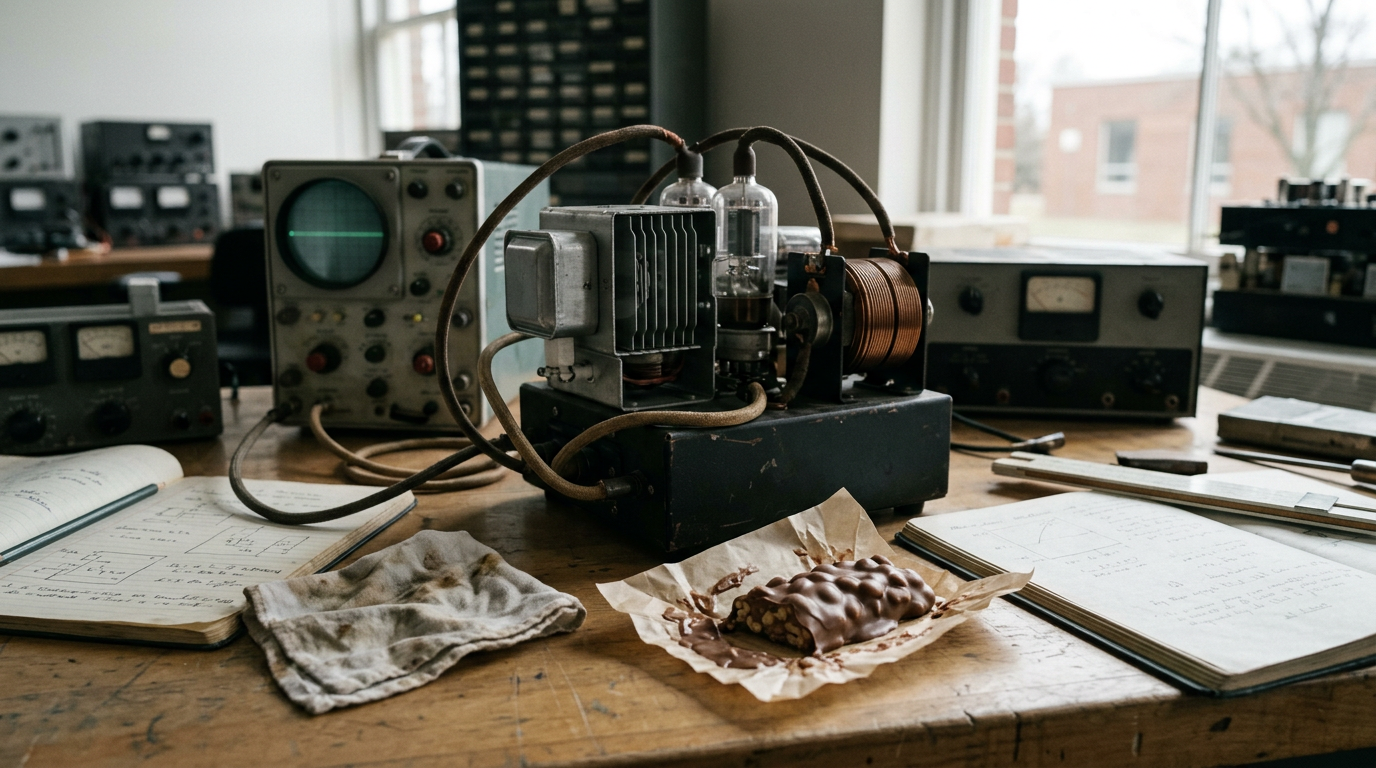
The microwave oven was a happy accident, invented when an engineer's chocolate bar melted in his pocket next to a radar magnetron. This shows how groundbreaking technology can emerge from unexpected observations. It's fascinating because a military device inadvertently gave us a kitchen staple that revolutionised how we cook.
In a hurry? TL;DR
- 1Microwave ovens were invented accidentally in 1945 by Percy Spencer, who noticed a candy bar melt near a radar magnetron.
- 2Spencer's initial experiments included popping corn and exploding an egg, demonstrating the cooking potential of microwave radiation.
- 3The technology works by causing water, fat, and sugar molecules in food to rotate rapidly, creating heat through friction.
- 4Early microwave ovens were large, expensive, and water-cooled, initially intended for commercial use.
- 5A compact countertop model released in 1967 made microwaves accessible for home kitchens, transforming meal preparation.
- 6Microwaves revolutionized home cooking, enabling convenience foods like TV dinners and reducing time spent on domestic tasks.
Why It Matters
It's quite surprising that the device we use to quickly heat our dinners was born from a melted chocolate bar discovered by an engineer working on wartime radar.
The microwave oven exists because Percy Spencer, a self-taught engineer at Raytheon, noticed a peanut cluster bar melting in his pocket while standing near an active radar magnetron in 1945. This accidental discovery transformed a high-stakes military technology into the most ubiquitous kitchen appliance in the world.
Key Facts and Timeline
- Discovery Year: 1945
- Inventor: Percy Spencer
- Original Name: The Radarange
- Initial Height: 5 feet 11 inches
- Original Price: Approximately 5,000 USD (roughly 70,000 USD today)
- Patent Date: October 8, 1945
The Sticky Origins of Modern Cooking
Percy Spencer was not looking for a way to heat leftovers. During World War II, Raytheon was a major contractor for the Allied forces, producing magnetrons—vacuum tubes that generate microwave radiation for radar systems. While working on a power tube, Spencer felt a strange, warm sensation and realised his snack had turned into a gooey mess.
Unlike other engineers who might have simply changed their trousers, Spencer saw a thermal application. He immediately tested the theory by placing unpopped corn kernels near the tube; they became the world’s first microwave popcorn. The next day, he successfully exploded an egg in front of a colleague, proving that electromagnetic waves could cook food from the inside out.
The Science of Friction
The technology works through dielectric heating. Microwaves are a form of non-ionizing electromagnetic radiation. When these waves pass through food, they cause water, fat, and sugar molecules to rotate rapidly. This molecular agitation creates friction, which produces the heat required to cook the food.
Unlike a conventional oven, which uses conduction to transfer heat from the outside in, microwaves penetrate the food surface. This is why a microwave can heat a bowl of soup in two minutes, whereas a gas stove requires significantly more time to reach the same temperature.
Why It Matters
The microwave changed the architecture of the modern home and the sociology of the family meal. It enabled the rise of the TV dinner and reduced the time spent on domestic labour. However, its primary value lies in its efficiency. In contrast to electric ovens, which lose a significant amount of energy heating the air inside the chamber, microwaves direct energy almost exclusively to the food, making them far more energy-efficient for small portions.
Practical Applications
- Rapid Sterilisation: Research published in the Journal of Environmental Health suggests that microwaving a wet kitchen sponge for two minutes can kill over 99 percent of bacteria, including E. coli.
- Rehydrating Bread: Placing a cup of water in the microwave alongside stale bread creates a moist environment that softens the crust and restores texture.
- Peeling Garlic: Microwaving a head of garlic for 15 seconds causes the moisture inside the cloves to expand, loosening the skin for effortless peeling.
- Drying Herbs: A microwave can dehydrate fresh herbs in seconds, preserving their colour and flavour better than air-drying.
Interesting Connections
- Radar Roots: The word radar is an acronym for Radio Detection and Ranging.
- Culinary Firsts: The first food intentionally cooked by Spencer was popcorn; the second was an egg, which famously exploded.
- Acoustic Branding: The distinctive beep at the end of a cycle was added decades later as a user-experience feature because the cooking process itself is relatively silent.
- Speed of Light: You can actually measure the speed of light in your kitchen by removing the rotating plate and heating chocolate; the distance between the melted spots corresponds to the wavelength of the microwaves.
Does microwaving food remove its nutrients?
Any form of heating changes the nutritional profile of food. However, because microwaves cook faster and use less water than boiling, they often preserve heat-sensitive vitamins like Vitamin C better than traditional methods.
Why shouldn't you put metal in the microwave?
Metal reflects microwaves rather than absorbing them. Thin pieces of metal, like aluminium foil or the gold rim on a plate, can act as antennas, creating an electric field that causes sparks, known as arcing.
Do microwaves cause cancer?
No. Microwaves use non-ionizing radiation, which lacks the energy to damage DNA directly. They are housed in a metal box designed to contain the waves, and the radiation ceases the moment the door opens or the timer ends.
Key Takeaways
- Accidental Genius: The device was a byproduct of WWII radar research.
- Molecular Friction: It cooks by vibrating water molecules, not by applying external heat.
- Efficiency: It is significantly faster and more energy-efficient than traditional ovens for reheating.
- Cultural Shift: It fundamentally altered the way food is processed, sold, and consumed globally.
The melted chocolate bar in Spencer’s pocket remains the ultimate example of how a keen eye for an anomaly can turn a military tool into a domestic revolution.
Frequently Asked Questions
Sources & References
 Smithsonian MagazineThis source details Percy Spencer's accidental discovery in 1945, noting that a melting candy bar in his pocket led to his realization of microwave heating and the subsequent invention of the microwave oven.smithsonianmag.com
 Encyclopaedia BritannicaThis article confirms that Percy Spencer, an American engineer, discovered in 1945 that microwaves could heat food while he was working with an active radar set, leading to the development of the microwave oven.britannica.com