
Quick Answer
A dentist invented the electric chair. Alfred Southwick, a dentist, designed the infamous execution device, inspired by his professional experience. He believed this electrically powered method would be a more humane alternative to hanging, which was the prevalent form of capital punishment at the time.
In a hurry? TL;DR
- 1Alfred Southwick, a dentist, invented the electric chair, seeking a more humane execution method than hanging.
- 2Southwick was inspired by witnessing an accidental electrocution, adapting his knowledge of dental chairs.
- 3The electric chair aimed to replace botched hangings with a supposedly precise method of execution.
- 4Thomas Edison controversially used the electric chair's development as a marketing weapon against rival George Westinghouse.
- 5The first electric chair execution in 1890 was a gruesome failure, requiring multiple jolts.
- 6The invention reflects a disturbing blend of medical professionalization and industrial technology for state-sanctioned death.
Why It Matters
It's surprising that a dentist, drawing on his experience with dental chairs, invented the electric chair as a supposed humane alternative to hanging.
The electric chair was invented by Alfred Southwick, a Buffalo dentist who believed the controlled application of electricity through a chair was a more humane alternative to hanging. He developed the concept after witnessing an accidental electrocution in 1881 and applied his knowledge of dental chairs to the design.
The Quick Summary
- The Creator: Alfred P. Southwick, a dentist and former steamboat engineer from New York.
- The Inspiration: Watching a drunk man die instantly after touching a live generator terminal.
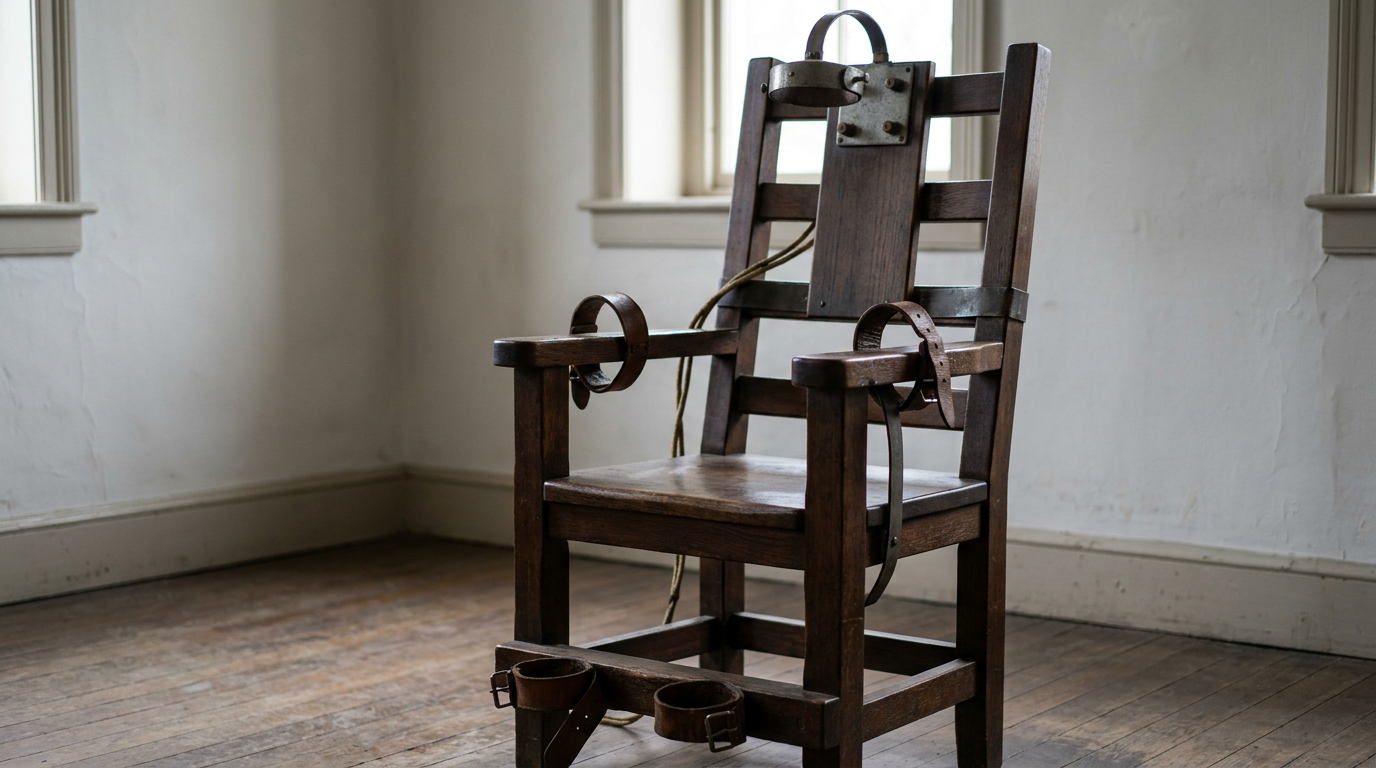
- The Design: A modified dental chair equipped with electrodes and straps.
- The Goal: To replace the gruesome and often botched process of public hangings.
- The Result: The first execution took place in 1890 at Auburn Prison.
Why It Matters
The invention of the electric chair represents a bizarre intersection of medical professionalisation and the Industrial Revolution, where the same seat designed for healing was repurposed for state-sanctioned death.
The Origins of a Deadly Seat
In 1881, Alfred Southwick happened upon a scene that would change the course of American penal history. He watched a drunk man touch a live electric generator in Buffalo, New York. The man died almost instantly.
While most would find the event harrowing, Southwick saw a technical solution to a social problem. At the time, hanging was the standard method of execution, but it was frequently botched. If the drop was too short, the prisoner strangled; if it was too long, they were decapitated.
Southwick, accustomed to performing procedures on patients seated in a chair, realised that electricity could be administered with precision if the subject was restrained in a similar fashion. He began advocating for the chair, eventually gaining the support of New York Governor David B. Hill.
The War of Currents
The development of the chair became a central battleground in the War of Currents between Thomas Edison and George Westinghouse. Edison, who championed Direct Current (DC), wanted to portray Westinghouse’s Alternating Current (AC) as dangerous.
Edison secretly funded experiments to ensure the electric chair used AC power. He even lobbied to have the process called Westinghousing to brand his rival’s technology as lethal. Despite his personal opposition to capital punishment, Edison saw the chair as the ultimate marketing tool to discredit his competitor.
Early Implementation and Failure
The first execution occurred on 6 August 1890. William Kemmler, convicted of murdering his partner, was the subject. Southwick was present, reportedly stating, This is the culmination of ten years of work and study! We live in a higher civilisation from this day.
The reality was far from civilised. The first 17-second jolt failed to kill Kemmler. After a frantic recharge of the generator, a second, two-minute jolt was administered. Witnesses described the smell of burning flesh and smoke rising from the prisoner's head. Unlike other methods of the era, this was a highly technical failure that horrified the medical community.
Comparative Context
Compared to the guillotine, which was designed for mechanical efficiency during the French Revolution, the electric chair was a product of the Gilded Age's obsession with invisible forces. While the guillotine relied on gravity, the chair relied on the fledgling infrastructure of the modern city. In contrast to lethal injection, which mimics a medical procedure, the electric chair was overtly industrial, requiring massive voltages and specialised engineers to operate.
Who was the first person to die in the electric chair?
William Kemmler was the first person executed by electrocution in 1890 at Auburn Prison in New York. The process was widely considered a disaster by witnesses.
Did a dentist really invent it?
Yes, Alfred Southwick was a practising dentist. His familiarity with the dental chair as a tool for restraining and treating patients informed the physical design of the execution apparatus.
Why did Edison support the electric chair?
Edison wanted to prove that Alternating Current (AC), backed by his rival George Westinghouse, was too dangerous for domestic use. He believed that using AC for executions would ruin the reputation of Westinghouse's company.
Practical Implications
The history of the electric chair serves as a case study in how technology is often adopted before its effects are fully understood. It also highlights the ethical complexities when members of the medical or dental profession apply their skills to the development of lethal technology.
Related Concepts
- The history of the War of Currents
- The evolution of capital punishment in the West
- The ethics of medical technology in penal systems
Key Takeaways
- Dental design: The chair's form factor was directly lifted from the 19th-century dentist's office.
- Marketing warfare: The adoption of AC power for the chair was a strategic move by Thomas Edison to discredit a rival.
- Humanitarian irony: The device was marketed as a humane advancement despite the brutal nature of early executions.
- Professional crossover: Alfred Southwick used his status as a dentist to lobby the New York state government for the chair's adoption.
Frequently Asked Questions
Sources & References
 WikipediaBackground and contexten.wikipedia.org
 Scientific AmericanScientific research and analysisscientificamerican.com
 BBCReporting and verificationbbc.co.uk
- WikipediaThis source verifies that William Kemmler was the first person executed by electric chair on August 6, 1890, and that the execution was botched.en.wikipedia.org