
Quick Answer
Hollywood was born from escape. In the 1910s, filmmakers fled to California to dodge Thomas Edison's tight control over film technology. He owned key patents, threatening lawsuits. Moving west allowed the industry to bloom independently, eventually creating the global movie powerhouse we recognise today.
In a hurry? TL;DR
- 1Filmmakers fled East Coast to California to escape Thomas Edison's Motion Picture Patents Company monopoly.
- 2Edison's 'Trust' controlled film technology patents, suing and harassing independent producers.
- 3Relocating 3,000 miles away provided a buffer from Edison's patent enforcement and legal actions.
- 4California's geography offered advantages like proximity to Mexico for smuggling equipment.
- 5Abundant sunlight in Southern California reduced reliance on expensive artificial lighting for early films.
- 6Filmmakers sought more favorable legal environments in Western courts compared to East Coast ones.
Why It Matters
It's surprising that Hollywood's very existence is rooted in filmmakers' desperate flight from Thomas Edison's patent lawsuits.
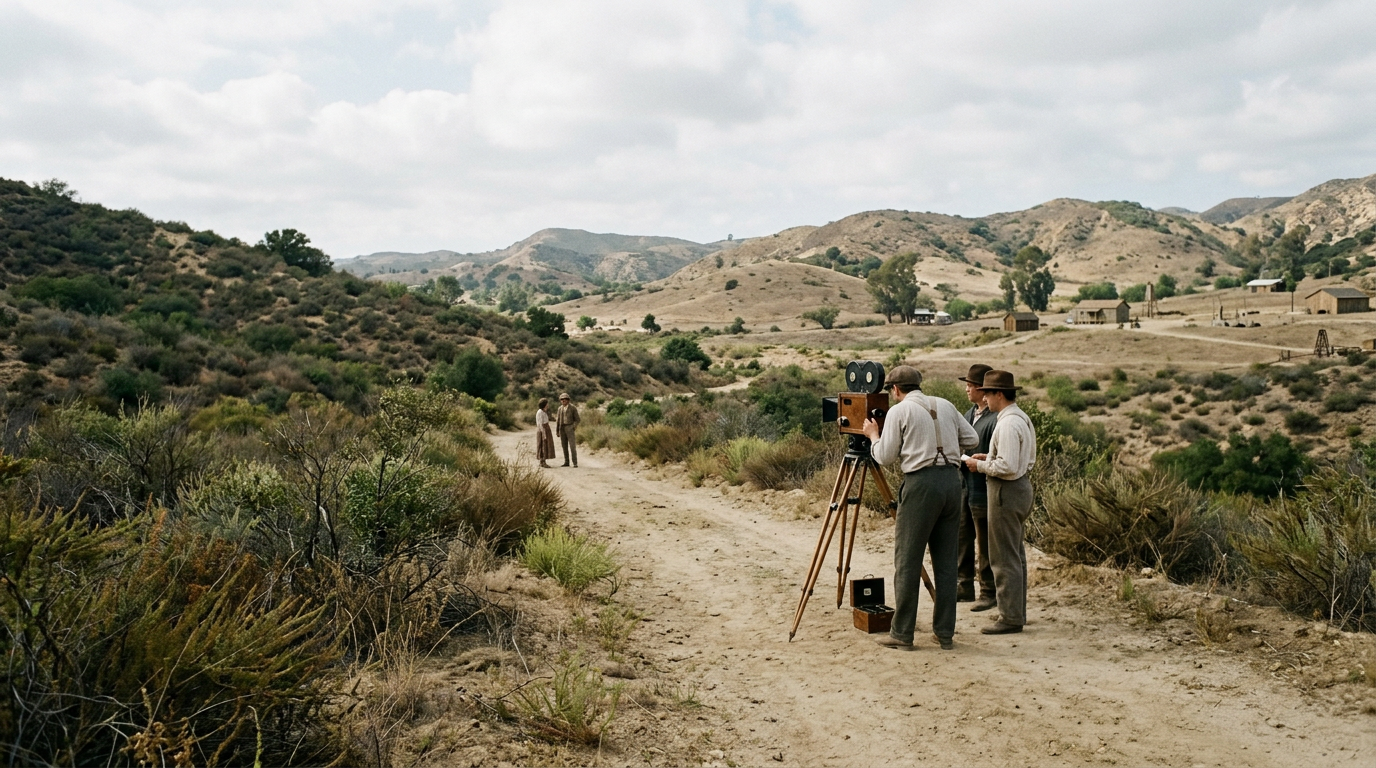
Hollywood owes its status as the global cinema capital to a legal feud. In the early 1910s, independent filmmakers fled the East Coast for Southern California to escape the litigious monopoly of Thomas Edison and his Motion Picture Patents Company.
Quick Answer
The American film industry moved to Los Angeles not just for the sunshine, but to evade Thomas Edison’s patent enforcement agents. By relocating 3,000 miles from New Jersey, directors could use unlicenced equipment without facing immediate lawsuits or physical sabotage.
- Distance: New Jersey to Los Angeles offered a 3,000-mile buffer from process servers.
- The Trust: Edison’s Motion Picture Patents Company (MPPC) held sixteen critical patents on film technology.
- Enforcement: The MPPC employed private detectives and thugs to seize unlicenced cameras.
- Legal Strategy: The Ninth Circuit Court of Appeals in California was known to be less friendly to patent monopolies than East Coast courts.
Why It Matters
This migration transformed a dusty agricultural suburb into a multi-billion dollar cultural powerhouse, proving that innovation often thrives when it breaks away from rigid intellectual property monopolies.
The Wizard of Menlo Park’s Iron Grip
Before Hollywood, the film industry lived in Fort Lee, New Jersey. Thomas Edison, who invented or bought the rights to the Kinetoscope and the vitascope, viewed movies as his personal intellectual property. In 1908, he formed the Motion Picture Patents Company, colloquially known as The Trust.
This cartel included major players like Biograph and Vitagraph. They controlled every aspect of the business, from the cameras used to shoot the film to the projectors in the theatres. If you wanted to make a movie, you paid Edison a royalty. If you refused, you were an outlaw.
The Great Escape to the West
Independent producers, led by figures like Carl Laemmle (who later founded Universal) and William Fox (founder of Fox Film Corp), grew tired of the constant harassment. Edison’s enforcers were known to smash cameras and even fire shots on sets to disrupt unlicensed productions.
California offered three distinct advantages that New Jersey lacked:
- Geography: The proximity to the Mexican border allowed filmmakers to smuggle equipment and themselves across the line if federal marshals showed up.
- Sunlight: Early film stock required immense amounts of light. Southern California offered 300 days of sun, reducing the need for expensive electric lighting.
- Legal Shielding: The distance made it prohibitively expensive for Edison’s lawyers to litigate every minor infraction in Western courts.
The Birth of the Studio System
Unlike the cramped, indoor stages of the East Coast, the vast landscapes of California allowed for the birth of the epic. D.W. Griffith and Cecil B. DeMille found that the varied terrain—mountains, deserts, and ocean—could stand in for almost any location on Earth.
By the time the Supreme Court finally dismantled Edison’s patent empire, the independents had already built massive permanent studios in Hollywood. The geographic shift was permanent. The rebels had become the establishment.
Practical Implications of the Migration
- Industry Consolidation: The move led to the Big Five and Little Three studios that dominated the Golden Age.
- Architectural Shift: Large outdoor backlots replaced the glass-roofed studios of New York and New Jersey.
- Creative Freedom: The lack of oversight allowed for longer films and more daring cinematography away from Edison’s rigid production standards.
Interesting Connections
- The Hollywood Sign: Originally read Hollywoodland, it was a 1923 real estate advertisement, not a tribute to the arts.
- Hattie McDaniel: The first Black Oscar winner highlighted the industry's complex social evolution following the move west.
- Technicolor: Just as Edison controlled early film, Technicolor later held a similar grip on colour processing.
Why was Fort Lee, New Jersey the original film capital?
It was close to the theatrical talent of Broadway and the manufacturing plants of Edison and Kodak. Until the move west, it was the primary hub for all American media production.
Did Edison ever try to build a studio in California?
Edison’s company did eventually film in the west, but by then, the independent studios had already cornered the market on talent and land. His focus remained largely on the technical and legal side rather than creative production.
Was the weather the only reason for the move?
No. While the 300 days of sunshine were a massive benefit for film exposure, the primary driver for the initial wave of independent filmmakers was escaping the legal reach of the MPPC.
Key Takeaways
- Resistance: Hollywood began as a hub for filmmakers resisting patent litigation.
- Distance: 3,000 miles provided the necessary buffer to ignore East Coast injunctions.
- Monopolies: The eventual collapse of Edison’s Trust allowed the new California studios to dominate globally.
- Environment: California’s diverse topography and light made it a superior technical choice once the legal threat subsided.
Frequently Asked Questions
Sources & References
 WikipediaThis source explains that the Motion Picture Patents Company (MPPC), formed by Thomas Edison in 1908, aimed to control critical patents and production in the early film industry.en.wikipedia.org
 Encyclopaedia BritannicaThis source verifies that filmmakers migrated to Southern California in the early 20th century to escape the patent restrictions imposed by Thomas Edison and his company on the East Coast.britannica.com
 Smithsonian National Museum of American HistoryThis Smithsonian Museum page confirms that Thomas Edison's Motion Picture Patents Company held a near-monopoly on early film production and distribution, leading independent filmmakers to seek new locations.americanhistory.si.edu