
Quick Answer
The Canary Islands are named after dogs, not the birds. Ancient Romans found large dogs there and called them 'Canariae Insulae', meaning islands of the dogs. Later, the yellow birds found on the islands were named after this canine connection. It's a surprising twist, showing how a colourful songbird ended up with a name inspired by ancient pups!
In a hurry? TL;DR
- 1The Canary Islands are named after dogs, not birds, deriving from the Latin 'Canariae Insulae' meaning Islands of the Dogs.
- 2Roman explorer Pliny the Elder documented large dogs on the islands, leading to their naming over a millennium before the birds were known.
- 3The canary bird was named after the islands in the 16th century, not the other way around, after being exported globally.
- 4The etymology traces back to the Latin word 'canis' (dog), making the islands unique for being named after apex fauna.
- 5The original dogs might have been ancestors of the Presa Canario breed or possibly a misinterpretation of monk seals.
- 6This naming convention highlights a linguistic reverse-engineering where the bird's name obscured the islands' original canine association.
Why It Matters
It's surprising that the famous Canary Islands are named after dogs, not the birds that share their name.
The Canary Islands derive their name from the Latin term Canariae Insulae, meaning Islands of the Dogs. While popular belief suggests the islands were named after the yellow songbirds, the reverse is true: the birds were named after the islands.
The Quick Answer
The Canary Islands were named by the Romans after large, fierce dogs found on the shores, not the birds. The canary bird, native to the archipelago, was named much later as an export of the islands.
Key Facts and Origins
- Latin Name: Canariae Insulae (Islands of the Dogs)
- Primary Source: Pliny the Elder, Naturalis Historia (AD 77)
- Island of Origin: Specifically Gran Canaria
- The Bird: Serinus canaria, named in the 16th century
- Current Symbol: The Presa Canario (Dogo Canario) is the official animal symbol of Gran Canaria
The Roman Discovery
The misconception that these Atlantic islands are named for their birds is a classic case of linguistic reverse-engineering. When European explorers began frequenting the islands in the 14th and 15th centuries, they found vast populations of small, greenish-yellow finches. Because these birds were unique to the region, they became known as canary birds.
However, the name existed more than a millennium before the birds became a global commodity. According to Pliny the Elder, writing in the first century, the Mauritanian King Juba II sent an expedition to the archipelago. The explorers did not report back about songbirds; they reported an abundance of dogs of huge size.
The Etymological Flip
The word canary comes from the Latin canis, the root for canine. Unlike other Atlantic archipelagos named for their flora or geographical features, the Canaries are a rare example of a place named for its apex fauna.
When the Spanish conquered the islands in the 1400s, they adopted the Roman nomenclature. As the birds were later bred and exported across Europe for their singing abilities, the name of the land became the name of the pet. By the time the English language fully integrated the word canary in the 1500s, the connection to dogs had been largely obscured by the popularity of the bird.
“The canary bird is a rare instance of a biological species being named after a specific piece of real estate, which was itself named after a different species entirely.”
The Search for the Original Dogs
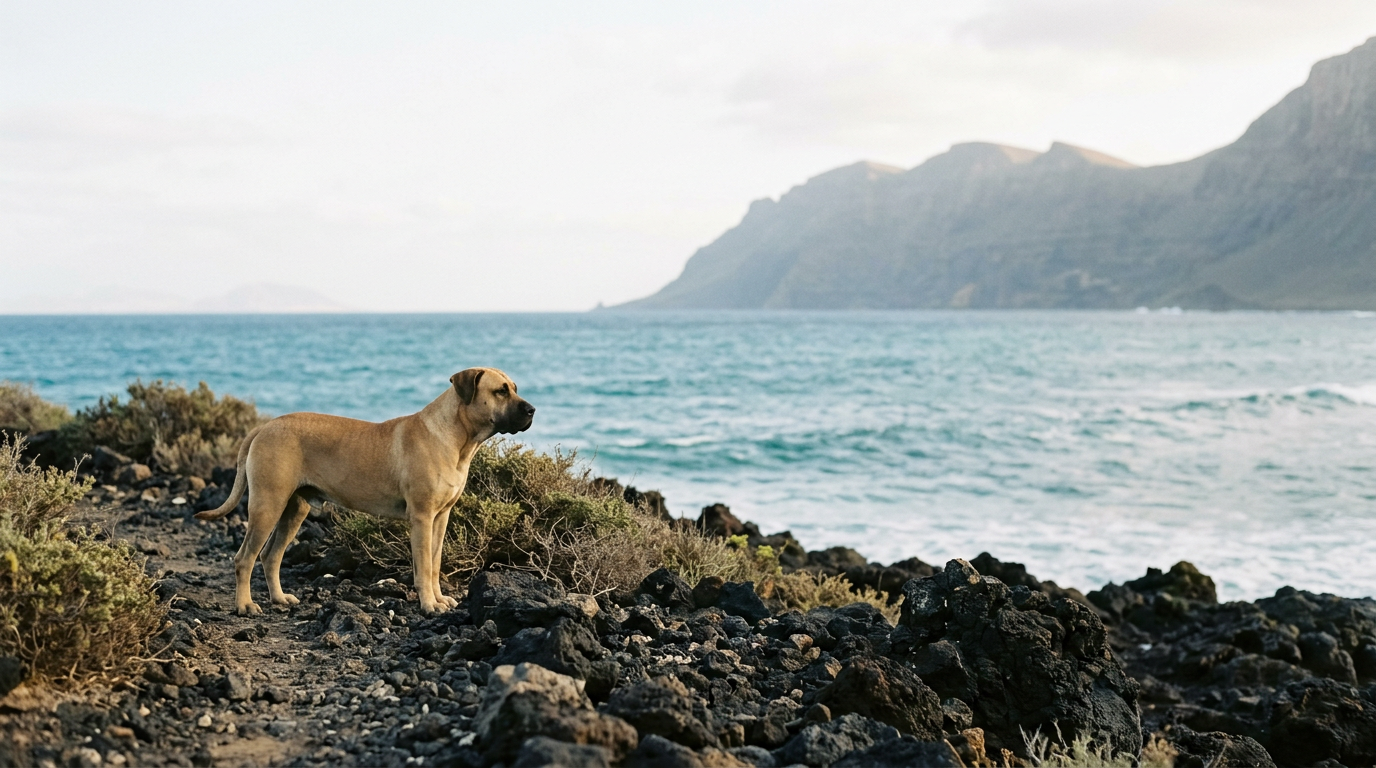
Historians and biologists have long debated what these original dogs actually were. Some scholars, such as those at the University of Las Palmas de Gran Canaria, suggest the Romans may have encountered the ancestors of the Presa Canario, a mastiff-like breed known for its strength and guarding instincts.
Others propose a more archaeological theory: the dogs were not animals at all, but a reference to the monk seals (Monachus monachus) that once thrived on the beaches. The Romans occasionally referred to seals as sea dogs (canis marinus). However, the presence of large land-based canines in the indigenous Guanche culture supports the literal interpretation.
Real-World Implications
The naming convention remains visible today in the heraldry of the islands. The official coat of arms of the Canary Islands features two dogs flanking a shield, a direct nod to the Latin roots of the territory.
In contrast to the Madeira Islands (named for timber) or the Azores (likely named for birds of prey), the Canaries serve as a reminder of how ancient maritime reports dictate modern geography. If King Juba’s men had been more impressed by the lizards or the volcanic peaks, the worlds most famous yellow songbird would likely carry a very different name today.
Were there ever wild canaries on the islands?
Yes, the wild Atlantic canary is native to the Canary Islands, the Azores, and Madeira. However, wild canaries are brownish-green; the bright yellow variety was created through selective breeding by Europeans in the 17th century.
Is the Presa Canario the same dog the Romans saw?
It is the modern descendant. The Presa Canario was refined over centuries, but it represents the same lineage of large, powerful mastiffs that the Romans documented during their initial surveys.
Does Gran Canaria mean Great Dog?
Literally, yes. Gran Canaria translates to Great Island of the Dogs. It was the specific island where the largest concentration of these animals was reportedly found by early explorers.
Key Takeaways
- Canine Roots: The name comes from the Latin canis, meaning dog.
- Roman Origin: Pliny the Elder first recorded the name in AD 77 based on reports from King Juba II.
- Naming Order: The islands were named first; the birds were named after the islands 1,400 years later.
- Heraldry: The official coat of arms still features two dogs as supporters.
- Breed Legacy: The Presa Canario dog remains the biological and cultural link to the islands ancient name.
Frequently Asked Questions
Sources & References
 Encyclopaedia BritannicaThis source confirms that the Canary Islands were named from the Latin 'Canariae Insulae', meaning 'Islands of the Dogs', and that the canary bird was subsequently named after the islands.britannica.com
 WikipediaThis source states that the Roman writer Pliny the Elder is credited with giving the name 'Canaria' to Gran Canaria due to its 'multitude of dogs of great size', and that the birds were later named after the islands.en.wikipedia.org
- WikipediaThis source confirms that the domestic canary bird (Serinus canaria domestica) is named after the Canary Islands, which themselves are named after dogs, from the Latin 'canariae insulae' ('islands of the dogs').en.wikipedia.org