
Quick Answer
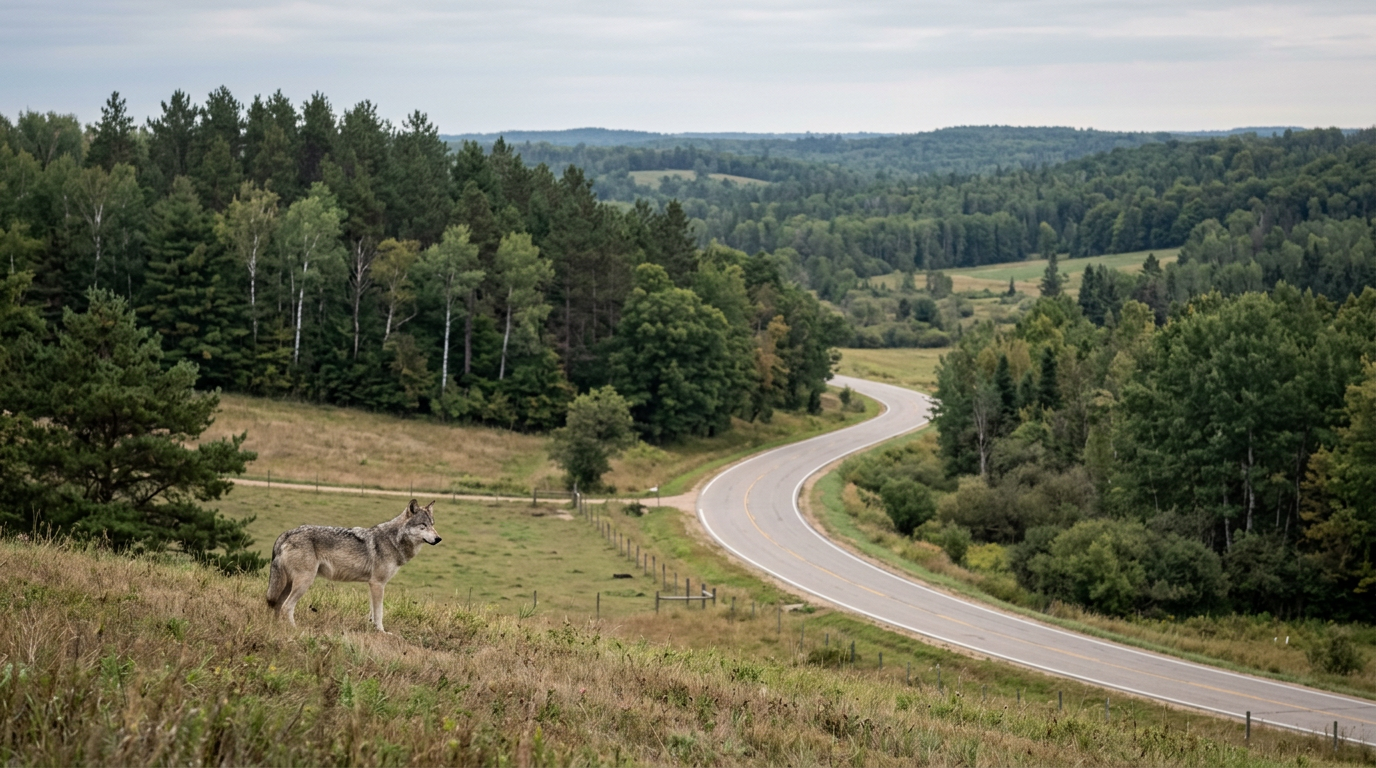
Introducing wolves to an area can cut deer-related car crashes by about a quarter. It’s not just that wolves hunt deer, but also that deer, fearing predators, avoid dangerous spots like roads. This shows how reintroducing natural predators can have a surprisingly direct and beneficial impact on human safety and reduce costly accidents.
In a hurry? TL;DR
- 1Wolf reintroduction reduces deer-vehicle collisions by 24%, saving lives and reducing damages.
- 2Most collision reduction (18%) stems from deer avoiding roads due to predator presence (landscape of fear).
- 3Actual wolf predation on deer accounts for only 6% of the collision reduction.
- 4Wolves act as a natural, 24-hour deterrent, unlike managed hunts or fences.
- 5The safety benefits of wolves in reducing accidents far outweigh livestock predation costs.
- 6Deer-vehicle collisions cost billions annually; wolves offer a natural subsidy for rural safety.
Why It Matters
The reintroduction of wolves surprisingly cuts deer-related car crashes by nearly a quarter, not just by hunting deer but by making them fear open spaces like roads.
Reintroducing wolves into an ecosystem reduces deer-related vehicle collisions by 24 per cent. This phenomenon, known as the landscape of fear, suggests that the mere presence of predators changes prey behaviour enough to save human lives and millions of pounds in damages.
Quick Answer
The presence of wolves in a county reduces deer-vehicle collisions by nearly a quarter. While wolves do hunt deer, the majority of this reduction comes from deer avoiding roads and clearings where they are most vulnerable to predation.
- 24 percent: The average reduction in deer-vehicle collisions after wolves arrive in a county.
- 6 percent: The amount of reduction attributed to wolves actually eating the deer.
- 18 percent: The amount of reduction caused by behavioural changes in the deer population.
- 10.9 million dollars: The estimated annual savings in accident costs for the state of Wisconsin alone.
Why It Matters
This research proves that large predators provide a quantifiable economic and safety benefit to human infrastructure that far outweighs the costs of livestock predation.
The Trophic Cascade of the Tarmac
In 2021, a study published in the Proceedings of the National Academy of Sciences (PNAS) revealed a counterintuitive solution to one of North America’s most expensive rural problems. Jennifer Raynor and her colleagues at Wesleyan University found that when wolves return to a region, car crashes involving deer plummet.
Unlike other methods of population control, such as managed hunts or fences, wolves provide a 24-hour deterrent that changes how deer move through the physical world. The researchers analysed 22 years of data across Wisconsin, comparing counties with growing wolf populations to those without.
The Landscape of Fear
The most striking finding of the PNAS study is that wolves do not need to kill every deer to make roads safer. In fact, actual predation accounts for only a quarter of the total reduction in accidents. The remaining 75 per cent of the benefit comes from a psychological shift in the deer population.
Ecologists call this the landscape of fear. When wolves are present, deer become hyper-aware of their surroundings. They avoid linear features like roads, pipelines, and trails, which wolves use as easy travel corridors. By staying deeper in the brush and away from the clear sightlines of the roadside, deer are significantly less likely to wander into the path of a moving vehicle.
Economic Realities vs. Ecological Myths
The conversation surrounding wolf reintroduction is often dominated by the cost of lost livestock. In Wisconsin, the state pays roughly 174,000 dollars annually in compensation to farmers for animals killed by wolves.
However, the Wesleyan study found that the reduction in car accidents saves the state 10.9 million dollars every year. This means the economic benefits of having wolves in the woods are 63 times greater than the costs of their predation on cattle and sheep.
Compared to human hunters, who generally harvest deer during a specific autumn window, wolves exert pressure year-round. Unlike fences, which simply redirect deer to the next available gap in the wire, wolves train the population to perceive high-risk areas as permanent no-go zones.
Practical Applications
- Urban Planning: Integrating wildlife corridors can enhance the natural movement of predators, keeping herbivore populations away from residential roads.
- Insurance Premiums: Actuaries may eventually factor the presence of apex predators into regional risk assessments for vehicle coverage.
- Conservation Policy: Environmental groups can use hard economic data regarding road safety to counter traditional arguments against predator reintroduction.
Interesting Connections
The word predator comes from the Latin praedator, meaning a plunderer. While we often view them as taking away from an environment, this data suggests they actually add a layer of systemic protection. In Europe, similar effects have been observed with the Eurasian lynx, which helps control roe deer populations and reduces agricultural damage.
This mirrors the concept of rewilding, a conservation strategy focused on restoring natural processes and wilderness areas. If you are interested in how animals shape our world, you might want to look into how whales act as carbon sinks or how the reintroduction of beavers prevents flash flooding.
Do wolves make roads more dangerous for other animals?
Generally no. Because wolves use roads as travel paths, other prey species also learn to avoid these areas, leading to a broader reduction in cross-species traffic accidents.
Is this effect seen in suburban areas?
Currently, the data focuses on rural counties where wolves can maintain established territories. In highly fragmented suburban landscapes, the lack of space for wolves means the effect is less pronounced, though coyotes may offer a smaller-scale version of the same benefit.
Why don't human hunters have the same effect?
Hunters usually operate during daylight and within specific seasons. Deer learn to adapt to human presence quickly. Wolves are a constant, 365-day threat that forces a permanent change in deer navigation habits.
Key Takeaways
- Wolves reduce deer-related car accidents by 24 per cent on average.
- Most of the safety benefit comes from deer avoiding roads out of fear, not just being eaten.
- The economic savings from fewer crashes are significantly higher than the costs of livestock loss.
- Large predators serve as a natural, low-cost form of infrastructure management.
Frequently Asked Questions
Sources & References
- 1PNASThis source directly publishes the 2021 study by Raynor, et al., which found that the return of wolves to Wisconsin counties is associated with a 24% reduction in deer-vehicle collisions and details how this phenomenon, known as the 'landscape of fear,' changes deer behavior, leading to fewer collisions.pnas.org
 Smithsonian MagazineThis article discusses the findings of the 2021 PNAS study, corroborating that wolves reduce deer-vehicle collisions by 24% and explaining that deer avoid roads due to the 'landscape of fear' created by predator presence, rather than solely through direct predation.smithsonianmag.com