
Quick Answer
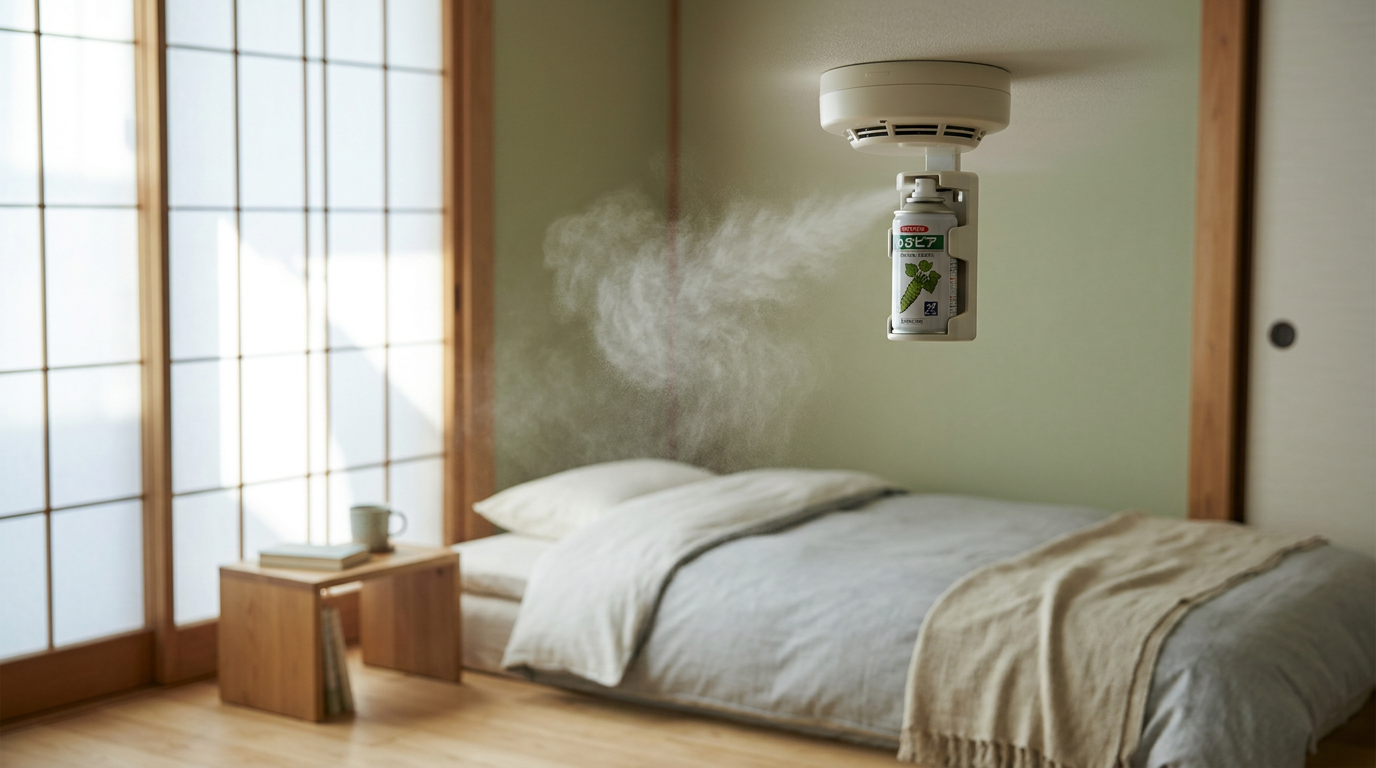
Japanese researchers have invented a smoke alarm for deaf people that sprays the strong scent of wasabi to wake them. This is brilliant because instead of relying on sound, it uses a powerful smell to trigger a physical reaction, ensuring people wake up effectively and safely.
In a hurry? TL;DR
- 1Japanese researchers developed a wasabi-scented smoke alarm to wake deaf individuals by releasing allyl isothiocyanate.
- 2The wasabi mist triggers the trigeminal nerve, creating a stinging sensation that effectively arouses sleepers within two minutes.
- 3Unlike sound-based alarms, this olfactory alarm bypasses auditory processing, directly stimulating the brain's arousal system.
- 4Tested on 14 subjects, including deaf individuals, the alarm achieved a 100% wake-up rate in under two minutes.
- 5The wasabi-based alarm is non-toxic at calibrated concentrations, ensuring effective alerting without harm.
- 6A commercialized version links a smoke detector to a canister dispensing the pungent mist for practical application.
Why It Matters
It's surprisingly useful that a fiery Japanese condiment can be used to create a more effective smoke alarm for people who can't hear.
Traditional fire alarms rely entirely on sound, which is useless for the three hundred and sixty million people worldwide with disabling hearing loss. To solve this, Japanese researchers developed a smoke alarm that uses an airborne mist of allyl isothiocyanate—the pungent compound in wasabi—to wake sleepers within two minutes.
Key Facts and Figures
- Innovation: Wasabi-based olfactory fire alarm
- Lead Researcher: Makoto Imai of Shiga University of Medical Science
- Wake-up Rate: 100 percent of test subjects in under two minutes
- Chemical Agent: Allyl isothiocyanate (synthesized wasabi extract)
- Recognition: 2011 Ig Nobel Prize in Chemistry
The Pungent Science of Waking Up
Standard smoke detectors use high-decibel sirens to alert occupants. For those who cannot hear them, the traditional alternatives are vibrating pillows or flashing strobe lights. However, these require the individual to be in direct physical contact with a device or facing a specific direction.
In 2009, a team led by Makoto Imai at Shiga University of Medical Science looked for a third physiological trigger: the sense of smell. They tested over one hundred different odours, including rotten eggs and peppermint, to see which could penetrate a deep sleep without causing permanent respiratory damage.
The researchers discovered that the sharp, stinging sensation of wasabi was the perfect irritant. Unlike a pleasant smell that might be integrated into a dream, the allyl isothiocyanate in wasabi triggers the trigeminal nerve. This creates a physical sensation of stinging or burning in the nasal passages that forces the brain into a state of alertness.
Why Wasabi Works Where Others Fail
During the testing phase, the team exposed fourteen subjects—including several who were deaf—to the concentrated wasabi mist while they were asleep. Unlike the scent of smoke, which often puts people into a deeper coma-like state due to carbon monoxide, the wasabi mist successfully roused every single participant.
The most impressive result was the speed of the reaction. One deaf subject woke up just ten seconds after the mist was released into the room. On average, the subjects were fully conscious and alert within eighty to one hundred seconds.
Compared to other olfactory stimulants, wasabi is non-toxic in the concentrations used. The researchers had to calibrate the spray carefully; too little would fail to wake the sleeper, while too much would cause unbearable stinging that might hinder an evacuation.
Real-World Application
The technology was eventually brought to market by Air Water Proteca, a Japanese company specializing in safety equipment. The device consists of a standard smoke detector linked to a canister that dispenses the pungent mist when triggered.
While the device is significantly more expensive than a standard five-pound hardware store alarm, it provides a level of independence for the hearing impaired that was previously unavailable. It is particularly effective in hotels and care facilities where occupants may not be familiar with the layout of the building and need an immediate, jarring wake-up call to begin evacuation.
Does the alarm smell like a sushi restaurant?
Not exactly. While it uses the active component of wasabi, the concentration is designed to be an irritant rather than a culinary aroma. It is designed to sting the nose, not stimulate the appetite.
Can you sleep through the smell?
In the clinical trials, not a single person remained asleep. The trigeminal nerve response is an evolutionary reflex designed to protect humans from noxious gases, making it nearly impossible to ignore.
Is it safe for people with asthma?
The researchers tested the concentration levels to ensure they were below the threshold of causing respiratory distress. However, like any airborne irritant, it is designed to be used only in life-threatening emergencies.
Key Takeaways
- Sensory Pivot: The device swaps sound for smell to reach users who cannot hear traditional sirens.
- Biological Trigger: It targets the trigeminal nerve rather than just the olfactory bulb to ensure a physical waking response.
- Proven Efficacy: Clinical trials showed a 100 percent success rate in waking subjects within two minutes.
- Specialized Safety: This innovation represents a shift toward inclusive design in emergency technology.
If you enjoyed learning about unique Japanese innovations, you might like our articles on the Forest Bathing trend, the history of the Emoji, or the secrets of the world's oldest hotel.
Innovation is rarely about creating something entirely new; often, it is just about taking a condiment from the dinner table and putting it in the ceiling.
Frequently Asked Questions
Sources & References
- 1The Japan TimesThis source reports on Makoto Imai and his team's 'Wasabi-based fire alarm' that won the 2011 Ig Nobel Prize in Chemistry, and mentions its use of allyl isothiocyanate to awaken sleepers.japantimes.co.jp
- 2Ig Nobel PrizeThis page lists the winners of the 2011 Ig Nobel Prize, specifically citing Makoto Imai, Eiji Ohno, and their co-researchers for 'determining the ideal airborne density of wasabi (allyl isothiocyanate) to awaken sleeping people in an emergency, and for applying this knowledge to invent a wasabi alarm'.improbable.com