
Quick Answer
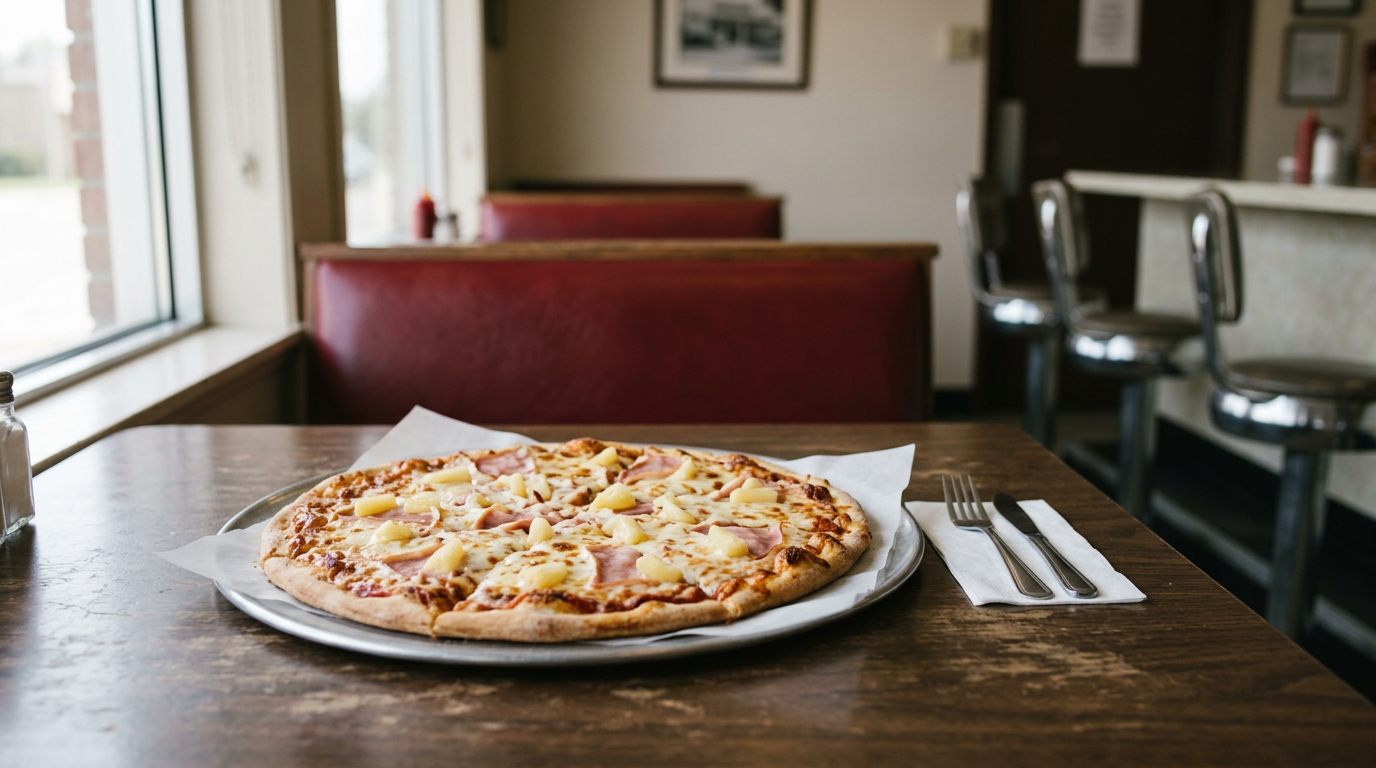
Hawaiian pizza wasn't invented in Hawaii, but in Ontario, Canada, in 1962 by a Greek immigrant, Sam Panopoulos. This might surprise you because it became a worldwide phenomenon, showing how unexpected culinary fusions can take the world by storm and redefine favourite dishes.
In a hurry? TL;DR
- 1Hawaiian pizza originated in Ontario, Canada in 1962, invented by Sam Panopoulos.
- 2The name 'Hawaiian' comes from the brand of canned pineapple used, not Hawaii itself.
- 3This pizza's creation was influenced by the 1960s Tiki culture trend.
- 4The sweet and savory combination works due to acidity cutting fat and sugar caramelization.
- 5Hawaiian pizza sparked a global debate, challenging traditional savory pizza norms.
- 6Similar fruit-and-meat combinations existed in other cuisines and dishes before 1962.
Why It Matters
It's surprising that the divisive Hawaiian pizza, a blend of sweet and savoury, was actually invented in Canada by a Greek immigrant, not in Hawaii.
Hawaiian pizza was not born in the tropics, but in the chilly climes of Chatham, Ontario. In 1962, Greek-born restaurateur Sam Panopoulos decided to toss canned pineapple onto a pizza at his Satellite Restaurant, forever altering the culinary landscape.
Key Facts at a Glance
- Inventor: Sam Panopoulos
- Location: Satellite Restaurant, Chatham, Ontario, Canada
- Year of Origin: 1962
- First Topping Pair: Canned pineapple and ham (later bacon)
- Named After: The brand of canned pineapple used (Hawaiian)
Why It Matters
The existence of Hawaiian pizza represents the ultimate culinary disruption, proving that a Greek immigrant in Canada could redefine an Italian staple using a South American fruit. It is the most famous example of the sweet-and-salty flavour profile causing a permanent, global schism in food culture.
The Experiment at Satellite Restaurant
Sam Panopoulos arrived in Canada in 1954, bringing a curiosity for the emerging fast-food culture of North America. At the time, pizza was still a relatively niche novelty in Ontario, often viewed as a simple snack consisting of dough, tomato sauce, and cheese.
Panopoulos and his brothers wanted to stand out. Inspired by the American trend of Tiki culture, which peaked in the mid-20th century, he opened a tin of pineapple and added it to the pie. The name Hawaiian was not a tribute to the island, but a literal reading of the label on the can.
The Science of the Schism
Why does this combination work for some and offend others? According to sensory scientists, the pineapple-ham pairing relies on the principle of food bridging. The acidity of the pineapple cuts through the heavy fats of the cheese and cured meat, while the sugars undergo caramelisation in the high-heat pizza oven.
However, the backlash is equally grounded in tradition. Unlike other regional variations, Hawaiian pizza directly challenges the savoury-only sanctity of the Neapolitan tradition. In 2017, the debate reached international proportions when the President of Iceland, Gudni Johannesson, joked that he would ban pineapple on pizza if he could.
Historical Context and Global Spread
While Panopoulos is the credited creator, the concept of mixing fruit with meat existed long before 1962. Middle Eastern cuisine frequently pairs lamb with apricots or pomegranates, and the German Toast Hawaii—an open-faced sandwich with ham, cheese, and pineapple—predates the pizza by seven years.
Practical Applications
- The Flavour Balance: When making this at home, ensure the pineapple is drained thoroughly to avoid a soggy crust; the contrast between crispy dough and juicy fruit is essential.
- The Upscale Pivot: Modern chefs have attempted to rehabilitate the dish by using fresh, grilled Maui Gold pineapples and high-quality prosciutto instead of canned chunks and Canadian bacon.
- The Diplomatic Tool: Use the topic as a low-stakes icebreaker in social settings; everyone has a firm opinion, yet no one actually gets hurt.
Interesting Connections
- Cultural Irony: While it is Canada’s most famous culinary export alongside poutine, Hawaiian pizza is often loathed in Italy, the birthplace of pizza.
- Etymology: The word pineapple comes from its resemblance to a pine cone, but the fruit itself is native to South America, not Hawaii.
- The Pineapple King: James Dole, the man who turned Hawaii into a pineapple powerhouse, lived to see his product become a global commodity, though he died four years before the Hawaiian pizza was born.
Why is it called Hawaiian pizza if it’s from Canada?
The name was taken directly from the brand of canned pineapple Panopoulos used. It was a marketing choice rather than a geographic one, capitalising on the 1960s fascination with tropical aesthetics.
Who was Sam Panopoulos?
He was a Greek immigrant who moved to Canada and operated several restaurants. He never patented his creation, viewing it simply as an experiment that luckily caught on with his local customers.
Is Hawaiian pizza actually popular in Hawaii?
While it is available there, it is no more native to the islands than it is to Rome. In Hawaii, traditional local food is more likely to feature taro, poi, or kalua pig.
Key Takeaways
- Origin Point: Invented in 1962 in Chatham, Ontario.
- The Creator: Greek immigrant Sam Panopoulos.
- Naming Convention: Derived from the brand of canned fruit, not the location.
- Global Impact: It remains one of the most divisive yet best-selling pizza varieties in the world.
The next time you see a slice of Hawaiian, remember it is less a taste of the beach and more a taste of 1960s Canadian experimentation. It is a reminder that the most enduring traditions often start as a bored cook wondering what happens if they open a tin of fruit.
Frequently Asked Questions
Sources & References
 WikipediaBackground and contexten.wikipedia.org
 Scientific AmericanScientific research and analysisscientificamerican.com
 BBCReporting and verificationbbc.co.uk
- WikipediaThis source confirms that the Hawaiian pizza was invented by Sam Panopoulos at the Satellite Restaurant in Chatham, Ontario, Canada in 1962.en.wikipedia.org