
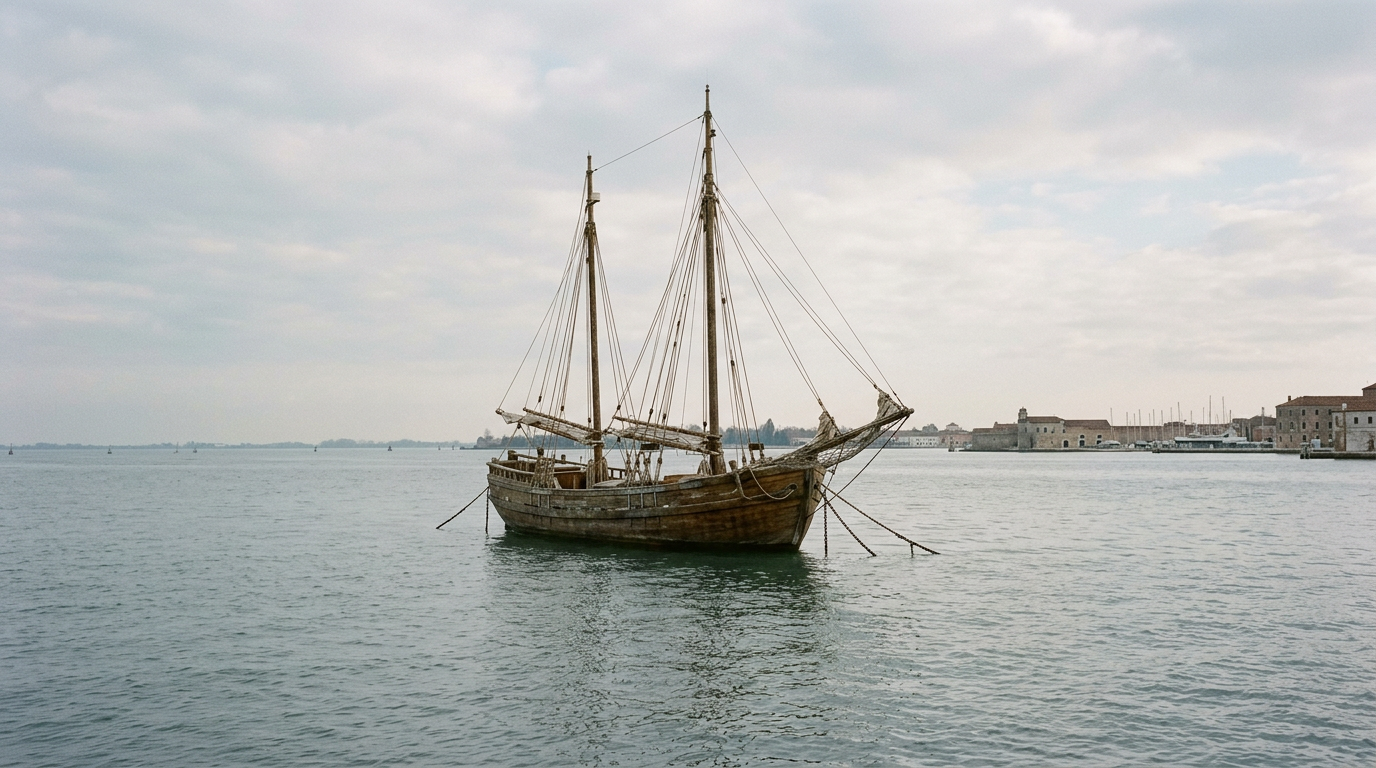
Quick Answer
"Quarantine" means isolating people or things to prevent the spread of disease, and it originates from the Italian for "forty days." This was the mandatory waiting period for ships arriving during plague outbreaks. It’s interesting because this centuries-old practice, though based on observation, is the ancestor of today's vital public health measures that keep us safe.
In a hurry? TL;DR
- 1Quarantine originates from the Italian "quaranta giorni" (forty days), the original isolation period for ships to prevent plague spread.
- 2The concept of quarantine marked the beginning of organized public health, based on observed contagion patterns.
- 3Venice implemented the first systematic maritime quarantine policy in 1348 during the Black Death.
- 4The forty-day period, though possibly influenced by tradition, was sufficient to cover the plague's incubation.
- 5Early quarantine stations (Lazarettos) were established to isolate ships and decontaminate goods.
Why It Matters
It's fascinating how a centuries-old quarantine rule, born from plague-era observations, still forms the bedrock of our modern public health strategies.
The term quarantine derives from the Venetian Italian phrase quaranta giorni, meaning forty days. This specific duration was the mandatory isolation period imposed on ships arriving in Venice during the 14th-century Black Death to ensure they were not carrying the plague.
Quick Facts: The 40-Day Rule
- Term: Quarantine
- Etymological Root: Italian (Venetian) quaranta giorni
- Original Duration: 40 days
- Primary Catalyst: The Black Death (Yersinia pestis)
- First Institutional Use: Ragusa (modern-day Dubrovnik) and Venice
- Medical Logic: Pre-germ theory observation of incubation periods
Why It Matters
The concept of quarantine represents the birth of organized public health. Long before humans understood bacteria or viruses, they identified the correlation between arrival and contagion, creating a mathematical buffer that remains our primary defense against global outbreaks today.
The Venetian Solution
In 1348, the Black Death was ravaging Europe, eventually claiming roughly one-third of the continent’s population. As a hub of global trade, Venice was particularly vulnerable. The city state implemented the world’s first systematic maritime isolation policy.
Originally, the port of Ragusa (a Venetian colony) mandated a thirty-day period, known as a trentine. However, by the time the practice was codified in Venice, the duration was extended to forty days. Ships were required to sit at anchor at the Isola di Santa Maria di Nazaret, a small island in the lagoon, before any crew or cargo could touch the mainland.
The Magic of Forty
Historians and epidemiologists still debate why forty was the chosen number. From a biological perspective, it was accidentally brilliant. According to research published in the Emerging Infectious Diseases journal by the Centers for Disease Control and Prevention (CDC), forty days was more than sufficient to cover the incubation period of the bubonic plague, which usually manifests within two to ten days.
However, the choice was likely rooted in culture rather than clinical trials. The number forty holds significant weight in Judeo-Christian tradition: the forty days of the Great Flood, the forty years the Israelites wandered the desert, and the forty days Jesus spent in the wilderness.
The Evolution of Isolation
Compared to modern quarantine periods, which for COVID-19 were often reduced to five or ten days based on viral shedding data, the Venetian forty-day rule was an extreme precaution. Unlike other medieval cities that relied solely on prayer or flight, Venice treated the plague as a logistical problem that could be managed through border control.
This shifted the burden of disease from the city’s inhabitants to the arrivals. If a crew survived forty days at sea without a fresh outbreak, they were deemed safe. If they died, the ship remained a floating tomb, separated from the healthy population by the natural barrier of the lagoon.
Practical Applications Today
While we no longer use the biblical forty-day standard, the Venetian model informs current global protocols:
- Agricultural Controls: Livestock are often held for 30 days when crossing international borders to check for Foot and Mouth disease.
- Space Exploration: Upon returning from the moon in 1969, the Apollo 11 astronauts were quarantined for 21 days to ensure no lunar pathogens were brought to Earth.
- Bio-Containment: Modern Level 4 labs use airlocks and pressure gradients that are technological descendants of the Venetian lagoon islands.
Interesting Connections
- Lazaretto: The term for a quarantine station comes from the island of Santa Maria di Nazaret, conflated with Lazarus, the patron saint of lepers.
- Cordon Sanitaire: A related French term referring to a guarded line preventing movement in or out of an infected area.
- The Decameron: Boccaccio’s famous literary work is set among a group of youths who essentially self-quarantine in a villa outside Florence to escape the plague.
Key Takeaways
- The word quarantine literally means forty days in Venetian Italian.
- It was invented as a defensive trade policy during the 14th-century Black Death.
- The duration was likely influenced by religious symbolism as much as medical observation.
- Venice created the first dedicated quarantine islands, known as Lazarettos.
- Today, the term is used for any period of isolation, regardless of the actual number of days.
Frequently Asked Questions
Sources & References
 WikipediaThis source explains that the word 'quarantine' is derived from 'quaranta giorni,' meaning 'forty days' in Venetian Italian, referring to the 40-day isolation period imposed on ships during the Black Death.en.wikipedia.org
- 2CDC Website - Injuries from Falling CoconutsThis academic article from the CDC's journal discusses the historical context of quarantine, including the 40-day period during the Black Death, and references the 'divine and mystic' significance of the number 40 in various traditions.wwwnc.cdc.gov