
Quick Answer
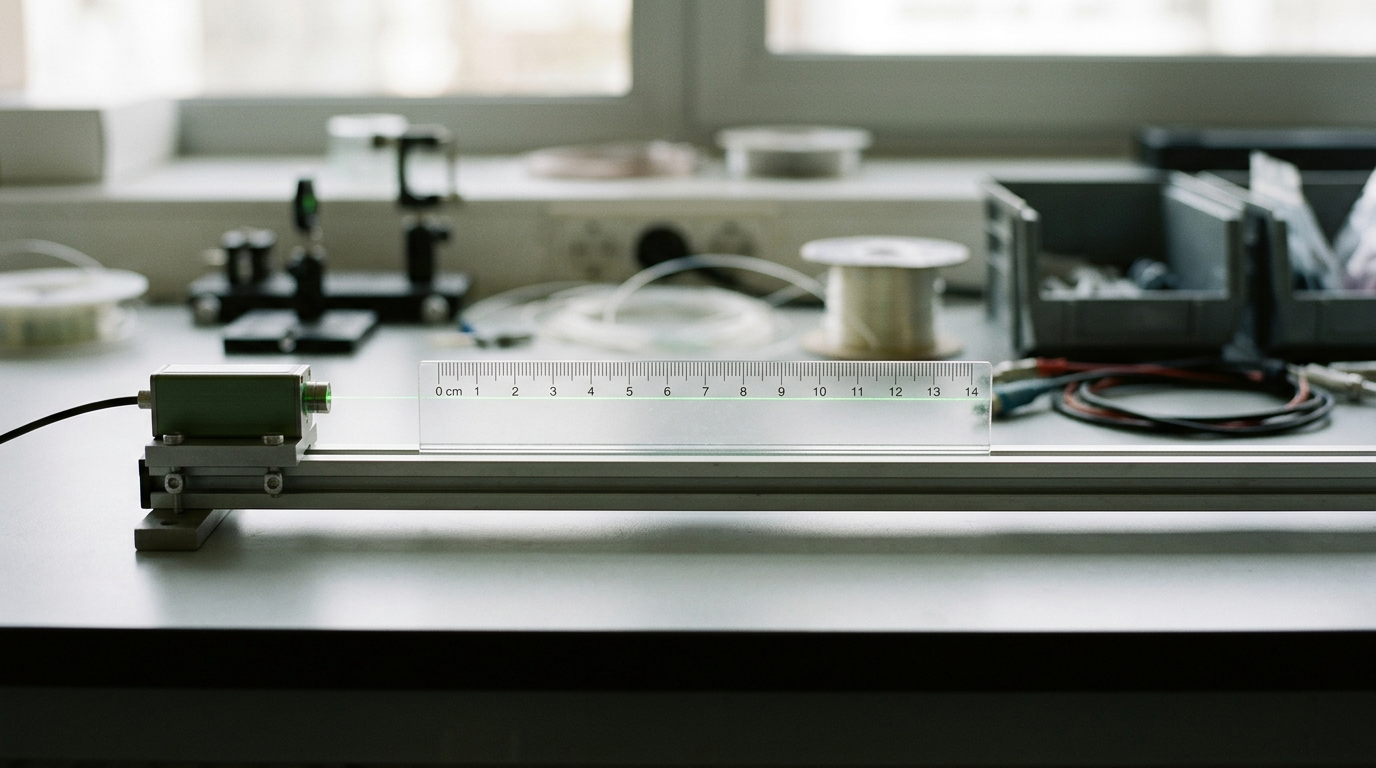
A "jiffy" isn't just a casual way to say "a moment"; it's a real, incredibly short unit of time in physics. It's defined as the time it takes light to travel one centimetre – about 33 trillionths of a second. This is fascinating because it connects our everyday expressions to the fundamental constant of the universe: the speed of light.
In a hurry? TL;DR
- 1A physics 'jiffy' is the time light takes to travel 1 cm, approximately 33.3 picoseconds, anchoring language to the speed of light.
- 2In computing, a 'jiffy' often represents a system clock tick, typically lasting 1 to 10 milliseconds.
- 3Electronics uses 'jiffy' for AC power cycles, equating to 1/50 or 1/60 of a second.
- 4Chemist Gilbert Newton Lewis formalized the physics definition of a jiffy in the early 20th century.
- 5The physics 'jiffy' is crucial for measuring extremely fast events in particle physics and quantum mechanics.
- 6While formalized in physics, the word 'jiffy' existed earlier as slang for a brief moment or confusion.
Why It Matters
It's surprising that a common, vague expression like "a jiffy" actually has precise, useful scientific definitions related to the speed of light.
A jiffy is a precise unit of measurement in physics representing the time it takes for light to travel one centimetre in a vacuum, approximately 33.3564 picoseconds. While used colloquially to mean an indefinite brief moment, it serves as a rigorous metric in high-frequency electronics and quantum mechanics.
Quick Summary
- Physics Definition: The time light travels 1 cm (approx. 33.3 picoseconds).
- Computing Definition: Often refers to the duration of one tick of the system clock (commonly 1ms to 10ms).
- Electronics Definition: The time for one cycle of alternating current (1/50 or 1/60 of a second).
- Origin: Coined by 18th-century chemist Gilbert Newton Lewis.
Why It Matters
Understanding the jiffy transforms a vague idiom into a window into the speed of the universe, illustrating how scientists anchor casual language to the fundamental constant of the speed of light.
The Scale of a Jiffy
| Context | Duration | Application |
|---|---|---|
| Physics | 33.3564 picoseconds | Light travel over 1 cm |
| Computing | 1–10 milliseconds | Operating system intervals |
| Electronics | 16.6 or 20 milliseconds | Mains power cycles |
| Everyday Speech | Indeterminate | I will be there in a jiffy |
The Man Who Measured a Moment
The transition of jiffy from slang to science is credited to Gilbert Newton Lewis, an American physical chemist famous for discovering the covalent bond. In the early 20th century, Lewis proposed the jiffy as a unit of time that light takes to travel one centimetre.
Unlike other units based on the rotation of the Earth or the vibration of atoms, Lewis wanted a unit tied directly to the most reliable constant in the cosmos: the speed of light. By defining a jiffy this way, he created a measurement that remains identical regardless of where you are in the universe.
One Centimetre of Light
To grasp how short a physics jiffy is, consider that a picosecond is one-trillionth of a second. A jiffy is roughly 33 of these. According to researchers at the National Institute of Standards and Technology (NIST), this scale is necessary because light moves so incredibly fast—roughly 300,000 kilometres per second—that human-scale seconds are far too clumsy for subatomic calculations.
In particle physics, where researchers track the decay of unstable isotopes or the collision of protons, measuring time by light-distance is more practical. Whereas a second feels like an eternity in a particle accelerator, a jiffy provides a manageable resolution for events occurring at the speed of light.
The Computing Confusion
If you ask a software engineer how long a jiffy is, you will get a very different answer. In computing, a jiffy is the duration of a single tick of the system timer interrupt. It is the heartbeat of a computer.
In older Linux kernels, this was often set to 10 milliseconds. In modern high-performance systems, it might be 1 millisecond. Unlike the physics jiffy, which is a universal constant, the computing jiffy is programmable. It is a reminder that in the world of technology, time is a resource to be allocated, not just a physical reality to be measured.
Practical Applications
- High-Speed Trading: Financial algorithms operate in timeframes approaching the jiffy to execute trades before competitors.
- Supercomputing: Precise timing is required to synchronise thousands of processors working on a single task.
- Quantum Optics: Researchers use femtosecond lasers (even shorter than jiffies) to photograph chemical bonds breaking in real-time.
The Electronics Standard
In the early days of television and radar, engineers used jiffy to refer to the period of an alternating current (AC) power cycle. In the United Kingdom, where the mains frequency is 50Hz, a jiffy was 1/50th of a second (20 milliseconds). In the United States, at 60Hz, it was 1/60th of a second. This measurement helped engineers synchronise the scanning lines on old cathode-ray tube televisions.
How many jiffies are in one second?
In the physics definition, there are approximately 30 billion jiffies in a single second. In computing, there are typically between 100 and 1,000.
Is a jiffy the shortest unit of time?
No. The Planck time is the smallest theoretical unit of time, representing the time it takes light to travel one Planck length. It is roughly 10 to the power of minus 43 seconds, making a jiffy look sluggish by comparison.
Did Gilbert Newton Lewis invent the word?
He did not invent it, but he was the first to give it a mathematical value. Before him, it was merely a colloquialism used by writers like Charles Dickens to signify haste.
Key Takeaways
- Scientific Precision: A jiffy is exactly the time light takes to travel one centimetre.
- Context Matters: The length of a jiffy changes depending on whether you are talking to a physicist, a programmer, or an electrician.
- Universal Constant: By tying the jiffy to the speed of light, science turned a slang word into a fundamental metric.
- Human Scale: We use the word to feel fast, but the reality is billions of times faster than our brains can perceive.
Frequently Asked Questions
Sources & References
 WikipediaBackground and contexten.wikipedia.org
 Scientific AmericanScientific research and analysisscientificamerican.com
 BBCReporting and verificationbbc.co.uk
- WikipediaThis source defines the 'jiffy' in physics as the time light takes to travel one centimeter in a vacuum, stating its value as approximately 33.3564 picoseconds.en.wikipedia.org