
Quick Answer
Incredibly, jockey Frank Hayes won a race in 1923 after suffering a fatal heart attack mid-gallop. His horse, Sweet Kiss, instinctively carried his lifeless body over the finish line first. This bizarre, true event highlights the unpredictable nature of racing and the remarkable bond between horse and rider, even in the most tragic circumstances.
In a hurry? TL;DR
- 1Jockey Frank Hayes won a 1923 horse race posthumously after dying of a heart attack mid-race.
- 2His horse, Sweet Kiss, continued racing and crossed the finish line first despite Hayes's death.
- 3Hayes's victory is a rare example of biological momentum and equestrian instinct at play.
- 4The extreme weight-cutting regime likely contributed to Hayes's fatal heart attack during the race.
- 5Hayes's horse, Sweet Kiss, was never raced again after the incident, earning the nickname 'Sweet Kiss of Death'.
- 6The event prompted increased scrutiny of jockey health and safety regulations in horse racing.
Why It Matters
It's fascinating that a jockey once won a horse race after dying mid-race, demonstrating the incredible instinct of both horse and rider.
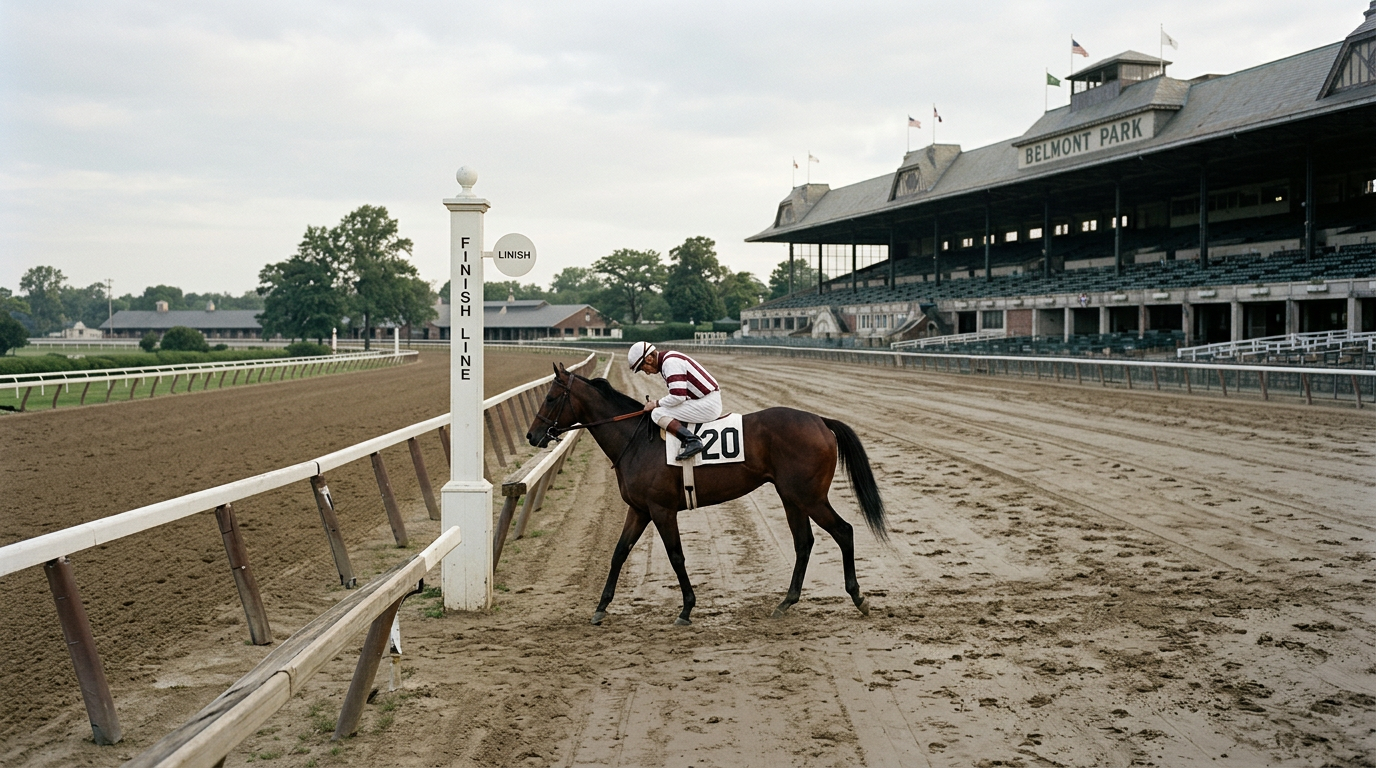
In June 1923, jockey Frank Hayes became the first and only person in history to win a competitive horse race while deceased. Despite suffering a fatal heart attack mid-race at Belmont Park, his body remained in the saddle as his horse, Sweet Kiss, crossed the finishing line in first place.
The Vital Statistics
- Date: 4 June 1923
- Location: Belmont Park, New York
- Jockey: Frank Hayes (aged 35)
- Horse: Sweet Kiss
- Odds: 20-1 outsider
- Official Result: First Place (Posthumous)
Why It Matters
This event stands as the ultimate example of biological momentum and equestrian instinct. It challenges our understanding of athletic performance, proving that in rare, macabre instances, the synergy between a horse and its rider can transcend the death of the human pilot.
The Race at Belmont Park
Frank Hayes was not a celebrated champion. In fact, he was primarily a stable hand and long-time trainer who had never won a race in his life. At 35 years old, he was considered old for a jockey, and he had spent the days leading up to the event engaged in a brutal weight-cutting regime to meet the 130-pound requirement.
According to archives from the New York Times, Hayes collapsed during the final turn of the steeplechase. While the exact moment of death is debated, witnesses noted he slumped forward against the horse’s neck during the final head-to-head battle against the favourite, Gimme.
Sweet Kiss did not falter. The horse maintained its line, cleared the final jumps, and surged ahead to win by a head. When the owner, Miss A.M. Frayling, rushed to the winner’s circle to congratulate Hayes, she found him still upright in the stirrups, but entirely unresponsive.
Biological Momentum and Instinct
How does a corpse stay on a horse at 35 miles per hour? The answer lies in a combination of rigor mortis and the unique mechanics of a jockey’s crouch.
Unlike other sports, where a player might collapse to the turf, a jockey is wedged into a specialized posture. The physiological stress of the race, combined with extreme dehydration from Hayes’s weight-cutting efforts, likely triggered a massive myocardial infarction.
Medical historians often point to the high-intensity physical demands placed on jockeys. A study published in the Journal of Sports Sciences notes that jockeys experience heart rates similar to marathon runners, but with higher isometric strain. In Hayes's case, the physical toll proved terminal.
Real-World Implications
The death of Frank Hayes led to immediate changes in how racing officials monitored the health of participants. While the victory was officially recognized by the Jockey Club, it remains a singular anomaly in the record books.
Compared to modern sporting regulations, the 1920s lacked rigorous pre-race medical screenings. Today, a jockey showing signs of the extreme dehydration Hayes suffered would likely be scratched from the race by a track physician.
Historical Context
Practical Applications
- Equestrian Training: The event is often cited in horse training to demonstrate how horses can navigate a course based on instinct and momentum rather than constant rider input.
- Sports Law: The Hayes case set a bizarre precedent for what constitutes a legal finish; as long as the rider is on the horse, the result stands.
- Medical Awareness: It serves as a grim case study in the dangers of rapid weight loss and cardiovascular strain.
Was he disqualified?
No. Despite the unusual circumstances, the stewards of the Jockey Club declared the result official. Because Hayes remained in the saddle until the horse slowed down past the finish line, the requirements for a legal win were technically met.
What happened to the horse?
Sweet Kiss lived out the rest of her days in retirement. The stigma of the event made her unraceable, as the superstitious nature of the 1920s racing community deemed her a harbinger of bad luck.
Did Hayes know he was winning?
It is unlikely. Most medical assessments suggest the heart attack occurred during the latter half of the race, meaning Hayes was likely unconscious or deceased during the final sprint and the jump over the last hurdle.
Key Takeaways
- Posthumous Victory: Frank Hayes is the only jockey to win a race after dying.
- Physical Strain: Extreme weight cutting and dehydration were the likely catalysts for his heart attack.
- Equestrian Instinct: The horse, Sweet Kiss, completed the race and cleared jumps without active guidance.
- Official Record: The win was never overturned, giving Hayes a 1-0 career win record.
Hayes was buried three days later in his racing silks, the only attire that matched his final, improbable achievement.
Frequently Asked Questions
Sources & References
 WikipediaThis source verifies that Frank Hayes won a professional horse race at Belmont Park on June 4, 1923, despite suffering a fatal heart attack during the race, making him the only jockey to win while deceased.en.wikipedia.org
- WikipediaBackground and contexten.wikipedia.org
 Scientific AmericanScientific research and analysisscientificamerican.com
 BBCReporting and verificationbbc.co.uk