
Quick Answer
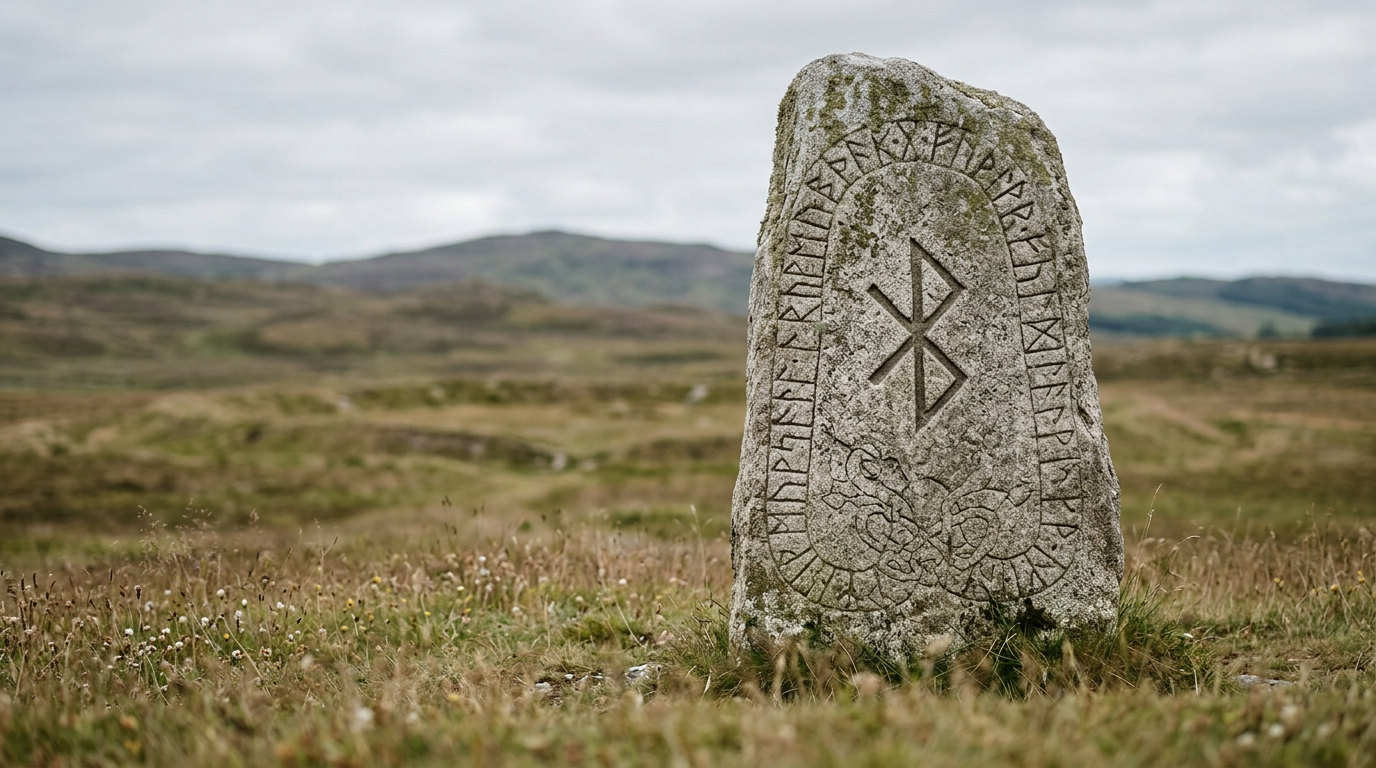
Bluetooth is named after Harald Bluetooth, a Danish king who unified warring tribes in the 10th century. The technology's logo cleverly combines his initials in ancient runes. It's a neat nod to history, suggesting the tech aims to unite different devices just as the king united his people, bringing modern communication together through an ancient symbol.
In a hurry? TL;DR
- 1Bluetooth is named after 10th-century King Harald Bluetooth, who united Scandinavia.
- 2The technology's logo combines runes representing Harald's initials, H and B.
- 3The name was initially a temporary placeholder but stuck due to trademark issues.
- 4Bluetooth's purpose mirrors Harald's unification of tribes by connecting devices.
- 5The logo is a bindrune using Younger Futhark letters, honoring Scandinavian heritage.
- 6Harald's nickname 'Bluetooth' likely originated from a dark, possibly decayed tooth.
Why It Matters
It's surprising that a common modern technology like Bluetooth is named after a thousand-year-old Viking king who unified tribes, with its logo being a fusion of his initials in ancient runes.
Bluetooth is named after Harald Gormsson, a 10th-century Viking king nicknamed Bluetooth who unified Scandinavia. The wireless technology’s logo is a bindrune merging the Younger Futhark initials for H and B.
The Quick Summary
- Origin: The name was proposed in 1997 during a meeting between Intel, Ericsson, and Nokia.
- Historical Figure: King Harald Bluetooth unified Denmark and Norway between 958 and 986 AD.
- Logo Design: A combination of the runes Hagall (ᚼ) and Bjarkan (ᛒ).
- Purpose: The name reflects the technology's goal of unifying disparate communication protocols.
- Legacy: Originally a temporary code name, it became the global industry standard.
Why It Matters
This tech-naming convention represents a rare moment where engineers looked to medieval diplomacy rather than Greek suffixing to define a modern digital revolution.
The King and the Code Name
In 1997, Jim Kardach of Intel and Sven Mattisson of Ericsson were developing a short-range radio link to connect computers and cellular devices. During a night of drinking in Toronto, Mattisson told Kardach about a historical novel he was reading called The Long Ships, which detailed the exploits of Vikings under King Harald Bluetooth.
Kardach later recounted that King Harald was famous for uniting Scandinavia, just as the engineers intended to unite the PC and cellular industries with a short-range wireless link. The name Bluetooth was originally intended as a placeholder until the marketing teams could come up with something cooler, like RadioWire or PAN (Personal Area Network).
However, RadioWire was already trademarked, and the trademark search for PAN would have taken too long to meet the product launch deadline. Bluetooth, the Viking placeholder, was the only viable option left on the table.
The Runic Identity
The logo is not a stylized B. It is a Nordic bindrune, a character formed by overlapping two distinct runes.
According to the Bluetooth Special Interest Group (SIG), the choice was intentional to honour the Scandinavian heritage of Ericsson and Nokia, two of the primary drivers behind the technology's adoption.
Unlike the sleek, corporate aesthetics of 1990s Silicon Valley, the Bluetooth symbol remains a piece of 10th-century epigraphy sitting in the corner of every smartphone screen today.
Why Was He Called Bluetooth?
History offers several theories for Harald's specific epithet, Blåtand. The most widely accepted explanation among historians, including those at the National Museum of Denmark, is that the king had a dead tooth that appeared dark blue or black.
In contrast to the violent stereotypes of the Viking era, Harald’s legacy is one of connectivity. He established the Trelleborg fortresses, a network of circular defensive structures that allowed for rapid communication and movement across his kingdom, a physical precursor to the digital network that now carries his name.
The Industry Impact
When the Bluetooth SIG was formed in 1998, the industry was fragmented. Different companies were developing proprietary ways to link devices, creating a landscape of incompatible cables and software.
According to researchers at the IEEE, the success of Bluetooth was not just its frequency-hopping spread spectrum technology, but its open standard. By adopting a single, unified name and protocol, the technology avoided the format wars that plagued early video tapes or modern charging cables.
Practical Applications
- Wireless Peripherals: Connecting keyboards and mice without the clutter of physical wires.
- Automotive Integration: Linking smartphones to car infotainment systems for hands-free calling.
- Health Monitoring: Transmitting data from wearable heart rate monitors to medical apps in real-time.
- Smart Home Ecosystems: Allowing locks, lights, and thermostats to communicate within a localized mesh network.
Interesting Connections
- Runes: The Younger Futhark runes used in the logo were the standard script in Scandinavia during the Viking Age, consisting of only 16 characters.
- Ericsson: The Swedish company Ericsson is named after Lars Magnus Ericsson, who started his career repairing telegraph instruments.
- The Jelling Stones: These massive carved runestones in Denmark specifically mention Harald winning all of Denmark and Norway and making the Danes Christian.
Why didn't they choose a modern name?
Marketing teams initially preferred RadioWire or PAN (Personal Area Network). However, PAN was considered too generic, and RadioWire couldn't be trademarked in time for the product launch.
Was Harald Bluetooth actually blue?
Probably not his skin, but likely a tooth. In Old Norse, the word bla meant both blue and black, suggesting he had a noticeably dark, necrotic tooth.
Does the Bluetooth logo mean anything else?
In the context of the technology, no. It is strictly a monogram of the initials H.B. in the Younger Futhark runic alphabet.
Key Takeaways
- Historical Roots: Named after King Harald Bluetooth, who unified Denmark and Norway in the 10th century.
- Runic Logo: A bindrune of the letters H and B (Hagall and Bjarkan).
- Accidental Branding: It was intended to be a temporary internal code name until trademark issues forced its permanent adoption.
- Symbol of Unity: Chosen because the technology unifies different industries and devices under one standard.
Bluetooth remains the only piece of modern hardware named after a medieval monarch, proving that sometimes the best way to brand the future is to raid the past.
Frequently Asked Questions
Sources & References
 WikipediaThis source explains that the name 'Bluetooth' was proposed by Jim Kardach of Intel in 1997, inspired by the historical King Harald Bluetooth, and details the technology's logo as a bindrune merging the runes ᚼ (Hagall) and ᛒ (Bjarkan) for Harald Bluetooth's initials.en.wikipedia.org
 Encyclopaedia BritannicaThis Britannica article identifies Harald I, known as Harald Bluetooth, as a 10th-century king who united Denmark and Norway, converting the Danes to Christianity, and mentions the theory of his nickname originating from a dead tooth.britannica.com
 History.comThis article from History.com confirms that the name Bluetooth was a temporary placeholder, suggested by Jim Kardach, and notes that the technology's logo is a bindrune combining the runic initials for Harald Bluetooth.history.com