
Quick Answer
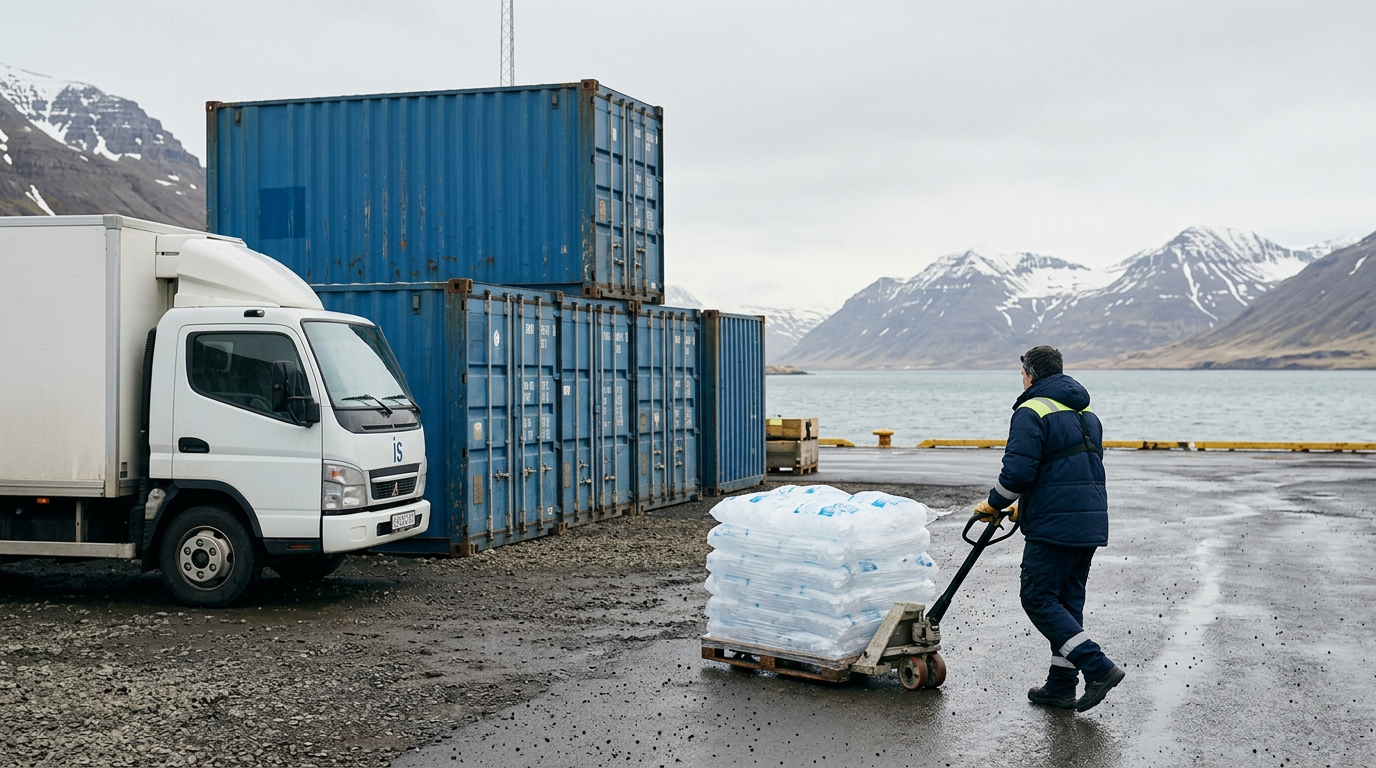
Despite its name and frozen landscape, Iceland imports packaged ice from abroad because it is often 40% cheaper than making it locally. This seems counterintuitive, but it highlights the reality of modern economics: high domestic labour and industrial energy costs can make shipping frozen water across the ocean more affordable than producing it at home. It is a fascinating reminder that in a globalised world, geography does not always dictate the most efficient way to supply even the simplest of
In a hurry? TL;DR
- 1Iceland imports packaged ice because high local labor and machinery costs make domestic production significantly more expensive than mass-produced, imported alternatives from abroad.
- 2Retailers choose imported ice to maintain competitive pricing, as foreign industrial-scale production benefits from economies of scale that small local facilities cannot match.
- 3High labor costs in Iceland create an economic paradox where shipping frozen water across the ocean is 40% cheaper than processing it domestically.
- 4Icelandic businesses focus on industries with a comparative advantage, such as fishing and smelting, while sourcing simpler consumer goods from larger international markets.
- 5Despite having abundant geothermal energy and glaciers, the lack of large-scale industrial ice-packaging infrastructure makes local production inefficient for serving a population of only 375,000.
- 6The Icelandic ice market proves that global logistics and industrial efficiency can often override geographic advantages, making it cheaper to import resources that are locally plentiful.
Why It Matters
It is genuinely surprising that Iceland imports ice because the high costs of local labour and packaging make it cheaper to ship frozen water from abroad than to produce it on an island defined by glaciers.
Iceland regularly imports packaged ice from abroad because the cost of importing frozen water is roughly 40% lower than producing it domestically. Despite a name that suggests a surplus of frozen resources, the high price of electricity and labour makes shipping foreign ice a logical business decision.
The Cold Reality of Icelandic Imports
- Economic Paradox: Imported ice from countries like Norway or the UK is significantly cheaper than local Icelandic production.
- Cost Differential: Supermarket chains report that imported bags of ice can cost 40% less than domestic alternatives.
- Energy vs. Labour: While Iceland has cheap geothermal energy, the machinery, labour, and transport costs for small-scale ice packaging are prohibitively expensive.
- Retail Strategy: Major retailers like Costco and Krónan often stock imported ice to maintain competitive pricing for consumers.
Why It Matters
The Icelandic ice trade reveals how global logistics and economies of scale can override geography, turning a nation defined by glaciers into a customer of foreign freezers.
The Logistics of Frozen Water
The central irony of Iceland is that it sits on top of massive natural glaciers and possesses some of the purest tap water in the world. However, the infrastructure required to freeze, bag, and distribute ice cubes is a specific industrial niche.
According to reports from Icelandic news outlet Vísir, the cost of running domestic ice-making facilities often fails to compete with large-scale industrial plants in mainland Europe. When a supermarket chain orders thousands of units, the per-unit cost of a bag shipped from the UK is lower than one produced in a small Reykjavik facility.
Unlike other nations where water scarcity drives imports, Iceland imports ice purely as a matter of retail efficiency. The cost of manual labour in Iceland is among the highest in Europe, which adds a significant premium to any product that requires local packaging and handling.
The Scale Problem
Domestic production in Iceland suffers from a lack of scale. A local producer might serve a population of 375,000, whereas a regional hub in Norway or the UK serves millions. The machinery used in these larger hubs runs 24/7, driving the marginal cost of a single ice cube down to fractions of a penny.
Even when accounting for the carbon footprint and shipping costs of moving heavy frozen goods across the North Atlantic, the final price at the till remains lower for the imported product. This is a classic example of comparative advantage, where a nation focuses on its most efficient industries (like aluminium smelting or fishing) and buys simpler goods elsewhere.
Comparative Context
In contrast to the United Arab Emirates, which has explored towing icebergs to provide fresh water, Iceland has no shortage of the raw material. The issue is entirely industrial. Whereas a desert nation imports water for survival, Iceland imports ice for convenience.
Industry experts note that this is similar to how timber-rich nations might import finished IKEA furniture; having the raw material does not equate to having the cheapest finished product.
Real World Scenarios
- The Bar Industry: High-end cocktail bars in Reykjavik often use local artisanal ice for quality, but high-volume venues and service stations rely on cheaper imported bags.
- The Costco Effect: When Costco opened in Iceland in 2017, it disrupted the market by leveraging its global supply chain, often bringing in goods that Icelanders previously assumed were cheaper to make at home.
- Tourist Surges: During peak travel seasons, the demand for packaged ice at campsites and hotels spikes, forcing retailers to rely on the steady, scalable supply of international distributors.
Is Icelandic tap water different from the imported ice?
Yes. Icelanders take immense pride in their tap water, which is untreated and spring-fed. Imported ice is typically made from treated municipal water in the country of origin, which some locals claim tastes different.
Why dont they just use glacier ice?
Harvesting glacier ice is environmentally sensitive, dangerous, and logistically difficult. It is not a viable source for the commercial ice cube market.
Does Iceland export anything related to water?
Yes. While they import cheap ice cubes, they export premium bottled water brands like Icelandic Glacial to global markets at a significant markup.
Key Takeaways
- Economic Efficiency: Business owners prioritise the 40% savings offered by international suppliers over the novelty of local production.
- Labour Costs: High Icelandic wages are a bigger factor in product pricing than the cost of electricity.
- Global Trade: The ice trade proves that geographic proximity to a resource does not guarantee the lowest price for the finished version of that resource.
- Quality vs. Price: While local water is superior, the commodity market for ice cubes is driven entirely by the bottom line.
If you enjoyed learning about the quirks of the North Atlantic, you might be interested in the economics of the banana trade, the history of the spice routes, or why some countries pay people to move there.
The next time you drop a cube into a drink in Reykjavik, check the bag; it likely travelled further than you did to get to the glass.
Frequently Asked Questions
Sources & References
- 1Observatory of Economic Complexity (OEC)Documents bilateral trade flow and volume data for Iceland's imports of ice and water products under international commodity codes.oec.world
 WikipediaDetails the economic structure of Iceland, including high labor costs, market scale constraints, and reliance on imported packaged goods.en.wikipedia.org