
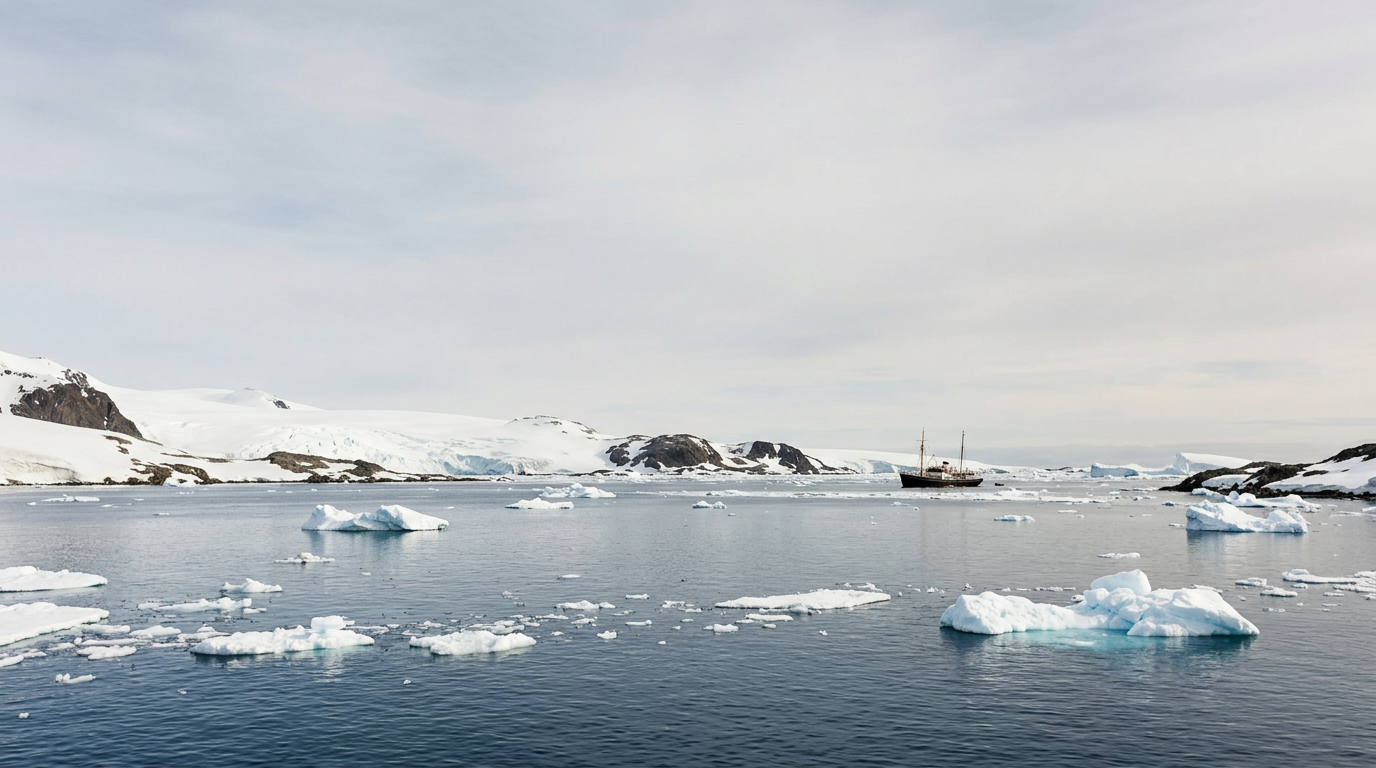
Quick Answer
We identified the planet Uranus in 1781, nearly forty years before we even caught a glimpse of mainland Antarctica. It seems surreal that we could map the distant heavens while our own globe still held massive, uncharted frontiers. This quirk of history highlights how the icy, treacherous conditions of the Southern Ocean proved far more formidable to early explorers than the vast vacuum of space was to our telescopes. It reminds us that reaching the unknown on Earth was often harder than gazing
In a hurry? TL;DR
- 1Understand that technological limitations significantly impacted geographical exploration, as superior telescope optics allowed for celestial discoveries long before maritime vessels could withstand harsh Antarctic conditions.
- 2Recognize that the 39-year gap between the discovery of Uranus and Antarctica highlights how physical endurance and engineering often trail behind the progress of observational science.
- 3Learn that William Herschel discovered Uranus in 1781 using a custom-built reflecting telescope, marking the first time a planet was identified via technology rather than the naked eye.
- 4Acknowledge that early Antarctic explorers like James Cook were deterred by the deadly combination of treacherous pack ice, katabatic winds, and the extreme isolation of the Southern Ocean.
- 5Note that the successful 1820 sighting of Antarctica required advancements in ship hull strength capable of surviving ice-crushing pressures that previously made the region inaccessible to earlier expeditions.
Why It Matters
It is fascinating that humanity managed to map the outer reaches of the solar system using telescopes decades before we possessed the endurance to brave the treacherous seas and discover the massive continent sitting at
Humans identified the seventh planet in our solar system, Uranus, in 1781, yet we did not lay eyes on the continent of Antarctica until 1820. For thirty-nine years, we knew more about the distant reaches of space than we did about the southernmost reaches of our own planet.
The Timeline Gap
- Uranus Discovered: 13 March 1781 by William Herschel
- Antarctica Sighted: 27 January 1820 by Fabian Gottlieb von Bellingshausen
- Time Difference: 38 years, 10 months, and 14 days
- Distance to Uranus: 2.8 billion kilometres
- Distance to Antarctica: Roughly 14,000 kilometres from Europe
Why the Gap Exists
It feels counterintuitive that a gas giant billions of miles away was logged in a star catalogue before we found a landmass twice the size of Australia. The reason is rooted in the difference between visual technology and physical endurance.
By the late 18th century, optics had advanced to a point where a backyard astronomer could peer into the deep sky. However, maritime technology was still battling the lethal combination of pack ice, katabatic winds, and the Drake Passage.
The Sighting of the Seventh Continent
While Herschel was being knighted for his celestial find, the bottom of the world remained a blank space on the map labeled Terra Australis Incognita. Captain James Cook had crossed the Antarctic Circle in the 1770s, but he never actually saw land, concluding that if a continent existed, it was likely inaccessible and useless.
It took a Russian expedition led by Fabian Gottlieb von Bellingshausen to finally spot the Fimbul Ice Shelf in 1820. Just days later, British captain Edward Bransfield and American sealer Nathaniel Palmer also claimed sightings.
The delay was not due to a lack of curiosity, but a lack of hull strength. Whereas a telescope only requires a clear night and a steady hand, exploring the Antarctic required ships that could survive being crushed by ice floes.
Scientific Context
According to records from the Royal Museums Greenwich, the discovery of Uranus expanded the known boundaries of the solar system overnight, doubling its radius. In contrast, the discovery of Antarctica was a gradual realization that the Earth had a frozen anchor.
Practical Implications
- Astronomical Precedence: The discovery of Uranus proved that the solar system was larger than ancient texts suggested, sparking a hunt for more planets (leading to Neptune in 1846).
- Geopolitical Race: The discovery of Antarctica triggered a century of brutal exploration and eventual territorial claims that remain frozen in place by the Antarctic Treaty today.
- Technological Divergence: This gap serves as a reminder that sensing something from a distance is often easier than arriving there in person.
Could Uranus be seen before 1781?
Yes, it is visible to the naked eye under perfect conditions. It was actually recorded by John Flamsteed in 1690, but he mistook it for a star and catalogued it as 34 Tauri.
Why did James Cook miss Antarctica?
Cook came within 80 miles of the coast, but the density of the pack ice forced him to turn back. He famously stated that no man would ever venture further south than he had.
Who named the planet Uranus?
Johann Elert Bode proposed the name to follow the genealogical pattern: Saturn was the father of Jupiter, so the new planet should be named after the father of Saturn.
Key Takeaways
- Technology vs. Logistics: We had the lenses to see billions of miles before we had the hulls to sail a few thousand miles south.
- Accidental Discovery: Uranus was found during a routine star survey, while Antarctica was sought for centuries before being found.
- The 1820 Trio: Three different nations (Russia, UK, USA) sighted the continent within weeks of each other, ending the 39-year period where a planet was better known than a continent.
Small Talk: The planet Neptune was discovered using mathematics before it was ever seen through a telescope, further proving that in the 19th century, our minds were traveling much faster than our feet.
Frequently Asked Questions
Sources & References
- 1Poor Richard's AlmanackDocuments William Herschel's discovery of Uranus on March 13, 1781, using a seven-foot reflecting telescope.loc.gov
 Encyclopaedia BritannicaVerifies that Russian naval officer Fabian von Bellingshausen first sighted the Antarctic ice shelf and continent in January 1820.britannica.com
- Encyclopaedia BritannicaDetails the chronological exploration of Antarctica, including Captain Cook's 1770s voyages and the first sightings of the continent in 1820.britannica.com