
Quick Answer
The Michelin Guide began in 1900 as a cunning marketing ploy by a tyre company to convince motorists to drive further and wear out their tyres faster. To boost sales, they provided maps and hotel recommendations for early travellers. It is extraordinary that this simple promotional booklet evolved into the world’s most prestigious culinary authority. Today, the coveted Michelin star remains the pinnacle of gastronomic excellence, far transcending its humble, rubber-selling origins to become the
In a hurry? TL;DR
- 1Use content marketing to solve your customers' pain points, as Michelin did by providing travel infrastructure to increase tyre demand and boost long-distance vehicle usage.
- 2Identify the primary barriers preventing your customers from using your product more frequently and create resources that help them overcome those specific challenges.
- 3Establish trust and authority in your industry by implementing rigorous, unbiased standards, such as Michelin’s anonymous inspector program, to ensure high-quality, reliable evaluations.
- 4Consider how a free, value-added resource can evolve into a premium, brand-defining asset that creates a prestigious ecosystem around your core business offerings.
- 5Recognize that the value of your content should be clear to your audience; charging for it only becomes feasible once your product earns genuine, perceived market value.
Why It Matters
It is fascinating that the world’s most prestigious culinary authority started as a simple marketing ploy to trick people into wearing out their car tyres.
The Michelin Guide was originally a marketing gimmick designed by a tyre company to help motorists find petrol, mechanics, and a decent meal, thereby wearing out their tyres faster. Today, it is the most prestigious culinary ranking system in the world.
Quick Answer
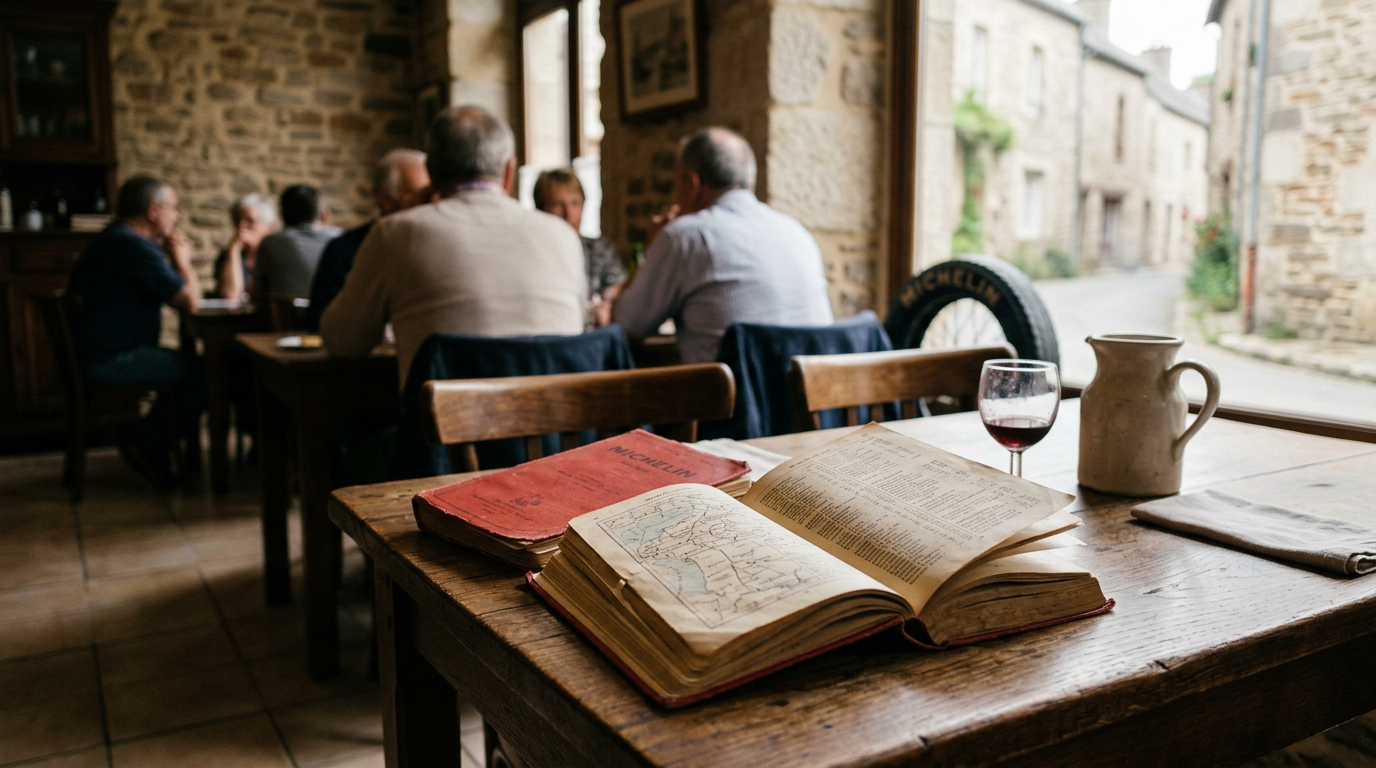
In 1900, brothers André and Édouard Michelin published a free travel guide to encourage the 3,000 car owners in France to drive more frequently. By providing maps and restaurant listings, they incentivised long-distance travel, which directly increased demand for replacement tyres.
TL;DR
- The guide launched in 1900 as a free promotional tool for Michelin tyre customers.
- It included maps, instructions for changing tyres, and lists of petrol stations and hotels.
- The famous star system was introduced in 1926 to rank fine dining establishments.
- One star means a very good restaurant; two stars mean excellent cooking worth a detour; three stars mean exceptional cuisine worth a special journey.
Why It Matters
It is the ultimate example of content marketing: a company created a problem (travel logistics) to sell a solution (rubber tyres), accidentally inventing a global standard for luxury in the process.
The Strategy of Forced Obsolescence
At the turn of the 20th century, there were fewer than 3,000 cars on French roads. For the Michelin brothers, the automotive industry was a niche market with a slow replacement cycle. Their business model faced a geographic hurdle: people only drove within their local communes because they lacked the infrastructure to go further.
To fix this, they printed 35,000 copies of a red book. It was not a gourmet handbook; it was a survival manual for the early motorist. It detailed where to find fuel (usually sold at pharmacies at the time) and how to fix a puncture. By demystifying the open road, Michelin transformed the car from a local novelty into a long-distance tool.
From Mechanics to Menus
As the guide evolved, the restaurant section became its most popular feature. The brothers hired a team of anonymous inspectors to review restaurants, a practice that remains the gold standard of the industry today. Unlike other contemporary critics, Michelin inspectors were instructed to be entirely invisible, paying for their meals to ensure an unbiased experience.
According to researchers at Harvard Business School, the Michelin Guide represents one of the earliest and most successful instances of a brand building an ecosystem around its core product. By 1926, the guide began awarding a single star for fine dining. By 1931, the hierarchy expanded to the three-star system we recognise today.
The Psychology of the Star
The weight of a Michelin star is immense. Unlike the populist crowdsourcing of Yelp or TripAdvisor, Michelin operates on an elitist, top-down model. A single star can increase a restaurant's revenue by up to 20 percent, while losing one can lead to financial ruin or, in extreme historical cases, personal tragedy for the chefs involved.
Practical Applications
- Tourism Strategy: National tourism boards frequently lobby Michelin to launch guides in their countries to boost high-end travel.
- Brand Extension: The guide proves that a brand can become an authority in a field entirely unrelated to its manufacturing roots.
- Market Segmentation: Michelin uses the Bib Gourmand category to capture the casual dining market while keeping stars reserved for fine dining.
Interesting Connections
- The Michelin Man: His name is Bibendum. He was inspired by a stack of tyres that the brothers thought looked like a man, and his name comes from the Latin phrase Nunc est bibendum (Now is the time to drink).
- The Red Guide vs Green Guide: While the Red Guide focuses on hotels and restaurants, Michelin also publishes Green Guides focused on sightseeing and culture.
- Culinary Suicide: The pressure of the guide is so high that chef Bernard Loiseau took his own life in 2003 amid rumours he was about to lose his third star.
Does Michelin still make tyres?
Yes. Michelin is the second-largest tyre manufacturer in the world, trailing only slightly behind Bridgestone. The guide remains a marketing arm of the larger corporation.
How do inspectors stay anonymous?
Inspectors are prohibited from telling even their closest family members about their work. They visit restaurants multiple times, usually alone, and never take notes while at the table.
Can a restaurant ask to be reviewed?
Restaurants cannot apply for a star. They are selected by the editorial team based on local reputation and previous screenings.
Key Takeaways
- Utility First: The guide started as a utility for drivers, not a luxury status symbol.
- Content as Marketing: It is a textbook case of a company providing value to create a market for its product.
- Anonymity is Authority: The guide's power stems from its secret inspection process and refusal to accept advertisements.
- Geographic Reach: What began as a French pamphlet now covers over 30 countries across three continents.
Frequently Asked Questions
Sources & References
 Encyclopaedia BritannicaVerifies the history of the Michelin Guide from its creation in 1900 by tire makers Édouard and André Michelin to the introduction of its star rating system for restaurants.britannica.com
- 2Rough GuidesConfirms the guide's origins as a motorist booklet with roadmaps and tyre-changing advice, the workbench incident leading to paid guides in 1920, and the introduction of restaurant stars.guide.michelin.com
 WikipediaDetails how the guide was created to boost French car travel and tire consumption, including the definitions of the one-, two-, and three-star restaurant ratings.en.wikipedia.org