
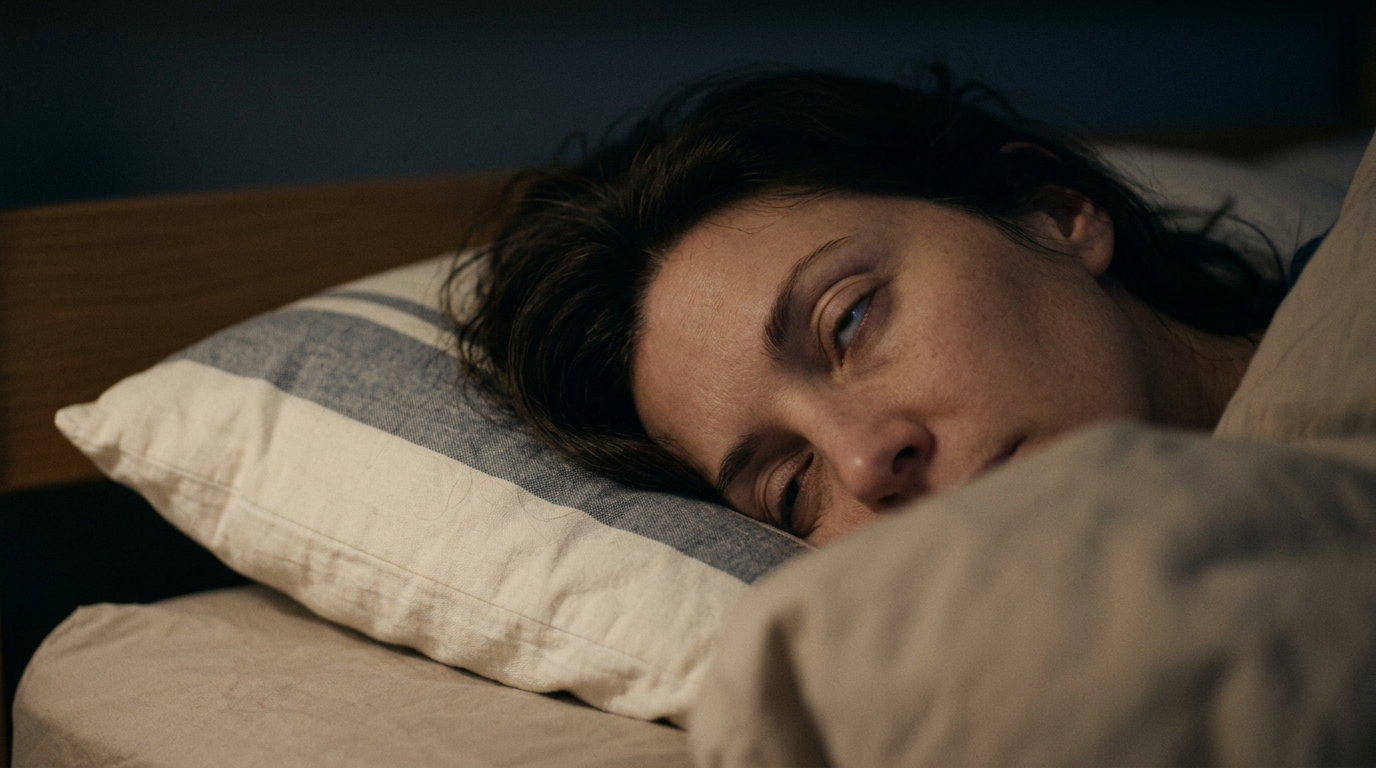
Quick Answer
Approximately one in 20 people sleep with their eyes partially or fully open, a condition known as nocturnal lagophthalmos. While it sounds like a harmless quirk, it is surprisingly significant. Because the eyelids do not form a complete seal, the eyes can dry out overnight, often causing persistent irritation that people wrongly blame on allergies. If left unmanaged, this simple habit can lead to serious corneal damage, making it a crucial detail to notice if you wake up with gritty, red eyes.
In a hurry? TL;DR
- 1Recognize that nocturnal lagophthalmos affects 5% of people, causing the eyelids to remain partially open during sleep, which can lead to chronic dryness and potential vision loss.
- 2Identify common symptoms like a gritty, sandy sensation upon waking, which often indicates the eyes are not sealing properly and are prone to overnight tear evaporation.
- 3Consult an eye specialist if you suspect this condition, as it is frequently misdiagnosed as simple allergies or standard dry eye syndrome by primary care physicians.
- 4Understand that the issue is typically mechanical, caused by weakened facial muscles or structural eye prominence, rather than a neurological sleep disorder or a conscious choice.
- 5Manage the condition using clinically recommended treatments such as specialized ophthalmic ointments or eyelid taping to maintain moisture and protect the cornea from permanent scarring.
- 6Be aware that persistent exposure of the lower cornea can lead to serious complications like corneal ulceration, making professional medical intervention essential for long-term ocular health.
Why It Matters
It is surprisingly common for people to sleep with their eyes open, a condition that often goes misdiagnosed but can lead to serious and permanent damage to the surface of the eye.
Roughly 5% of the global population sleeps with their eyes partially or fully open, a medical phenomenon known as nocturnal lagophthalmos. This condition prevents the eyelids from forming a complete seal during rest, often leading to chronic dryness and blurred vision.
The Reality of Sleeping with Open Eyes
About one in 20 people are thought to sleep with their eyelids partly or fully open, a condition called nocturnal lagophthalmos. While it might sound like a quirk of horror cinema, it is a legitimate physiological issue where the facial nerve or orbicularis oculi muscle fails to close the gap.
- Prevalence: Approximately 5% of the general population.
- Primary Cause: Weakness in the facial nerve or structural issues with the eyelids.
- Key Risk: Severe corneal drying and potential permanent scarring.
- Common Symptom: Waking up with a gritty, sandy sensation in the eyes.
Why It Matters: Understanding this condition is vital because untreated nocturnal lagophthalmos can lead to permanent vision loss, turning a strange sleeping habit into a clinical emergency.
A Breakdown of the Condition
Data Point: 5% of people affected Scientific Name: Nocturnal Lagophthalmos Primary Risk: Corneal ulceration Typical Treatment: Ophthalmic ointments or eyelid taping
The Mechanics of an Imperfect Seal
The term originates from the Greek lagos, meaning hare, based on the ancient belief that hares slept with their eyes open. In reality, humans require the blink reflex and nocturnal closure to spread a tear film across the cornea, providing oxygen and protection against debris.
According to research published in the journal Case Reports in Ophthalmological Medicine, the condition is often misdiagnosed as simple allergies or dry eye syndrome. Unlike standard dryness, however, nocturnal lagophthalmos causes a specific pattern of damage on the lower third of the cornea, where the surface is exposed to the air all night.
Why the Eyelids Fail
The failure to close is rarely a choice of the brain and almost always a failure of the hardware. The orbicularis oculi is the muscle responsible for closing the eye. If the facial nerve (the seventh cranial nerve) is damaged or weakened, the muscle lacks the signal to maintain a seal during the muscle relaxation of sleep.
In other cases, the issue is structural. People with proptosis—bulging eyes often associated with thyroid eye disease—may find their eyelids simply cannot bridge the distance. Unlike other sleep disorders that are neurological, this is fundamentally a mechanical breakdown.
The Morning After: Symptoms and Signs
Most people with nocturnal lagophthalmos have no idea they are doing it. They don't see themselves sleep, and the brain still enters the standard REM and deep sleep cycles. The evidence appears only upon waking.
Common indicators include:
- Foreign Body Sensation: Feeling like a grain of sand is stuck under the lid.
- Redness: Persistent bloodshot eyes that do not clear up with standard rest.
- Blurred Vision: Distorted sight in the morning that gradually improves as the eye rehydrates.
- Photosensitivity: A sudden pain or discomfort when moving into bright light.
Compared to standard dry eye, which affects the entire surface, lagophthalmos damage is localised. If you find yourself constantly reaching for eye drops every morning, the culprit might be an incomplete seal.
Clinical Consequences and Long-term Risks
If left unmanaged, the constant evaporation of the tear film leads to a condition called exposure keratopathy. The cornea, lacking its protective layer, begins to develop small scratches or ulcers. Over time, these can lead to permanent scarring.
According to specialists at the Mayo Clinic, treatment ranges from the simple to the surgical. Many patients find relief using thick, preservative-free ointments that coat the eye in a viscous barrier before bed. In extreme cases, a procedure called tarsorrhaphy is performed, where the eyelids are partially sewn together to narrow the opening.
Can you see things while sleeping with your eyes open?
No. Although the physical pathway for light is open, the brain effectively shuts down visual processing during sleep. You will not have a visual memory of the room, though bright lights may disturb your sleep cycle.
Is it the same as sleepwalking?
No. Sleepwalking is a parasomnia involving complex motor behaviours. Nocturnal lagophthalmos is a physical eyelid closure failure and can happen to anyone, regardless of whether they move in their sleep.
How do I know if I have it?
The easiest way is to ask a partner to check or to film yourself for a portion of the night. If you wake up with dry, painful eyes that feel better after using heavy lubricating drops, you should consult an optician.
Key Takeaways
- Nocturnal lagophthalmos affects roughly 5% of people, often without their knowledge.
- The condition is caused by nerve issues, muscle weakness, or physical eye shape.
- Chronic exposure to air during sleep can lead to corneal ulcers and vision loss.
- Treatment usually involves moisture-chamber goggles, ointments, or medical tape.
- Waking up with a gritty feeling in the eyes is the primary red flag.
If you suspect your eyelids aren't doing their job, don't ignore the morning grit; your corneas aren't designed for the night shift.
Frequently Asked Questions
Sources & References
 WikipediaDetails nocturnal lagophthalmos, its Greek etymology, physiological causes like facial nerve dysfunction, and corneal exposure complications.en.wikipedia.org
- 2Parkinson's disease and pesticides: an updateProvides clinical overview of lagophthalmos, explaining the inability of the orbicularis oculi and eyelid mechanisms to fully close the eye.ncbi.nlm.nih.gov
- 3American Academy of OphthalmologyExplains lagophthalmos during sleep, the risk of tear evaporation and corneal drying, and primary treatment approaches.aao.org