
Quick Answer
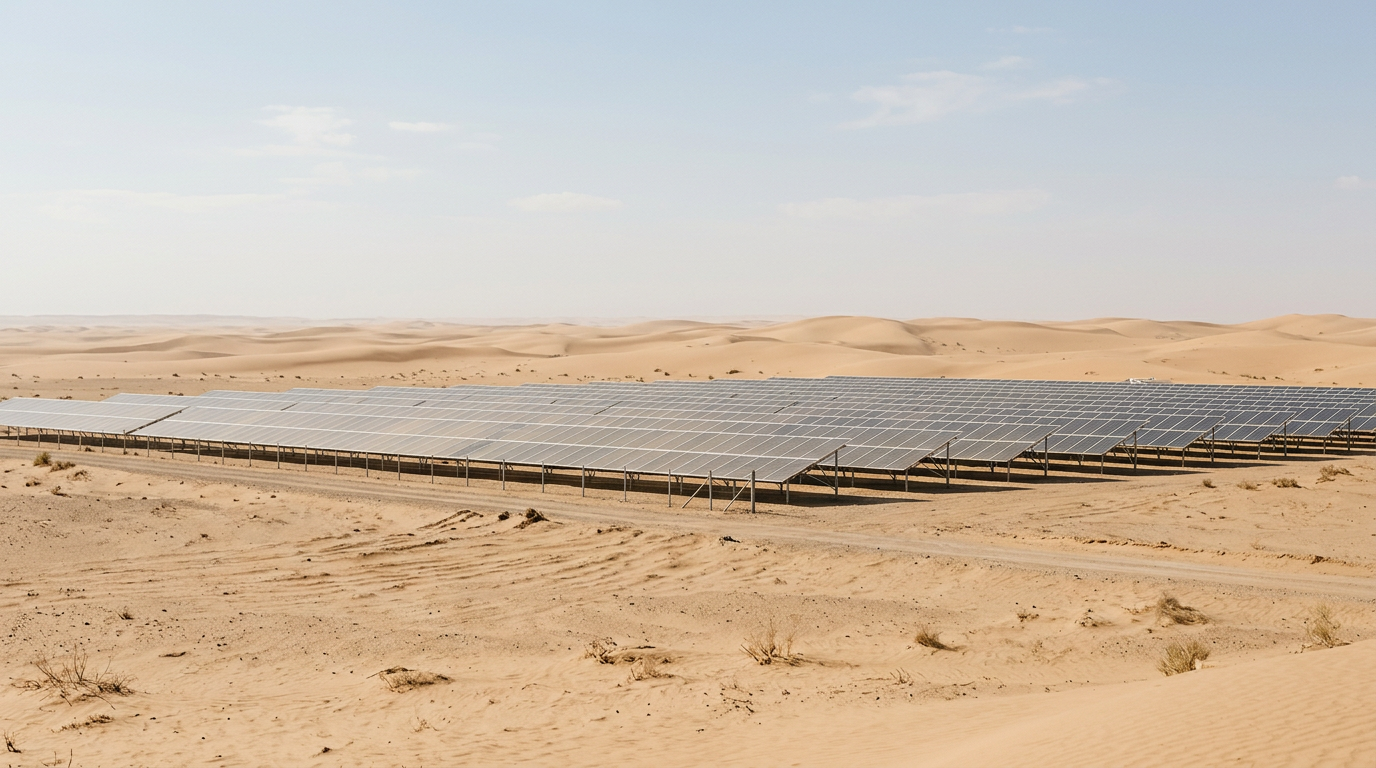
Covering just 0.3% of the Sahara Desert with solar panels could theoretically generate enough electricity to power the whole of Europe. This is an extraordinary prospect because it shows how a tiny sliver of barren, sun-drenched land holds the potential to transform our entire energy landscape. By harnessing one of the world's most consistent power sources, we could move towards a cleaner, more sustainable future, proving that the solution to our global energy needs may be hidden in plain sight.
In a hurry? TL;DR
- 1Harnessing solar power from just 0.3% of the Sahara Desert could theoretically generate enough electricity to satisfy the annual energy consumption of the entire European continent.
- 2Concentrated solar power systems are ideal for desert environments because they use thermal heat to generate electricity and can store energy for use after sunset.
- 3Engineers recommend using concentrated solar thermal plants instead of standard photovoltaic panels, as extreme heat can negatively impact the efficiency of traditional solar hardware.
- 4The primary technical obstacle to this initiative is the construction of high-voltage direct current (HVDC) transmission lines capable of transporting energy across the Mediterranean Sea efficiently.
- 5Beyond meeting European demand, experts estimate that covering only 1.2% of the Sahara's vast territory could theoretically produce enough electricity to fulfill total global energy requirements.
- 6While physical potential is high, successful large-scale projects must overcome significant real-world challenges, including high infrastructure costs, geopolitical instability, and complex cross-border energy distribution logistics.
Why It Matters
It is remarkable that harnessing the intense, consistent sunlight falling on a tiny fraction of the Sahara could provide enough clean energy to power an entire continent.
Covering just 0.3 percent of the Sahara Desert with solar panels could theoretically generate enough electricity to power all of Europe. This massive potential stems from the fact that the Sahara receives some of the highest solar irradiation on Earth, exceeding 2,500 kilowatt-hours per square metre annually in many regions.
Key Facts and Numbers
- Required Area: Approximately 27,000 to 30,000 square kilometres
- Sahara Total Area: 9.2 million square kilometres
- Theoretical Yield: Enough to satisfy Europe’s annual consumption of roughly 3,300 terawatt-hours
- Sunlight Intensity: Over 3,000 hours of sunshine per year in most parts of the desert
The Origin of the Idea
The concept of harvesting Saharan sun gained mainstream traction in 2009 with the launch of the Desertec Industrial Initiative. This consortium of European and North African companies proposed a 400 billion Euro project to build a network of solar and wind farms across the Middle East and North Africa.
The aim was to supply 15 percent of Europe’s electricity by 2050 via high-voltage direct current cables laid across the Mediterranean. While the original consortium eventually splintered due to political instability and high costs, the underlying physics remains undisputed.
The Mathematics of Vastness
Unlike rooftop solar in cloudy climates like Germany or the UK, the Sahara offers a consistent energy profile. According to research from the European Commission’s Joint Research Centre, the solar energy falling on deserts is so concentrated that even a tiny fraction of the land could meet global demand.
To put this in perspective, covering 1.2 percent of the Sahara could theoretically power the entire world. This is not just a matter of space, but of efficiency. In a desert environment, solar thermal plants—which use mirrors to focus sunlight and heat water—can store energy in molten salts, allowing for electricity generation even after the sun sets.
The Transmission Challenge
The primary hurdle is not capturing the energy, but moving it. Unlike local grids, transporting electricity from North Africa to Central Europe requires High Voltage Direct Current (HVDC) lines. These lines lose significantly less power over long distances compared to the Alternating Current (AC) lines used in standard domestic grids.
Building this infrastructure involves navigating the complex geopolitical landscape of the Maghreb and the Mediterranean. Furthermore, the desert environment itself is hostile to machinery. Sandstorms can abrade mirrors and coat panels in dust, requiring massive amounts of water for cleaning—a scarce resource in the world's largest hot desert.
Why It Matters
This statistic serves as a reminder that the energy crisis is a problem of logistics and investment rather than a lack of raw resources. The Sahara represents a natural nuclear reactor that remains largely untapped.
Real-World Applications
- The Ouarzazate Solar Complex: Located in Morocco, this is one of the world's largest concentrated solar plants, proving that Saharan sunlight can be successfully harnessed for national grids.
- Xlinks Project: A proposed 3,800-kilometre subsea cable project designed to link a massive solar and wind farm in Morocco directly to the UK National Grid.
- Hydrogen Production: Excess solar power can be used to split water molecules, creating green hydrogen that can be shipped as fuel, bypassing the need for electric cables.
Interesting Connections
- Albedo Effect: Large-scale solar farms could actually change the local climate. Research published in Science suggests that massive solar installations might increase local rainfall by darkening the ground and triggering vegetation growth.
- Historical Precedent: The first solar engine was actually tested in Egypt in 1913 by American inventor Frank Shuman, who used parabolic troughs to pump irrigation water from the Nile.
- Space Comparison: The Sahara is so large that it is roughly the same size as the United States, including Alaska and Hawaii.
Wouldn’t sandstorms destroy the panels?
Sand is a major operational cost. Automated cleaning robots that don't use water are currently being developed to sweep panels daily, preventing dust buildup from reducing efficiency.
How much would this cost?
Initial estimates for a Europe-wide supply chain exceed 400 billion Euro. However, as the cost of solar technology continues to drop, the economic argument becomes stronger than the reliance on volatile fossil fuel markets.
What about the people living there?
Successful projects must be collaborative. Modern proposals focus on a dual-benefit model where North African nations use the energy for their own industrialisation and desalination before exporting the surplus to Europe.
Key Takeaways
- Scale: 0.3 percent of the Sahara is roughly the size of Belgium, yet it could power an entire continent.
- Efficiency: Desert sunlight is far more potent and reliable than European sunlight.
- Logistics: The main obstacles are transmission losses and geopolitical stability, not technology.
- Global Potential: If we scaled this to 1.2 percent of the desert, we could theoretically power every home and factory on the planet.
Frequently Asked Questions
Sources & References
 WikipediaBackground and contexten.wikipedia.org
 Scientific AmericanScientific research and analysisscientificamerican.com
 BBCReporting and verificationbbc.co.uk
- WikipediaDetails the Desertec concept and consortium founded in 2009 to generate solar electricity in North African deserts and transmit it to Europe.en.wikipedia.org