
Quick Answer
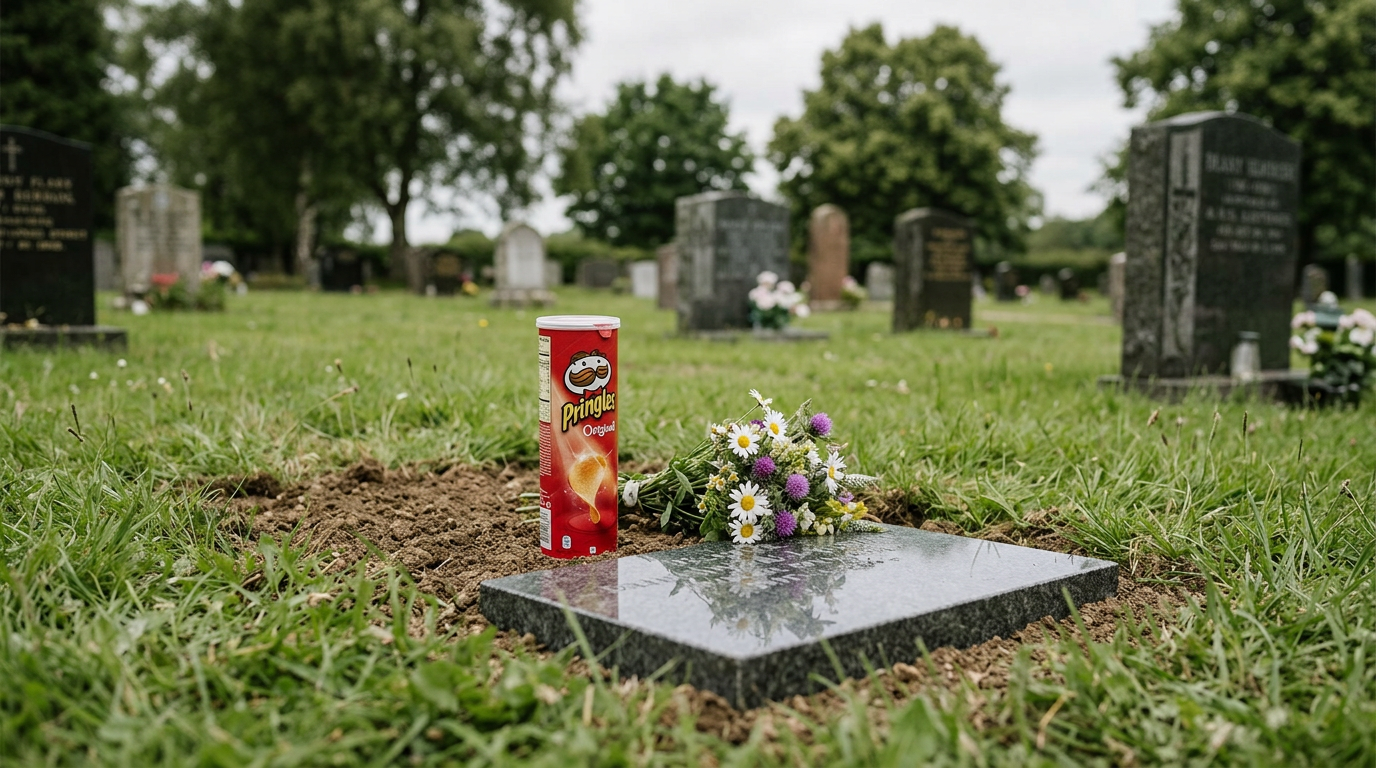
Fredric Baur, the chemist who designed the iconic Pringles can, was buried with his ashes inside one of his own containers. He was so incredibly proud of his engineering achievement that he requested this quirky tribute before his death in 2008. His family honoured his wishes, using an Original-flavour can to hold a portion of his remains. It is a fascinating example of a creator being truly devoted to their craft, ensuring his legacy stayed perfectly intact long after he was gone.
In a hurry? TL;DR
- 1Fredric Baur, an organic chemist at Procter & Gamble, invented the iconic Pringles cylinder in 1970 to solve industry problems regarding chip breakage and excessive grease.
- 2Baur utilized hyperbolic paraboloid geometry to ensure each chip remained uniform, allowing for efficient stacking and protection within the rigid, airtight, and pressure-controlled Pringles container.
- 3In a final tribute to his engineering legacy, Baur’s children honored his request to be buried with a portion of his ashes inside an Original-flavour Pringles can.
- 4Beyond packaging, Baur developed the unique dough and frying process for dehydrated potato flakes, leading to the product's official classification as a potato crisp.
- 5The innovative design of the Pringles can revolutionized global snack logistics by enabling dense, air-efficient shipping compared to the bulky, fragile bags used by traditional competitors.
Why It Matters
It is fascinating that a packaging engineer was so committed to his invention that he chose to be laid to rest inside the very snack tube he designed to solve the problem of broken chips.
Fredric Baur, the chemist and packaging engineer who designed the iconic Pringles cylinder, was buried with a portion of his remains inside one of his own creations. After he died in 2008, his children fulfilled his request by placing part of his cremated ashes into an Original-flavour can before interment.
Key Facts and Figures
- Designer: Fredric J. Baur
- Employer: Procter & Gamble
- Patent Year: 1970 (for the Pringles container)
- Death Date: 4 May 2008
- Can Flavour Used: Original
- Resting Place: Arlington Memorial Gardens, Cincinnati
The Man Who Engineered the Crunch
Fredric Baur was not a snack food marketer; he was a highly trained organic chemist and packaging expert at Procter & Gamble. In the mid-1950s, Baur was tasked with finding a solution to the two biggest problems in the potato chip industry: grease and breakage. Traditional bags were filled with air and fragile chips that inevitably turned into crumbs at the bottom of the bag.
Baur’s solution was a triumph of geometry and civil engineering applied to snacks. He designed a hyperbolic paraboloid chip (a shape that is mathematically identical across every unit) and a rigid, airtight cylinder to protect them. This ensured that every chip stayed intact from the factory to the consumer’s hand.
A Final Request for the Original Flavour
When Baur passed away at the age of 89, his children remembered a request he had made years earlier. He was so proud of the design that he wanted to be buried in it. According to his son, Larry Baur, the family stopped at a Walgreens on the way to the funeral home to purchase the burial vessel.
They briefly debated which flavour to use before settling on the classic Original. While the majority of his remains were placed in a traditional urn and buried with the can, the gesture served as a final tribute to a career defined by mathematical precision and functional design.
Unlike other snack pioneers who might be remembered for a recipe, Baur is remembered for the physics of the delivery system. The Pringles can changed the logistics of global snacking by allowing for dense stacking and efficient shipping, a stark contrast to the bulky, air-filled bags used by competitors.
The Chemistry of a Super-Stack
Baur’s contribution went beyond the cardboard tube. He also developed the dough and the frying process that allowed the chips to hold their specific shape. Because Pringles are made from dehydrated potato flakes rather than sliced whole potatoes, the FDA famously ruled in the 1970s that they could not be called potato chips. P&G eventually settled on the term potato crisps.
Real-World Applications of Baur's Design
The influence of the Baur cylinder extends into several unexpected areas of modern life:
- Antenna Engineering: DIY tech enthusiasts frequently use Pringles cans to create cantennas, which are directional antennas used to increase the range of Wi-Fi signals.
- Humanitarian Logistics: The stackable nature of the design inspired research into high-density food packaging for disaster relief zones.
- Physics Education: The hyperbolic paraboloid shape is a staple in geometry classrooms to demonstrate how a curved surface can be formed by straight lines.
Was he buried in a full-sized can?
Yes, his children used a standard tall Original Pringles can for a portion of his cremated remains. The rest of his ashes were placed in a traditional urn.
Did he design the logo?
No, Baur was responsible for the engineering and chemistry. The character on the can, Julius Pringle, was created by the company’s marketing and design teams.
Are Pringles still made the same way?
While ownership of the brand moved from Procter & Gamble to Kellogg’s (and now Kellanova), the fundamental engineering Baur patented in 1970 remains the industry standard for the product.
Key Takeaways
- Fredric Baur designed the Pringles can and the chip's hyperbolic paraboloid shape.
- He was a chemist at P&G who sought to solve the problem of broken chips and stale snacks.
- A portion of his ashes was buried in an Original-flavour Pringles can in 2008.
- The design is considered a masterpiece of functional packaging and remains largely unchanged after five decades.
Baur’s legacy is a reminder that even the most mundane objects in our pantry are often the result of sophisticated engineering and a lifelong dedication to solving invisible problems.
Frequently Asked Questions
Sources & References
 The New York TimesConfirms the death of packaging designer Fredric J. Baur and details his family honoring his request to place his ashes in an Original-flavor Pringles can.nytimes.com
 WikipediaDetails Baur's career as an organic chemist for Procter & Gamble, his patent for the Pringles can, and his burial in an Original can at Arlington Memorial Gardens.en.wikipedia.org