
Quick Answer
The Witwatersrand Basin in South Africa has produced nearly half of all the gold ever mined in human history. This massive geological formation is arguably the most significant mineral deposit on Earth, acting as the primary engine that powered the global gold standard for decades. It is truly remarkable that one specific site could wield such immense economic influence, effectively creating the foundations for the modern city of Johannesburg and shaping the global financial landscape in ways fe
In a hurry? TL;DR
- 1Recognize that the Witwatersrand Basin in South Africa is responsible for nearly 50% of all gold ever mined, fundamentally shaping the global gold standard and imperial wealth.
- 2Understand that this 300-kilometre geological formation is a deep-seated, saucer-shaped deposit created by ancient river sediment nearly 3 billion years ago, preserving gold within hard rock.
- 3Note that industrial-scale extraction is required for this site, as the gold is buried deep underground, necessitating advanced engineering like the world’s deepest mine, Mponeng.
- 4Consider how the discovery of this deposit in 1886 rapidly transformed Johannesburg from an open veld into a major metropolitan hub driven by massive industrial capital.
- 5Observe that while this basin dominated global production for decades—peaking at 79% in 1970—it now accounts for less than 5% of annual worldwide gold output.
- 6Study the history of the Witwatersrand to understand how massive, concentrated mineral deposits dictate global economic trends and influence the development of modern financial systems.
Why It Matters
It is staggering to realise that almost half of all the gold in existence was pulled from a single geological basin in South Africa, a discovery that fundamentally reshaped the global economy.
Nearly half of all the gold ever pulled from the Earth originated from a single source: the Witwatersrand Basin in South Africa. This geological anomaly has yielded over 1.5 billion troy ounces of the precious metal since its discovery in 1886.
Quick Answer
The Witwatersrand Basin is a 300-kilometre-long geological formation in South Africa that has produced roughly 40 to 50 percent of all gold currently in human circulation. Since the late 19th century, this single site has been the primary engine of the global gold supply.
TL;DR
- Total Yield: Approximately 40-50 percent of all gold ever mined.
- Scale: The basin spans roughly 300 kilometres across several South African provinces.
- Depth: Home to Mponeng, the deepest man-made hole on Earth at 4 kilometres below the surface.
- Formation: Created nearly 3 billion years ago, likely by ancient river deposits.
- Peak Production: In 1970, South Africa produced 79 percent of the world’s annual gold output.
Why It Matters
Understanding the Witwatersrand is the key to understanding modern global finance; without this specific patch of dirt, the gold standard—and the wealth of empires—would have looked radically different.
The Stats of the Rand
| Metric | Detail |
|---|---|
| Discovery Year | 1886 |
| Total Mined | Over 50,000 metric tonnes |
| Age of Deposit | 2.7 to 2.9 billion years |
| Current Global Share | Less than 5 percent of annual production |
| Primary City | Johannesburg (the City of Gold) |
The Ridge of White Waters
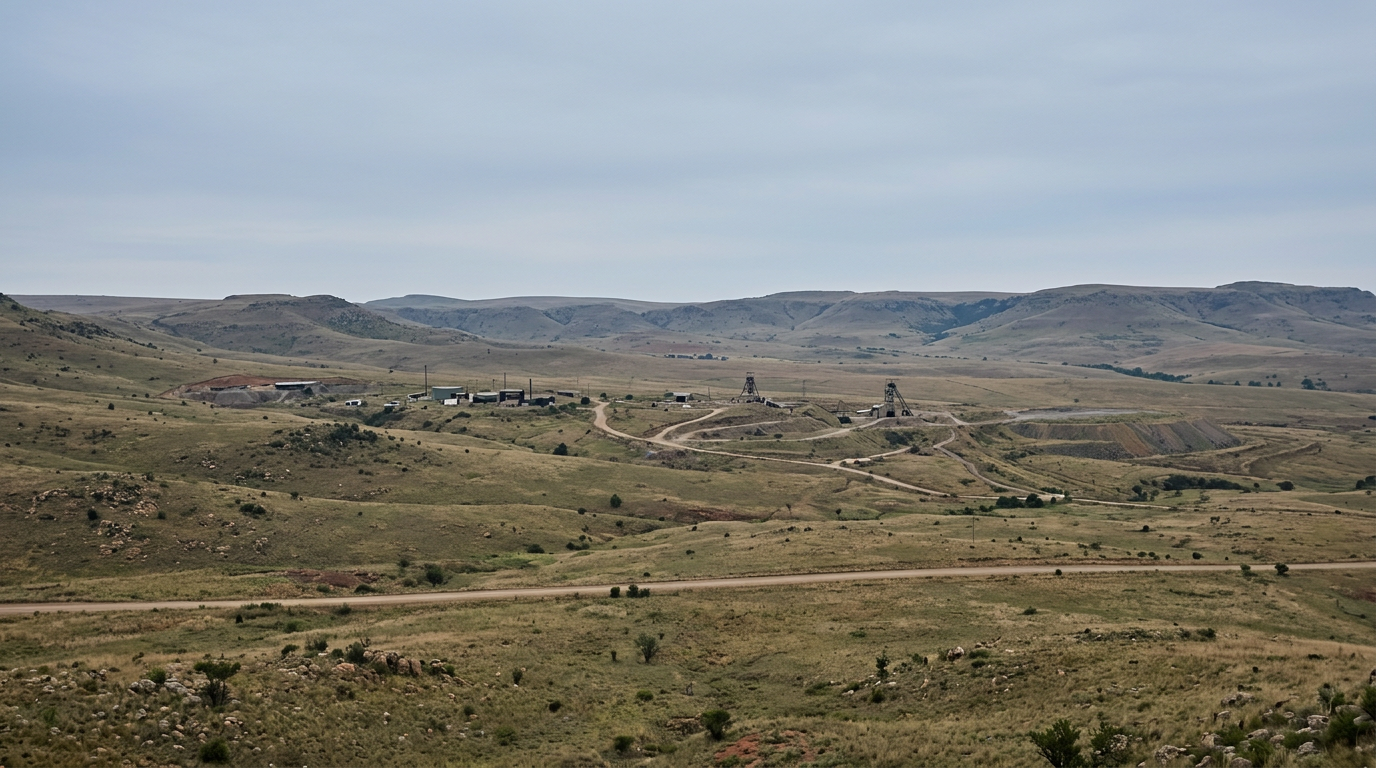
In 1886, an Australian miner named George Harrison stumbled upon an outcropping of gold-bearing conglomerate on a farm called Langlaagte. He had no idea he had found the edge of a massive underground golden bowl.
The formation is shaped like a giant saucer, with the rim exposed at the surface and the rest diving kilometres into the crust. Unlike the loose nuggets found during the California Gold Rush, Witwatersrand gold is locked inside hard rock reefs.
How One Place Got So Much Gold
Geologists have debated the origin of this bounty for a century. The leading theory, supported by researchers at the University of the Witwatersrand, suggests that the gold was washed into a massive inland sea by ancient rivers nearly 3 billion years ago.
Over eons, volcanic activity and tectonic pressure buried these deposits under layers of sediment and lava. This protected the gold from erosion, essentially deep-freezing half of the world's wealth until the 19th century.
The Deepest Work on Earth
Mining in the Witwatersrand is no longer about finding easy veins. It is a feat of extreme engineering. At the Mponeng Mine, workers travel 90 minutes just to reach the rock face.
The temperature of the rock at these depths reaches 60 degrees Celsius. To make work possible, massive refrigeration plants must pump ice slurry down from the surface to keep the tunnels at a bearable 28 degrees.
Real-World Applications
- Monetary Reserves: A significant portion of the bullion held in central bank vaults in New York and London was physically pulled from the Witwatersrand.
- Industrial Technology: The sheer volume of gold from this region helped drive down prices enough during the mid-20th century to make gold viable for high-end electronics and aerospace components.
- Urban Development: The infrastructure of modern South Africa, from its rail networks to its power grids, was built to serve the energy-intensive needs of these deep-level mines.
Interesting Connections
- Etymology: The South African currency, the Rand, is named directly after the Witwatersrand (literally Ridge of White Waters).
- Space Links: Some theories suggest the gold in the basin may have been concentrated by a massive meteorite impact at Vredefort, which occurred 2 billion years ago.
- Extreme Life: Scientists have discovered bacteria living 3 kilometres deep in the Witwatersrand mines that survive on radiation from uranium rather than sunlight.
Is there still gold left in the Witwatersrand?
Yes, billions of pounds worth of gold remain underground. However, it is located at depths that are currently too expensive or dangerous to reach with existing technology.
Why has South Africa’s production dropped?
In 1970, the country produced over 1,000 tonnes of gold. Today, it produces closer to 100 tonnes. This is due to the rising cost of electricity, the extreme depth of remaining veins, and the discovery of easier-to-mine deposits in China and Australia.
Is the gold in the Witwatersrand different from other gold?
Chemically, gold is an element and remains the same. However, Witwatersrand gold is typically found in a matrix of quartz pebble conglomerate, often associated with uranium and pyrite (fools gold).
Key Takeaways
- Centrality: No other mineral deposit in history has had a greater impact on the global economy.
- Geography: The basin is a 300km arc, making it a massive geological target that was hidden for billions of years.
- Engineering: The region has pushed the limits of human endurance, hosting the deepest mines ever constructed.
- Legacy: While production is declining, the Witwatersrand remains the gold standard for mineral wealth, literally and figuratively.
Frequently Asked Questions
Sources & References
 Encyclopaedia BritannicaDetails the history and geology of the Witwatersrand as the world's most productive gold district since its discovery in 1886.britannica.com
 WikipediaDocuments the scale, historical yield of over 1.5 billion ounces, and the geological formation of the Witwatersrand Basin.en.wikipedia.org
- WikipediaConfirms that Mponeng, situated in the Witwatersrand Basin, is the deepest underground mine on Earth reaching roughly 4 kilometres below the surface.en.wikipedia.org