
Quick Answer
Over two billion people globally still live without any internet access. Despite our obsession with hyper-connectivity, this stark reality reveals a massive digital divide that continues to shape our world. While many of us take instant information and banking for granted, those remaining offline are effectively locked out of essential modern education and vital financial services. It is a sobering reminder that for a vast portion of humanity, the digital revolution is still waiting to arrive, l
In a hurry? TL;DR
- 1Bridge the digital divide by treating high-speed internet as a fundamental utility, similar to water and electricity, to ensure universal access for underserved global populations.
- 2Address the high cost of data plans in developing nations, where expenses often exceed 5% of monthly income, to make connectivity affordable for lower-income households.
- 3Invest in digital literacy programs to assist the 773 million adults lacking basic skills, enabling them to navigate text-based online platforms and participate in the digital economy.
- 4Develop sustainable, off-grid energy infrastructure in remote regions to ensure that internet-enabled devices remain charged and operational where stable electricity is currently unavailable.
- 5Implement gender-targeted digital initiatives, as women in least developed countries are 30% less likely to use mobile internet, helping to close the pervasive global gender gap.
- 6Prioritize long-term infrastructure investment over temporary pandemic-driven surges to ensure that internet quality remains consistent across both urban centers and isolated rural communities.
Why It Matters
It is surprising to realise that despite our hyper-connected lives, over two billion people still remain entirely cut off from the digital world, creating a profound global divide in access to basic services like educati
While the digital world feels omnipresent, billions remain disconnected. In 2021, the International Telecommunication Union (ITU) reported that 2.9 billion people had never used the internet; by 2025, that number dropped to 2.2 billion.
The Offline Billion: At a Glance
- 2.9 Billion: Total people offline in 2021 (37% of the global population)
- 2.2 Billion: Estimated number of people still offline by 2025
- 96%: The percentage of the offline population living in developing countries
- 3.7 Billion: People who gained access between 2019 and 2021 during the pandemic spike
- 400%: The increase in data usage in some regions following infrastructure investment
Why It Matters
The digital divide is no longer just about convenience; it is a primary driver of global inequality that dictates who can access education, modern healthcare, and the global financial system.
The Illusion of Universal Connection
Living in a hyper-connected society creates a cognitive bias known as the availability heuristic. Because we use the internet for everything from banking to turning on lightbulbs, we assume the rest of the world does too.
The reality, according to the ITU, the UN agency for information and communication technologies, is far more fragmented. The 2021 surge in connectivity was largely a reaction to the COVID-19 pandemic, which forced governments to prioritise digital infrastructure.
However, even as the raw number of users climbs, the quality of that connection varies wildly. Being online in a rural village in Chad is not the same as being online in Seoul.
The Barriers to Entry
Connectivity is not just a matter of signal strength. Researchers identify three primary hurdles that keep 2.2 billion people in the dark:
Cost: In many Least Developed Countries (LDCs), the cost of a basic mobile data plan exceeds 5% of average monthly income, compared to less than 1% in wealthier nations.
Literacy and Skills: According to UNESCO, nearly 773 million adults lack basic literacy skills, making text-based internet navigation impossible without significant assistance.
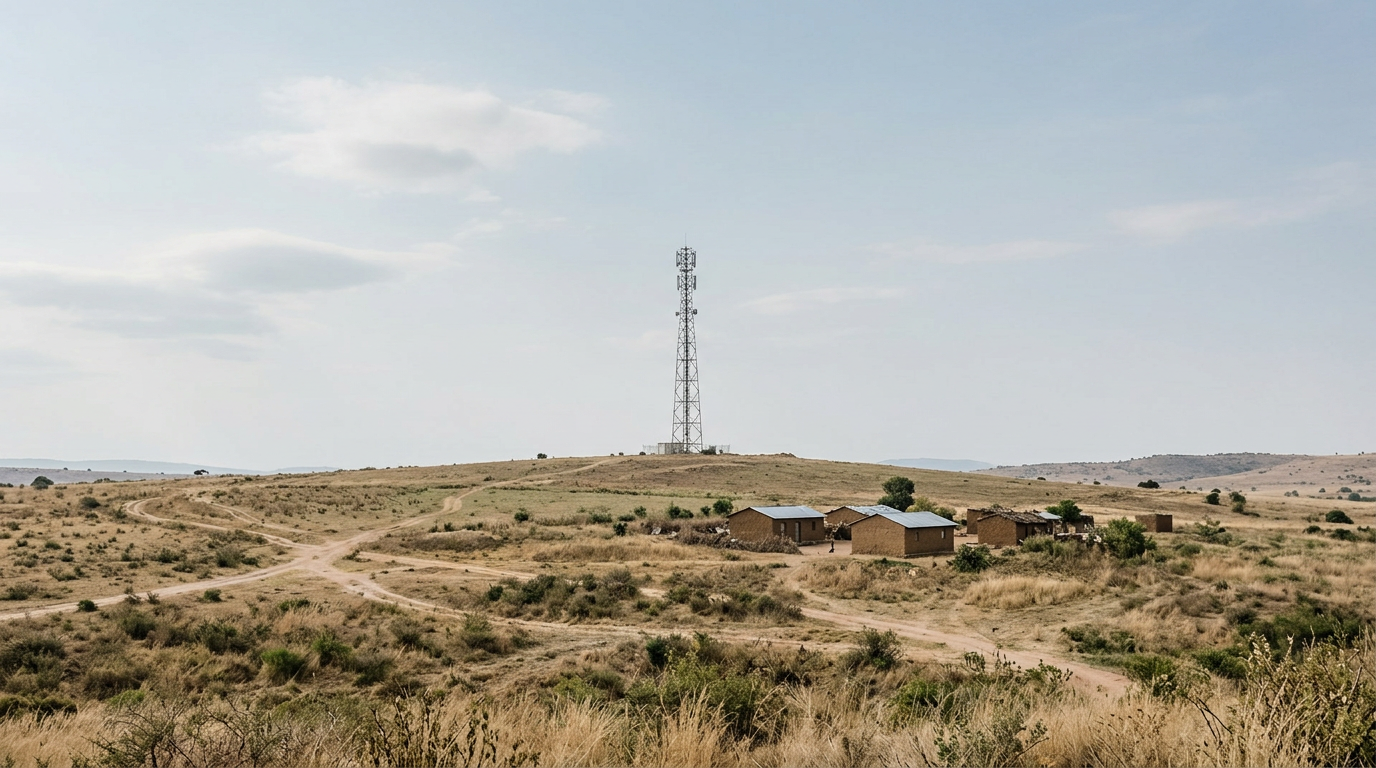
Infrastructure: Unlike urban hubs, remote regions often lack the stable electricity required to keep devices charged, let alone the fibre optic cables or satellite receivers needed for a signal.
The Impact of the 2021 Surge
The leap from 2019 to 2021 was the largest recorded increase in internet users in a decade. This was not a natural market evolution but a forced transition.
Governments that had previously treated high-speed internet as a luxury suddenly viewed it as a utility, akin to water or electricity. This shift was particularly evident in South Asia and parts of Africa, where mobile banking became a lifeline for those in lockdown.
Economic and Social Implications
Being offline in 2025 is an economic death sentence for a community. The World Bank notes that a 10% increase in broadband penetration can lead to a 1.2% increase in GDP growth in low-to-middle-income economies.
When 2.2 billion people are excluded from the digital economy, the world loses out on a massive pool of human capital. These individuals cannot participate in remote work, access global marketplaces, or utilize tele-health services that could save lives in regions with few physical doctors.
Why did the number of offline people drop so fast recently?
The COVID-19 pandemic acted as a catalyst. Schools moved online, and governments digitised social services, forcing a rapid expansion of mobile networks and a reduction in device costs.
Which regions have the lowest connectivity?
Sub-Saharan Africa and Southern Asia remain the least connected. In some LDCs, fewer than 20% of the population has ever accessed the web.
Does having a smartphone mean you are online?
Not necessarily. Many people own second-hand smartphones but lack the funds for data or live in areas where the only available signal is 2G, which is insufficient for modern web browsing.
Is satellite internet like Starlink the solution?
While satellite constellations provide coverage to remote areas, the hardware and monthly subscription costs remain prohibitively high for the majority of the 2.2 billion people currently offline.
The Path to 2030
The UN has set a goal for universal meaningful connectivity by 2030. This means not just having a signal, but having a connection that is fast, safe, and affordable.
As the digital world expands into AI and high-bandwidth services, the gap between the connected and the disconnected risks widening again. The 2.2 billion people remaining offline are not just a statistic; they represent a significant portion of the human experience that currently exists entirely outside the digital record.
Key Takeaways
- 2.2 Billion: The number of people still lacking internet access as of 2025.
- Pandemic Catalyst: The 2021 surge was driven by a global shift to digital services during lockdowns.
- Meaningful Access: Connectivity requires more than a signal; it requires affordability and digital literacy.
- Economic Gap: Lack of access directly correlates with lower GDP growth and restricted social mobility.
Frequently Asked Questions
Sources & References
 WikipediaBackground and contexten.wikipedia.org
 Scientific AmericanScientific research and analysisscientificamerican.com
 BBCReporting and verificationbbc.co.uk
- 4International Churchill SocietyDetails the ITU's 2021 assessment finding that 2.9 billion people—about 37% of the global population—remained offline, with 96% living in developing nations.itu.int