
Quick Answer
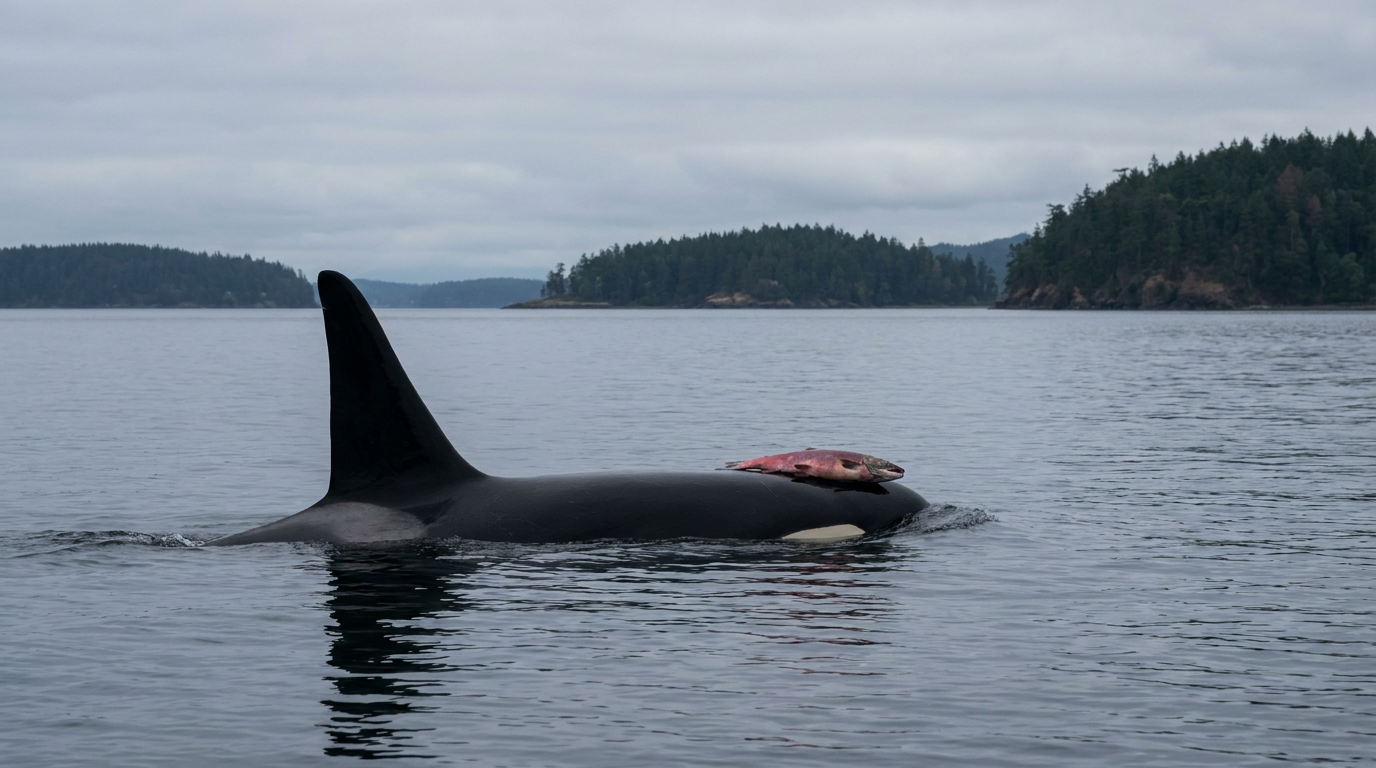
Orcas experience fleeting fashion trends, just like humans. Back in 1987, a group of killer whales inexplicably began balancing dead salmon on their heads, a bizarre fad that recently resurfaced in 2024. This behaviour proves that sophisticated culture and the desire to mimic the crowd are not unique to us. It is a fascinating glimpse into the lives of these highly intelligent creatures, revealing that they possess both a complex social structure and a surprisingly playful, creative side to thei
In a hurry? TL;DR
- 1Orcas demonstrate complex social cultures by adopting temporary, non-functional trends, such as the famous 1987 fad of balancing dead salmon on their heads for social cohesion.
- 2Recognize that orca behavior is not solely driven by instinct, but is heavily shaped by matrilineal traditions passed down through sophisticated social learning and cultural mimicry.
- 3View these animal fads as a form of cultural conformism, where younger orcas adopt behaviors to signal group membership, mirroring human teenage social trends and peer pressure.
- 4Understand that these performative activities highlight the high cognitive capacity of orcas, suggesting they possess sufficient leisure time and brain complexity to prioritize social novelty.
- 5Note that these behaviors are transmitted through pods, meaning that observing specific object interactions can provide researchers with deep insights into how distinct orca cultures evolve.
- 6Observe that these trends are often ephemeral, appearing and disappearing quickly, which serves as a benchmark for studying how information spreads and fades within marine populations.
Why It Matters
It is fascinating to realise that orcas possess a complex sense of culture, proving they are capable of adopting fleeting social trends for no other reason than to copy their peers.
Orcas exhibit temporary, non-functional social fads, such as the 1987 phenomenon where Puget Sound pods began wearing dead salmon as hats. This behaviour serves no evolutionary purpose beyond social mimicry and often disappears as quickly as it arrives.
Quick Answer
Orcas engage in social fads that mirror human fashion trends, most notably a 1987 craze where individuals balanced dead salmon on their heads. These behaviours are transmitted through social learning rather than biological necessity.
The Salmon Hat Trend: By the Numbers
- Year of First Sighting: 1987
- Primary Location: Puget Sound, Washington
- Duration of Original Fad: Approximately 6 weeks
- 2024 Revival Location: Near the Strait of Gibraltar
- Number of Participating Pods: 3 distinct pods in the initial 1980s event
Why It Matters
This behaviour proves that high-level social learning and cultural transmission are not exclusive to humans. It suggests orcas possess enough leisure time and cognitive complexity to engage in activities purely for social cohesion or novelty.
The Summer of the Salmon Hat
In 1987, a female orca from the J-Pod in the Puget Sound was spotted carrying a dead salmon on her nose. Within weeks, the behaviour spread to the K and L pods. It was not a feeding strategy; the fish were simply worn until they slid off.
The trend was a viral sensation in the marine world. By the end of that summer, the craze vanished. For over thirty years, the salmon hat remained a bizarre footnote in marine biology until 2024, when similar head-balancing behaviours were documented in different orca populations.
Social Learning and Cultural Transmission
According to researchers at the University of Exeter, orcas have some of the most sophisticated social structures on the planet. Unlike other apex predators that rely solely on instinct, orca behaviour is heavily dictated by the specific traditions of their matrilineal pods.
While most cultural traits are functional—such as the unique wave-washing hunting technique used by Antarctic orcas—fads like the salmon hat are different. They are classified as cultural conformism. Younger whales likely copy the elders to signal membership within the group, much like human teenagers adopting specific clothing brands.
The 2024 Revival
In early 2024, sightings near the Iberian Peninsula suggested the trend-making impulse had not faded. While not always using salmon, orcas were observed interacting with objects and debris in ways that appeared performative rather than predatory.
This mirrors other documented fads, such as the period in the 1990s when certain pods became obsessed with playing with crab pots, or the recent, more aggressive trend of orcas bumping into yacht rudders. While the rudder-bumping has tactical elements, scientists believe the spread of the behaviour is driven by the same social mimicry that fuelled the salmon hats.
Practical Applications and Examples
- Cultural Identification: Marine biologists use these fads to track how information flows between different orca communities.
- Conservation Strategy: Understanding that orcas learn from one another means that if one whale learns to avoid a specific type of fishing gear, the knowledge could theoretically spread through the population.
- Captive Behaviour: Observations of "fads" in captivity often manifest as repetitive or neurotic movements, highlighting the stark difference between natural social play and confined stress.
Interesting Connections
- Etymology: The word orca comes from the Latin orcus, referring to the underworld or a bringer of death, though their social lives suggest a far more playful nature.
- Comparative Context: Similar fads are seen in chimpanzees, such as a documented trend in a Zambian sanctuary where a group began sticking blades of grass in their ears for no apparent reason.
- Folklore: Indigenous cultures in the Pacific Northwest have long depicted orcas as social beings with their own "nations," a belief that modern science is now validating through the study of pod-specific traditions.
Do all orcas wear salmon hats?
No, it was a localized event specific to the Southern Resident orcas in the late 1980s. While similar behaviours emerge elsewhere, they are pod-specific.
Why did they stop doing it?
Like human fashion, the novelty likely wore off. Once the behaviour no longer provided a social dopamine hit or lost its "cool" factor among the dominant females, it was abandoned.
Is the boat-ramming in Europe a fashion trend?
It is debated. Some experts believe it started as a defensive reaction to a collision, while others argue it has become a social fad among juvenile orcas who find the activity stimulating.
Key Takeaways
- Orca Culture: They are one of the few species capable of "meaningless" social trends.
- Social Mimicry: Fads spread through pods to reinforce social bonds and group identity.
- Beyond Survival: These behaviours prove that orcas have the cognitive bandwidth for activities that do not involve hunting or breeding.
- Temporary Nature: Most orca fads are short-lived, lasting only a few months before disappearing for decades.
Frequently Asked Questions
Sources & References
 WikipediaDescribes cultural transmission and temporary social fads in killer whales, including the 1987 trend of Puget Sound orcas carrying dead salmon on their heads.en.wikipedia.org
- 2Royal Society PublishingReviews the scientific evidence for cultural conformism, social learning, and behavioral fads that spread through cetacean populations.royalsocietypublishing.org