
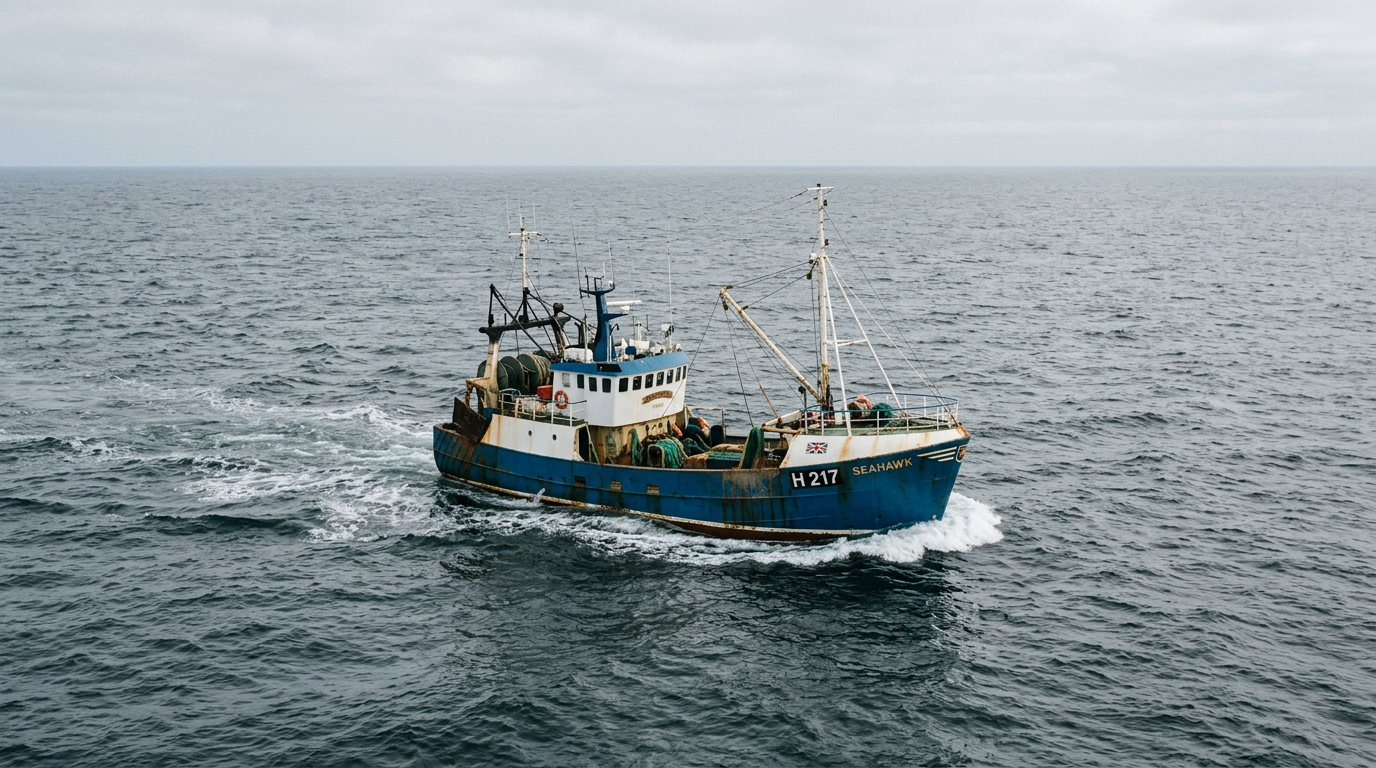
In a hurry? TL;DR
- 1To fulfill its purpose, a ship (or any tool) must leave port and face risks, not remain safe and unused.
- 2Prioritizing the complete avoidance of failure means abandoning the very reason for your existence or creation.
- 3True preservation isn't about preventing damage, but about actively using and functioning to achieve your intended goal.
- 4Accepting calculated risks leads to mastery and progress, while avoiding all risk results in stagnation and uselessness.
- 5In careers and product development, embrace challenges and 'imperfect' launches to foster growth and achieve function.
- 6The pursuit of absolute safety often leads to missing out on meaningful experiences and fulfilling one's potential.
Why It Matters
This idea is interesting because it suggests that true usefulness comes not from avoiding damage, but from actively engaging in the very purpose for which something was created.
Risk is the price of purpose. Thomas Aquinas argues that safety, when pursued as an ultimate goal, renders an object or a person completely useless.
- Ships are built for the sea, not the harbour.
- Avoiding failure often means avoiding the very reason for your existence.
- Stability is a tool, but utility requires exposure to risk.
- True preservation comes through fulfilling a function, not hiding from damage.
This quote serves as a sharp reminder that the safest path is rarely the most meaningful one.
The Logic of Purpose
Thomas Aquinas was not a sailor, but he understood the mechanics of intent. In his Summa Theologica, he explored the nature of virtue and the end goals of human action. His observation about the captain is a masterclass in teleology: the study of purpose.
If a captain defines success solely as the absence of damage, he has failed his primary duty. A ship that never leaves the port remains pristine, but it ceases to be a ship in any functional sense. It becomes a museum piece, a hollow shell that occupies space without providing value.
The Paradox of Safety
Modern risk management often falls into the trap Aquinas identified. Unlike other medieval thinkers who focused purely on spiritual asceticism, Aquinas recognised that worldly action requires a degree of calculated peril.
Consider the development of the British Royal Navy. During the Age of Sail, the cost of timber was so high that losing a first-rate ship of the line was a national disaster. Yet, compared to the French navy, which often stayed in port to preserve their fleet for a single decisive battle, the British kept their ships at sea in all weather.
The result? The ships suffered more wear and tear, but the crews became the most proficient in the world. By risking the vessel, they secured the empire. Preservation through stagnation leads to atrophy; preservation through use leads to mastery.
Practical Applications
Applying the captain’s logic requires distinguishing between reckless gambles and necessary exposure.
Career Growth: Declining a challenging project because you might fail is the equivalent of staying in port. You preserve your record but stunt your development.
Product Development: Shipping a version 1.0 that might have bugs is better than never launching at all. In contrast to perfectionists, successful innovators accept the friction of the real world.
Similar Perspectives
- Seneca: A ship should not rely on one small anchor, nor should life rest on a single hope.
- Theodore Roosevelt: Far better it is to dare mighty things, to win glorious triumphs, even though checkered by failure, than to take rank with those poor spirits who neither enjoy much nor suffer much.
- John A. Shedd: A ship in harbour is safe, but that is not what ships are built for.
Does this mean all risk is good?
No. Aquinas emphasizes the highest aim. Risk should be subservient to a goal, not an end in itself.
How does this apply to mental health?
Over-protection can lead to fragility. Psychologists often suggest that gradual exposure to challenges builds resilience, whereas total avoidance increases anxiety.
Who was Thomas Aquinas?
He was a philosopher and theologian who laid the intellectual groundwork for much of Western thought, particularly in ethics and natural law.
Key Takeaways
- Function over form: An object's value is found in its use, not its appearance.
- The cost of inaction: Choosing safety has a hidden price tag: the loss of potential.
- Goal alignment: Ensure your desire for security isn't sabotaging your primary mission.
For more on philosophy and decision-making, see our guides on Stoic principles, the OODA loop, and the Lindy Effect.
Historical Context
This profound observation is attributed to Thomas Aquinas, a hugely influential scholastic philosopher and theologian of the 13th century. While he never sailed, his work, notably the Summa Theologica, delved into ethics, virtue, and the purpose of human existence. The quote serves as an analogy within his broader philosophical explorations, highlighting the teleological perspective – the study of purpose and end goals. It underscores the idea that the true essence and utility of a thing, whether a ship or an individual, are realised only through fulfilling its intended function, which inherently involves exposure to risk and challenge.
Meaning & Interpretation
Aquinas argues that true preservation or success doesn't come from avoiding all potential harm, but from fulfilling one's designated purpose. Keeping a ship perpetually in port ensures its physical safety, but it fundamentally negates its reason for being, rendering it useless as a vessel. The quote suggests that an overemphasis on safety, to the exclusion of action and risk, leads to stagnation and a failure to achieve inherent potential. It's a call to embrace calculated risks, recognising that purpose often demands venturing beyond comfort and security.
When to Use This Quote
This quote is particularly apt when discussing decision-making in business, personal growth, or leadership. It's useful when advocating for innovation, encouraging calculated risk-taking, or challenging overly cautious strategies that hinder progress. For instance, in a team meeting debating a new project with inherent risks, it can be used to remind colleagues that inaction can be more detrimental than potential failure. Similarly, it applies to personal development, urging individuals to step out of their comfort zones to achieve their full potential, rather than remaining in a 'safe' but unfulfilling state.
Frequently Asked Questions
Sources & References
- 1Albert Einstein — WikiquoteThis source documents various quotations attributed to or related to Thomas Aquinas, providing a potential reference point for the 'ships are built for the sea' sentiment, though it might be a paraphrase rather than a direct quote.en.wikiquote.org
 WikipediaThis source provides comprehensive biographical information about Thomas Aquinas, detailing his life, work, and influence as an Italian Dominican friar and philosopher.en.wikipedia.org
- 3Catholic Encyclopedia (New Advent)This source provides the full text of Thomas Aquinas's Summa Theologica, where his philosophical and theological ideas, including those on purpose and human action, are extensively explored.newadvent.org