
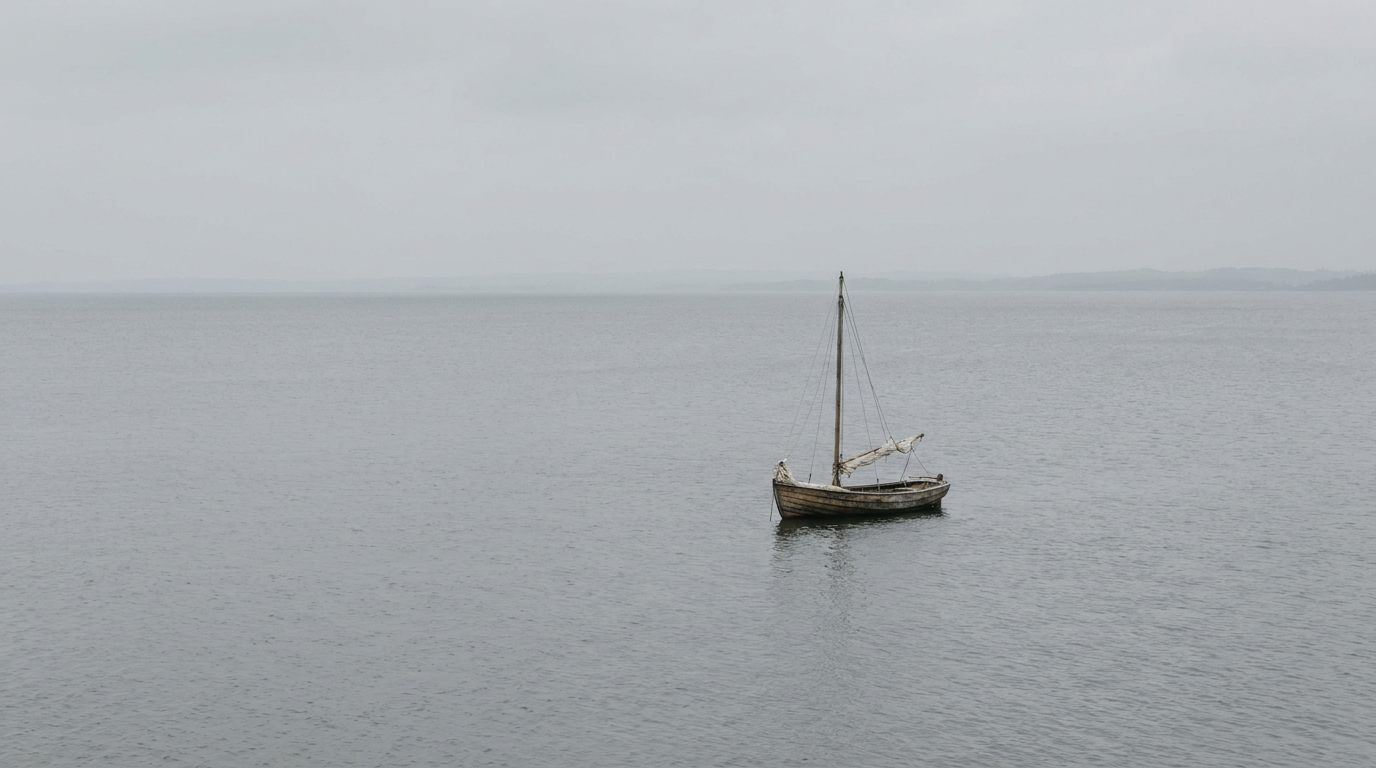
About Seneca the Younger
In a hurry? TL;DR
- 1Define your specific destination before seeking opportunities, as resources and favourable circumstances are only valuable when they actively contribute to achieving your clearly stated long-term goals.
- 2Distinguish between productive effort and aimless busywork by evaluating whether your current actions move you toward a target or merely generate static movement without progress.
- 3Adopt a mindset of goal-based filtering to decline irrelevant opportunities, recognizing that any wind or circumstance is a distraction unless it directly aids your intended voyage.
- 4Shift your primary focus from the mechanics of hustling to the clarity of your map, as working hard on the wrong path yields no meaningful results.
- 5View luck as a function of design rather than chance, understanding that you must define your purpose first to recognize which external factors serve your success.
Why It Matters
This insight is powerful because it reframes luck not as a random occurrence, but as a deliberate outcome that only becomes visible once you have established a clear destination.
Directionless effort is the enemy of progress. If you do not have a defined destination, even the most helpful circumstances become irrelevant distractions because you have no criteria to judge their value.
- Intent precedes utility: Resources are only useful if they serve a specific objective.
- The trap of busywork: Movement without a goal is merely vibration, not travel.
- Strategic selection: A clear target allows you to ignore the wrong opportunities.
- Stoic pragmatism: Success is defined by alignment with purpose, not just raw effort.
Understanding your intent is the prerequisite for recognising opportunity.
The Tyranny of the Aimless
Seneca the Younger, the Roman Stoic philosopher and advisor to Nero, wrote this in his Letters from a Stoic (Epistulae Morales ad Lucilium). It is a masterclass in nautical metaphor that exposes a psychological truth: opportunity is invisible to the unprepared.
In the original Latin, Seneca writes: ignoti nulla cupido. This translates roughly to there is no desire for the unknown. Without a port, a sailor cannot trim their sails. A gale from the north is a blessing to one man and a catastrophe to another; without a destination, it is just noise.
Modern productivity culture calls this intentionality, but Seneca viewed it as a matter of character. He lived in the high-stakes theatre of the Roman Imperial Court, where a lack of clarity could lead to execution. To Seneca, life was a navigation exercise through the shifting winds of fortune.
Unlike modern self-help which focuses on the hustle, Seneca focuses on the map. He suggests that most people aren't failing because they lack strength or favourable winds, but because they are drifting. They are waiting for a breeze to tell them where to go, rather than using the breeze to get where they need to be.
Context and Origin
Seneca wrote these words to his friend Lucilius. At the time, Rome was a chaotic superpower. Seneca was attempting to teach Lucilius how to maintain mental clarity amidst the noise of the city and the volatility of politics.
Practical Applications
Goal-based filtering: When a new opportunity arises, ask if it blows you toward your port. If it does not, it is not a favourable wind; it is a distraction.
Defining the port: Spend more time on the destination than the mechanics. Hard work on the wrong path is a waste of life.
The power of No: Having a port gives you the courage to reject winds that look good to everyone else but take you off course.
Similar Perspectives
Marcus Aurelius: A fellow Stoic who argued that the mind should be like a rock in the sea, unaffected by the waves.
The Cheshire Cat: In Alice in Wonderland, Lewis Carroll mirrors this logic. When Alice asks which way she ought to go, the cat replies that it depends on where she wants to get to.
Viktor Frankl: The psychiatrist argued that those with a why (a port) could survive almost any how (the wind).
Does this mean I can never change my mind?
No. You can change ports, but you must do so consciously. Drifting is the absence of a port; changing course is the selection of a new one.
What if I don't know my port yet?
Then your current port is exploration. Until you find a permanent destination, your goal is to gather data and test different waters.
Is Seneca saying luck doesn't exist?
He is saying luck is useless if you can't harness it. A winning lottery ticket is a favourable wind, but without a plan, it rarely leads to long-term wealth.
Key Takeaways
- Clarity is the multiplier of effort.
- Without an objective, all resources are wasted.
- Decision-making becomes easier once the destination is fixed.
- Stoicism is about control, and control begins with direction.
Read more on internal-link-stoic-philosophy, internal-link-seneca-biography, and internal-link-mental-models.
Historical Context
This maxim appears in Seneca the Younger's Epistulae Morales ad Lucilium (Moral Letters to Lucilius), specifically in Letter 71, composed around AD 63 to 65. Seneca, a prominent Roman Stoic philosopher and former tutor and political advisor to Emperor Nero, spent his final years in semi-retirement, writing reflective counsel to his friend Lucilius, a procurator in Sicily. Living amidst the unpredictable, perilous politics of the Roman imperial court, Seneca understood the danger of living reactively. The letter serves as an ethical guide, urging Lucilius to anchor his mind to virtue and a coherent life purpose, rather than drifting haphazardly on the whims of external circumstances and political instability.
Meaning & Interpretation
Seneca uses a vivid nautical metaphor to convey that opportunity and good fortune are meaningless without a defined objective. Just as a sailor requires a specific destination to determine whether a breeze is helpful or hazardous, an individual must establish a clear purpose to capitalise on external circumstances. Without an overarching goal, effort is merely chaotic motion, and seemingly lucky breaks cannot be exploited effectively because there is no framework to evaluate their utility. Ultimately, the quote argues that direction must precede action: clarity of intent transforms random events into meaningful tailwinds.
When to Use This Quote
Deploy this quote during leadership meetings, strategic reviews, or personal coaching sessions when a team or individual displays high energy but lacks direction. It serves as an incisive critique of busywork and reactive decision-making, reminding others that working tirelessly without a targeted outcome yields little actual progress. It is equally valuable for anyone facing career crossroads, cautioning against accepting attractive offers without first evaluating whether they genuinely align with their ultimate ambitions.
Frequently Asked Questions
Sources & References
- 1Albert Einstein — WikiquoteDocuments Seneca the Younger's quotes from Epistulae Morales ad Lucilium, including his reflections on navigating life and sailing without a port.en.wikiquote.org
 Encyclopaedia BritannicaProvides biographical details on Roman Stoic philosopher Seneca the Younger, his political career under Nero, and his philosophical writings.britannica.com
 WikipediaCovers the life, Stoic philosophy, and literary works of Seneca the Younger, including his moral epistles to Lucilius.en.wikipedia.org