
Quick Answer
Rugose means wrinkly or ridged. This word is fantastic for describing textures that aren't just bumpy, but have a more substantial, uneven quality. Think of old leather or the surface of certain leaves – "rugose" captures that deeply creased appearance, often suggesting age, resilience, or interesting natural development.
In a hurry? TL;DR
- 1Use 'rugose' for surfaces with deep wrinkles, ridges, or corrugations, not just simple wrinkles.
- 2It's a precise adjective originating from Latin, meaning 'full of wrinkles'.
- 3Examples include brain tissue, tree bark, walnut shells, and coral reefs.
- 4Rugosity often indicates functional efficiency and complexity in biological structures.
- 5This term is valuable in biology, botany, geology, and formal descriptive writing.
- 6It neutral describes texture, implying ruggedness or age without negative connotations.
Why It Matters
Rugose is a surprisingly useful word for describing the intricate, folded textures crucial for everything from high-level thinking to the survival of ancient coral reefs.
Rugose describes a surface that is wrinkled, corrugated, or ridged. It is a precise term for textures that are naturally uneven rather than smooth or flat.
Why It Matters Using rugose instead of simply wrinkled elevates your description from a general observation to a specific, structural detail.
Quick Reference
Part of Speech: Adjective Pronunciation: ROO-gohs (/ˈruːɡoʊs/) Meaning: Marked by wrinkles, ridges, or corrugations.
The Texture of Complexity
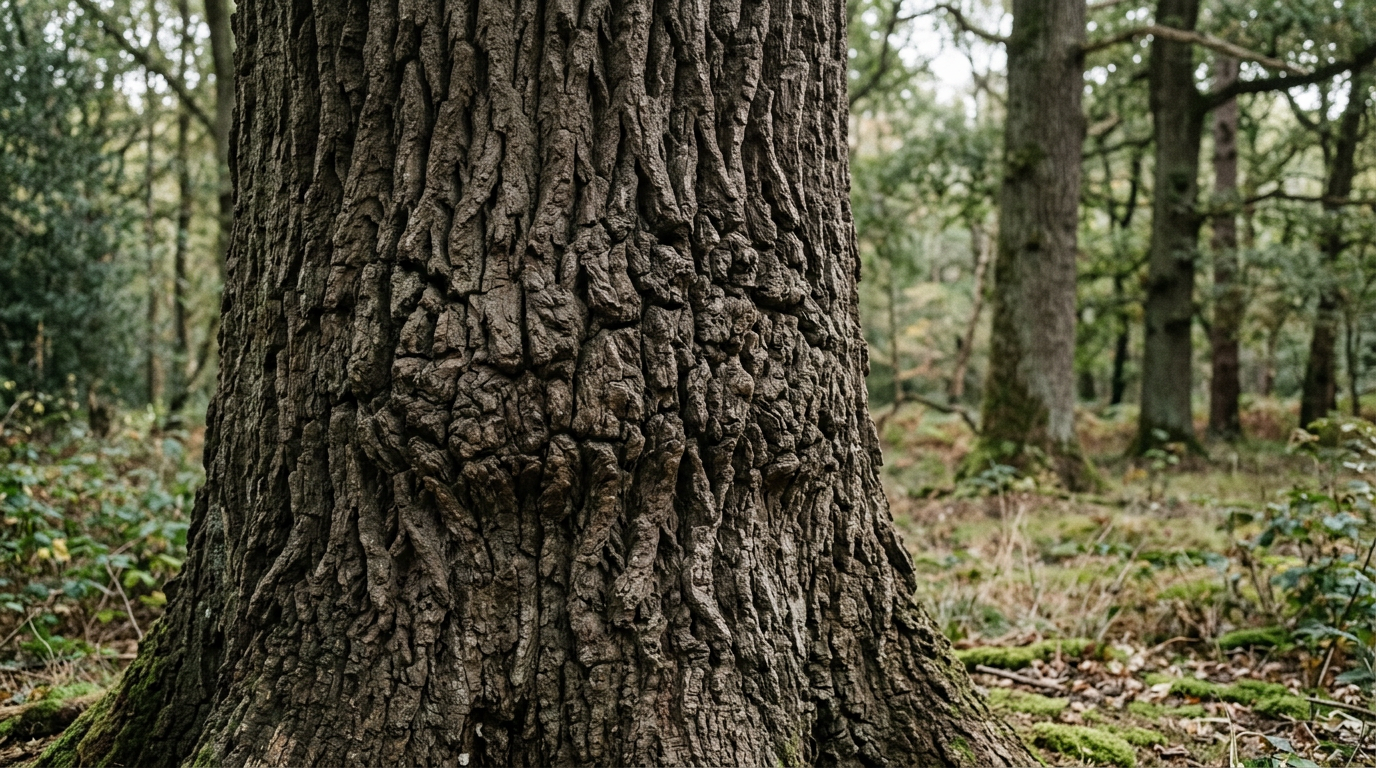
Rugose is the word you need when wrinkled feels too flimsy. A linen shirt is wrinkled; a walnut shell, a dried prune, or the surface of a coral reef is rugose. It implies a deeper, more structural unevenness.
In biology, rugosity is often a sign of functional efficiency. According to researchers at the University of Cambridge, the rugose nature of the human cerebral cortex allows for a massive surface area to be packed into the limited space of the skull. This folding is what enables our high-level cognitive functions. Unlike the smooth brain surfaces of simpler organisms, our rugose architecture is a mark of complexity.
The word suggests a certain ruggedness or age. It is the texture of survival and adaptation, found in the thick, protective bark of ancient oaks or the weathered skin of a desert reptile. While many words for uneven surfaces carry negative connotations, rugose is neutral and descriptive, focusing on the geometry of the object rather than its aesthetic flaws.
Examples in Context
- Botany: The rugose leaves of the sage plant provide a tactile contrast to the smooth, waxy foliage of the surrounding ivy.
- Geology: Hikers found the ascent difficult due to the rugose limestone, which offered excellent grip but shredded their gloves.
- Literature: The detectives noted that the suspects face was rugose and weathered, suggesting a life spent working on the open sea.
- Anatomy: Doctors examined the rugose lining of the organ to ensure the folds were healthy and capable of expansion.
Related Concepts
- Synonyms: Corrugated, furrowed, ridged, scabrous.
- Antonyms: Glabrous, smooth, le平, polished.
- Related terms: Rugosity (the state of being rugose), Rugulate (having small wrinkles).
What is the difference between rugose and wrinkled?
Wrinkled is a general term often associated with fabric or skin aging. Rugose is more formal and usually refers to a permanent, structural texture like that of a leaf or a specific type of rock.
How do you use rugose in a sentence?
You use it to describe a surface that has distinct, raised ridges. For example: The rugose texture of the tire provided extra traction on the muddy road.
Is rugose used in medicine?
Yes, it is frequently used to describe the internal linings of organs, such as the stomach or the gallbladder, which feature folds called rugae.
Key Takeaways
- Use rugose to describe permanent, ridged textures.
- It is a more precise alternative to words like bumpy or wrinkled.
- It carries a scientific and formal tone suitable for technical descriptions.
- The word highlights the beauty of structural complexity in nature.
Example Sentences
"The surgeon noted the rugose texture of the affected organ tissue during the biopsy."
"Examining the fossil, the palaeontologist could clearly identify the rugose surface of the ancient coral."
"Gardeners often notice the rugose skin of ripening plums, indicating their readiness for picking."
"The artist used a special technique to create a beautifully rugose surface on the ceramic vase, giving it an antique feel."
"Scientists are studying the rugose folds of the human brain to better understand its cognitive capacities."
Frequently Asked Questions
Sources & References
- 1Collins DictionaryThis source offers the definition, synonyms, and usage examples for 'rugose'.collinsdictionary.com
 Merriam-WebsterThis source provides the definition, pronunciation, and examples of the word 'rugose'.merriam-webster.com
- 3Online Etymology DictionaryThis source details the etymology of 'rugose', tracing its origin back to Latin 'rugosus' and 'ruga'.etymonline.com