
Quick Answer
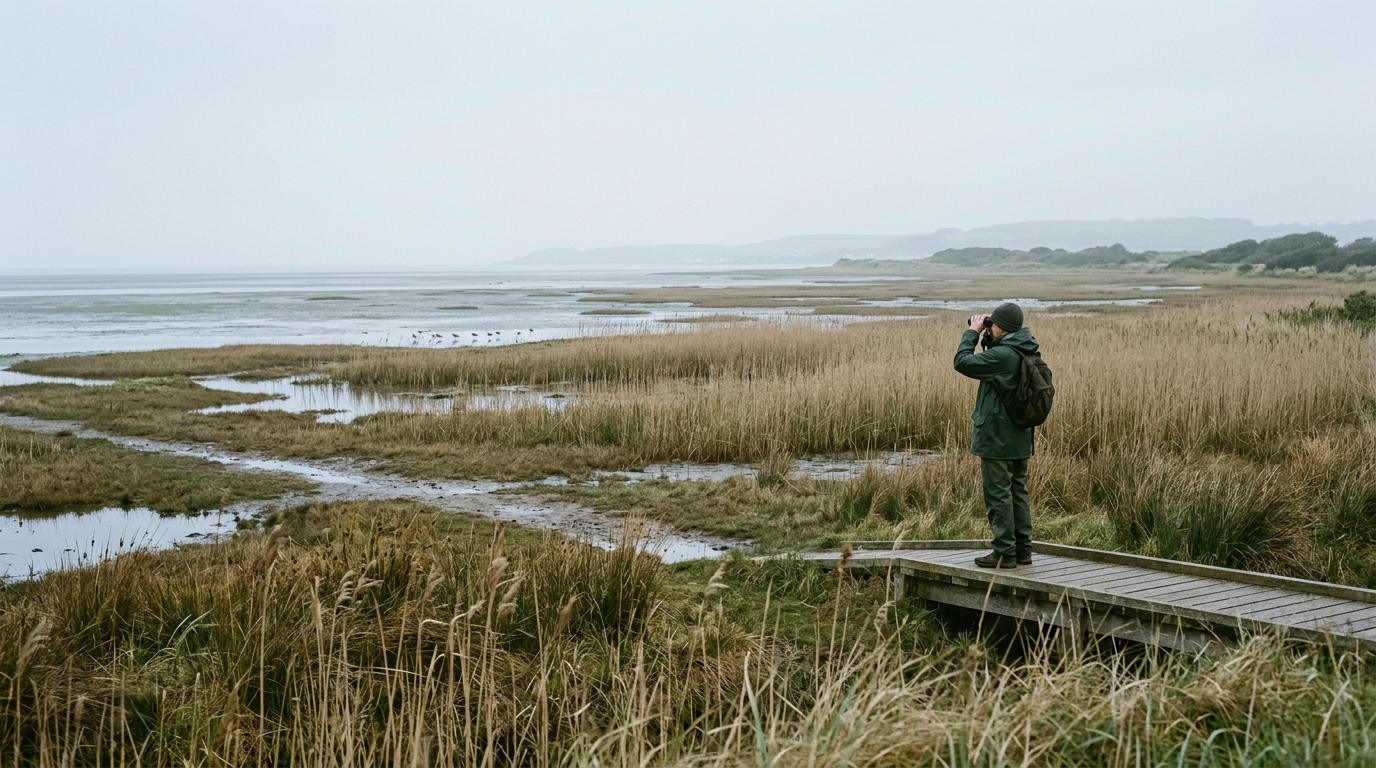
Descry means to spot something that's hard to see, especially after looking intently. It's a rather romantic word, evoking that satisfying moment of discovery, like a sailor catching sight of land through the mist, implying a keen, active perception rather than just a glance.
In a hurry? TL;DR
- 1Descry means to spot something distant, obscure, or hidden through careful, active observation, implying effort.
- 2It signifies a transition from passive seeing to active discovery, highlighting the act of perception.
- 3Descry implies overcoming visual obstacles like fog, darkness, or camouflage to achieve detection.
- 4Unlike 'describe', 'descry' focuses on the moment of revelation and spotting something previously unseen.
- 5Use 'descry' for objects of significance or scale that require scrutiny to be revealed.
- 6It's a literary term suggesting a victory over interference, contrasting with modern verbs like 'spot' or 'find'.
Why It Matters
The word "descry" is interesting because it precisely captures the satisfying moment of discovering something hidden through focused effort, distinguishing you as a perceiver rather than just an observer.
To descry is to catch sight of something distant, obscure, or difficult to see through careful observation. It implies the act of spotting something that was previously hidden or hard to distinguish from its surroundings.
The Quick Reference
- Part of Speech: Verb
- Pronunciation: dih-SKRAHY (/dɪˈskraɪ/)
- Definition: To catch sight of; to discover or discern by looking carefully.
Why It Matters
Using descry signals a transition from passive looking to active discovery, separating the casual observer from the one who truly perceives.
The Art of Sharp Sight
Descry is not just about the eyes; it is about the effort. While we see a sunset or notice a friend, we descry a sail on the horizon or a subtle flaw in a diamond. It is a word of distance and detail. Unlike its phonetic cousin describe, which tells what something is, descry focuses on the moment of revelation.
It fills a specific linguistic gap for those moments when an object reveals itself only after intense scrutiny. In maritime history, a lookout in the crow’s nest did not just see land; they descryed the faint coastline through the morning mist. This nuance suggests a victory over visual interference, whether that be fog, darkness, or camouflage.
In contrast to modern verbs like spot or find, descry carries a sense of literary weight. It suggests that the thing being seen has some significance or scale. According to researchers at the University of Michigan’s Middle English Compendium, the word has shifted from its early meanings of decrying or denouncing toward its modern sense of visual detection.
The Linguistic Roots
Descry in Action
- The sailor climbed the rigging, hoping to descry the lights of the harbour before the storm intensified.
- After hours of studying the satellite imagery, the archaeologist managed to descry the outlines of a buried temple.
- Even with a telescope, it was difficult to descry the individual rings of the distant planet through the atmospheric haze.
- She scanned the crowd for hours before she finally managed to descry her brother’s red hat near the stage.
Synonyms and Antonyms
- Synonyms: Discern, espy, perceive, spot, detect.
- Antonyms: Overlook, miss, ignore, neglect.
Usage Tips
- Use for Distance: Save descry for things that are far away or visually faint. You wouldn't descry your keys on the coffee table, but you might descry a hidden mountain pass.
- Focus on Effort: Use the word when the character or subject has to work to see something. It implies a reward for paying attention.
What is the difference between descry and describe?
While they sound similar, they are unrelated in meaning. Descry is the act of seeing or discovering, whereas describe is the act of representing something in words.
Is descry the same as discern?
They are close, but discern often implies a mental understanding or a moral judgment, while descry is almost exclusively tied to physical vision and the act of spotting.
How do you use descry in a sentence?
It is a transitive verb, meaning it needs an object. You descry a thing, such as a landmark, a signal, or a pattern.
Key Takeaways
- Visual Discovery: To descry is to see something that is not immediately obvious.
- Active Effort: The word implies a deliberate search or keen observation.
- Historical Shift: It evolved from a word about shouting or betraying secrets to a word about visual perception.
- Literary Tone: It adds a layer of precision and elegance to descriptions of searching or scouting.
Example Sentences
"From the top of the hill, we could just descry the distant shimmer of the sea."
"The scout attempted to descry any movement in the dense undergrowth, but saw nothing."
"It took a moment for my eyes to adjust, but eventually, I managed to descry the faint outline of the old lighthouse."
"After hours of searching, the explorers were relieved to descry a small village in the valley below."
"Despite the fog, the captain hoped to descry land before nightfall."
Frequently Asked Questions
Sources & References
 Merriam-WebsterThis source provides the definition, pronunciation, and synonyms for 'descry', and shows example sentences of its usage.merriam-webster.com
- 2Collins DictionaryThis source offers multiple definitions, example sentences, and notes on the usage and nuance of 'descry'.collinsdictionary.com
- 3Online Etymology DictionaryThis source details the etymology of 'descry', tracing its origins from Old French and explaining the shift in its meaning over time.etymonline.com