
Quick Answer
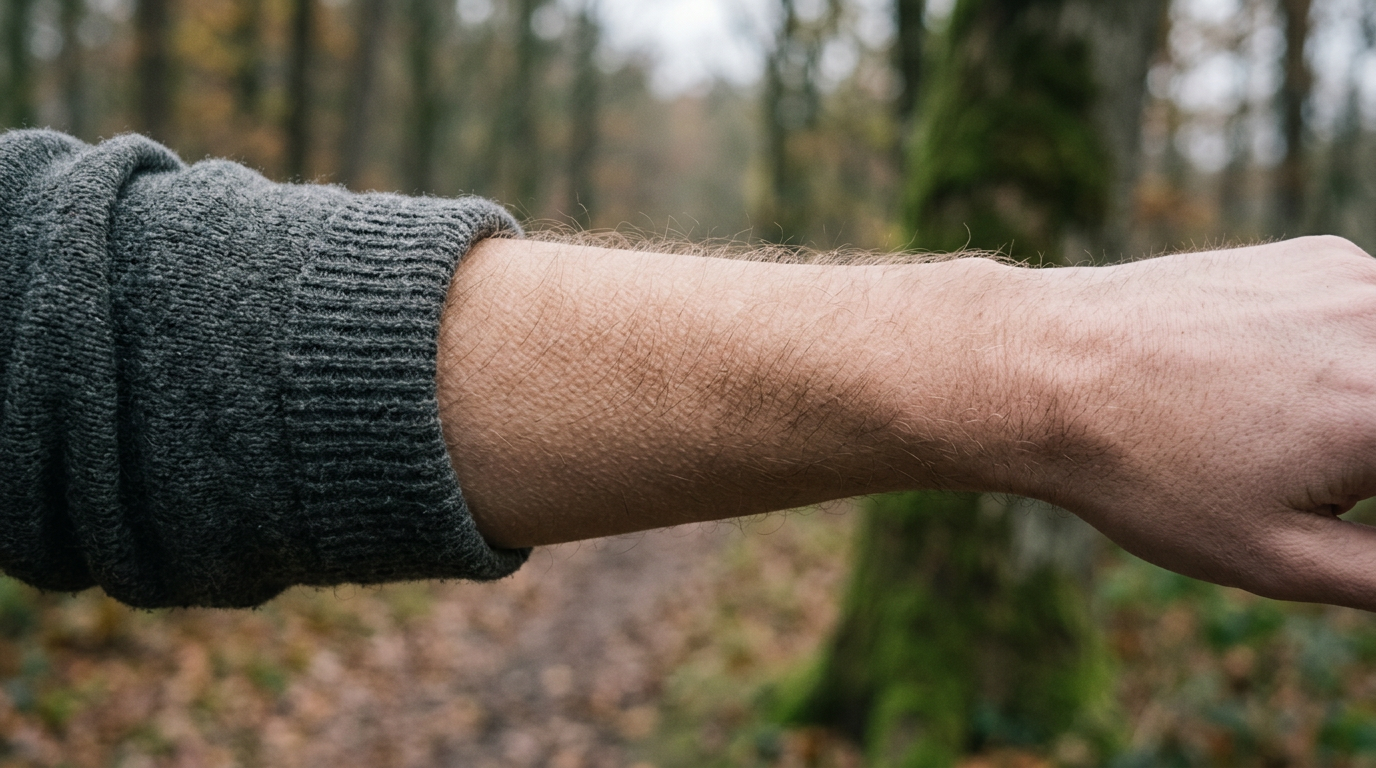
Horripilation is the medical term for goosebumps. This is when your body hairs stand on end, causing those familiar bumps on your skin. It's an ancient reflex that once helped our ancestors get warmer or appear more intimidating, and it still happens to us when we're cold, frightened, or intensely moved.
In a hurry? TL;DR
- 1Horripilation, or goosebumps, is a vestigial reflex from our furry ancestors, meant for insulation and intimidation.
- 2It's triggered by cold, fear, or excitement, activating the sympathetic nervous system's fight-or-flight response.
- 3Unlike 'goosebumps,' 'horripilation' implies a visceral, intense reaction, often used in medical or literary contexts.
- 4The term comes from Latin roots 'horrere' (to bristle) and 'pilus' (hair), linking it to the word 'horror.'
- 5Use 'horripilation' to convey a deeper, more atmospheric, or clinical skin-crawling sensation in your writing.
- 6The sensation can be accompanied by 'frisson,' a physiological chill often associated with intense emotional experiences.
Why It Matters
Horripilation is a surprisingly useful word that connects our primal, involuntary physical reactions to profound emotions with a clinical description.
Horripilation is the involuntary bristling of hair on the skin, commonly known as goosebumps, triggered by cold, fear, or sudden emotional excitement. It describes the physical transition of the skin into a texture resembling a plucked poultry carcass.
Quick Reference
- Part of Speech: Noun
- Pronunciation: HAW-rip-ih-LAY-shun (/ˌhɒrɪpɪˈleɪʃn/)
- Meaning: The erection of hairs on the skin due to cold, fear, or excitement.
Why It Matters
This word bridges the gap between biological reflex and gothic atmosphere, providing a clinical term for the universal experience of skin-crawling dread.
The Science of Shuddering
Horripilation is a vestigial reflex. In our evolutionarily distant past, when humans possessed a thicker coat of fur, the contraction of the arrector pili muscles served two vital purposes. First, it trapped a layer of air against the skin for insulation. Second, it made the individual appear larger and more intimidating to predators.
Today, while we lack the pelt to stay warm or look menacing, the physiological mechanism remains intact. According to researchers at Harvard University, this pilomotor reflex is controlled by the sympathetic nervous system, the same system responsible for the fight-or-flight response. It is a literal manifestation of your body preparing for a threat before your conscious mind has fully processed it.
Unlike the generic term goosebumps, horripilation carries a weight of intensity. It is frequently used in medical and literary contexts to describe a reaction that is visceral rather than just a mild chill. It is the skin’s way of screaming.
Example Sentences
- The haunting soprano solo triggered a wave of horripilation across the audience.
- As the basement door creaked open in the silence, he felt the familiar prickle of horripilation on his forearms.
- Medical examiners noted the victim’s horripilation, a common physical reaction to the sudden drop in body temperature.
- She read the final chapter with a sense of horripilation, realizing the killer had been the narrator all along.
Synonyms and Antonyms
- Synonyms: Piloerection, gooseflesh, horripilation (medical), frisson (aesthetic)
- Antonyms: Smoothness, calm, warmth
Practical Usage Tips
Use horripilation when you want to elevate your writing above the mundane. While goosebumps feels casual or juvenile, horripilation suggests a deeper, more clinical, or more atmospheric reaction. It is particularly effective in horror or suspense writing where the physical body reacts to an unseen presence.
Is horripilation different from goosebumps?
Technically, no. They refer to the same biological process. However, horripilation is the formal and more precise term often used in biology and high-level literature.
Can you control horripilation?
Generally, no. Because it is governed by the autonomic nervous system, it happens without conscious thought. However, some people can voluntarily trigger the sensation by thinking of specific memories or sounds.
Why do we get it when we hear good music?
This is known as aesthetic chills. It happens when the brain’s reward system is surprised by a chord change or a powerful vocal, releasing dopamine that triggers the sympathetic nervous system.
Key Takeaways
- Horripilation is the formal term for hair standing on end.
- The word shares an etymological root with horror, signifying the physical side of fear.
- It is a vestigial trait used by our ancestors to stay warm or look larger.
- It is triggered by the sympathetic nervous system during intense emotional or physical states.
Example Sentences
"A wave of horripilation swept over him as the ghost story reached its terrifying climax."
"The unexpected cold plunge into the sea caused an instant horripilation across her skin."
"Despite the warm weather, the sheer excitement of the concert made her experience a strange horripilation."
"He felt a distinct horripilation as the eerie music began to play in the abandoned house."
"The doctor noted the patient's horripilation, indicating a strong emotional or physical response."
Frequently Asked Questions
Sources & References
 Merriam-WebsterThis source provides the definition, pronunciation, and an example of 'horripilation'.merriam-webster.com
- 2Online Etymology DictionaryThis source details the etymology of 'horripilation', tracing its origins to Latin 'horripilare', 'horrere', and 'pilus'.etymonline.com
- 3Collins DictionaryThis source offers a definition and examples of how 'horripilation' is used in sentences.collinsdictionary.com