
Quick Answer
A callithumpian is a really loud, chaotic racket, like a boisterous protest or a shambolic street parade. It matters because it’s not just noise; it’s the sound of people making a bold, often rebellious, statement through sheer, organised mayhem, a very human sort of cacophony.
In a hurry? TL;DR
- 1Use 'callithumpian' to describe loud, boisterous, and disorderly noise or activity, like a chaotic parade or band.
- 2The term implies a human element of intentional, often rebellious, energy behind the noise.
- 3It originated in the mid-19th century, primarily in North America, for noisy street celebrations.
- 4Modern usage extends 'callithumpian' to any uncoordinated yet loud situation, from arguments to crowded places.
- 5Think of clanging cymbals or a group chat where everyone talks at once when using 'callithumpian'.
- 6It contrasts with harmonious sounds, signifying a rough, unruly, and attention-grabbing commotion.
Why It Matters
The word "callithumpian" vividly describes a kind of deliberately unruly, noisy celebration that feels more authentically messy and human than a mere cacophony.
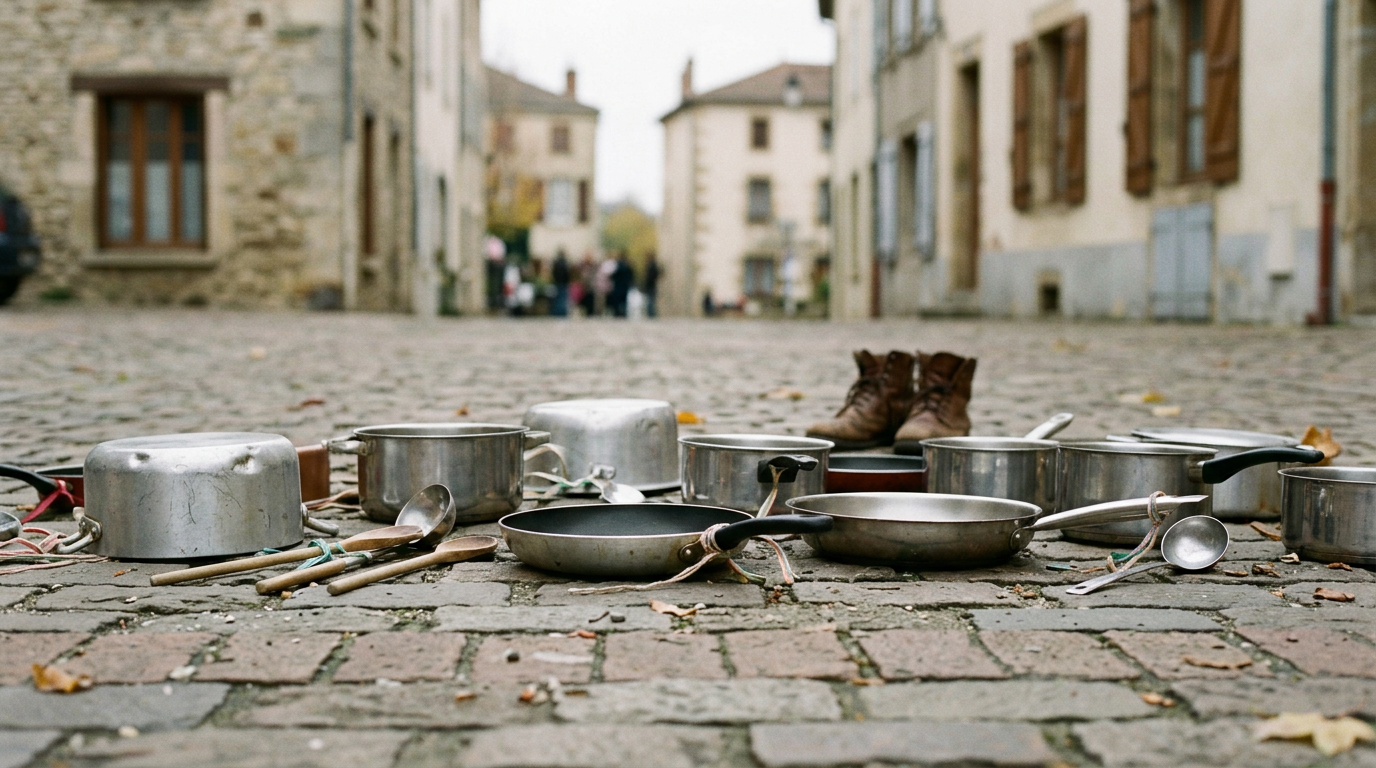
Callithumpian refers to a loud, boisterous, or riotous noise, often associated with discordant music or chaotic street celebrations. It describes the specific kind of clatter produced by a rowdy parade or a makeshift band using pots and pans.
Quick Reference
Part of Speech: Adjective / Noun Pronunciation: kal-uh-THUHM-pee-uhn (/ˌkæləˈθʌmpiən/) Meaning: Characterised by noisy, disorderly, or riotous activity; a person who participates in such a disturbance.
The Sound of Social Friction
Callithumpian is the linguistic equivalent of a clanging cymbal. It fills a very specific niche in the English language, sitting somewhere between a festive parade and a public nuisance. While a cacophony is simply a harsh mixture of sounds, a callithumpian event implies a human element of intentional, often rebellious, energy.
The term surfaced in the mid-19th century, predominantly in North America, to describe the callithumpian bands that would roam the streets on New Year's Eve or during weddings. These were not polished orchestras. They were groups of people armed with rattles, tin whistles, and bells, intending to make as much racket as physically possible.
In modern usage, the word has drifted from literal street bands to anything that feels uncoordinated yet loud. You might describe a chaotic boardroom argument or a crowded playground as callithumpian. It captures the essence of a group chat where everyone is shouting over one another, or the frantic, noisy coordination of ducklings chirping inside their eggs before a synchronous hatch.
Example Sentences
- The wedding reception turned callithumpian when the guests began drumming on the tables with silver spoons to demand a speech.
- Neighbors complained about the callithumpian rehearsals of the local teenage garage band, which consisted mostly of distorted bass and crashing cymbals.
- Beneath the surface of the quiet office, the callithumpian internal politics made it impossible for anyone to actually focus on work.
Related Terms
Synonyms: Discordant, boisterous, rowdy, clamorous, obstreperous. Antonyms: Euphonious, harmonious, serene, tranquil.
Is callithumpian a positive or negative word?
It depends on the context. In a festive setting, like a New Year's parade, it implies high spirits and energy. In a professional or quiet setting, it is usually pejorative, suggesting a lack of discipline and annoying volume.
How is it different from a cacophony?
Cacophony refers to the sound itself being unpleasant or harsh. Callithumpian refers to the nature of the activity or the people making the noise. A broken machine creates a cacophony; a rowdy crowd is callithumpian.
Can a person be a callithumpian?
Yes. Though often used as an adjective, it can function as a noun to describe a participant in a noisy parade or a rowdy individual who enjoys stirring up a racket.
Usage Tips
Use this word when you want to describe a scene that is loud but also slightly performative. It works best when describing groups of people, street scenes, or chaotic social gatherings. If you compare it to a charivari, you will sound like a true historian of social unrest.
Key Takeaways
- Callithumpian describes loud, discordant, and often festive noise.
- It originated in 19th-century street culture and mock parades.
- The word implies a sense of human-led chaos rather than accidental noise.
- It is a perfect descriptor for rowdy celebrations or disorganized social groups.
Example Sentences
"The New Year's Eve parade was a truly callithumpian affair, with revellers banging pots and pans as they marched."
"His attempt at a solo was more callithumpian than musical, causing several audience members to wince."
"The children's birthday party quickly descended into a callithumpian free-for-all, much to the parents' dismay."
"Despite the callithumpian protest outside, the council meeting continued undeterred."
"The old engine started with a callithumpian clatter, signalling it was time for an overhaul."
Frequently Asked Questions
Sources & References
 Merriam-Webster DictionaryProvides the definition, pronunciation, and historical usage of the word 'callithumpian', noting its origin in the 19th century.merriam-webster.com
- 2Oxford English DictionaryDetails the etymology of 'callithumpian', suggesting its potential connection to British dialectal terms and folk etymology.oed.com
- 3Online Etymology DictionaryOffers an etymological breakdown of 'callithumpian', noting its mid-19th century American origin and association with noisy parades.etymonline.com