
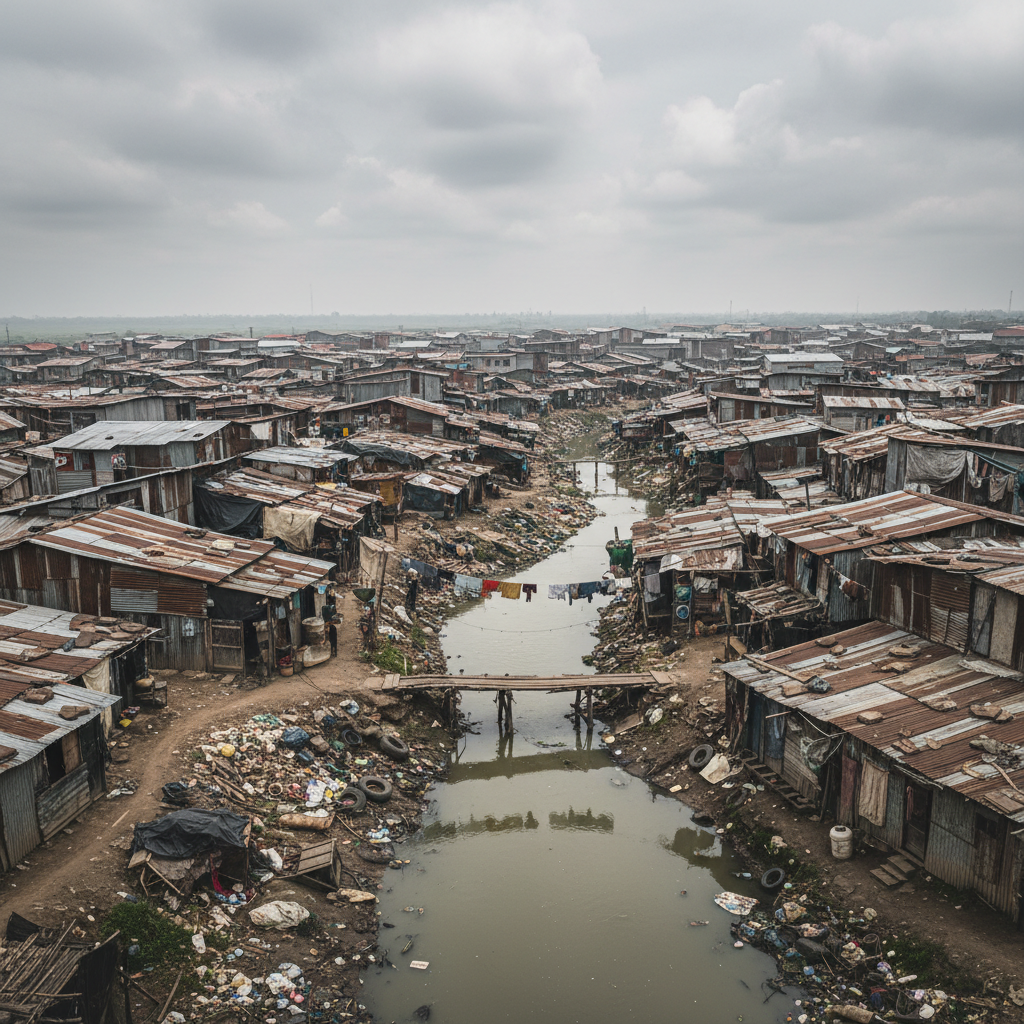
Quick Answer
Squalid describes places or conditions that are appallingly dirty and grim, often due to poverty or neglect. It's a powerful word that evokes a visceral sense of decay and hardship, making us understand the severity of someone's living situation and the impact on their lives.
In a hurry? TL;DR
- 1Squalid means extremely dirty and unpleasant, indicating severe neglect and often implying misery.
- 2It goes beyond mere messiness, suggesting systemic failure in upkeep and a loss of human dignity.
- 3Use squalid to describe environments where inhabitants are abandoned by basic societal care, unlike simply 'filthy'.
- 4The term can also describe unethical or tawdry situations in non-physical contexts, like scandals.
- 5Historically, squalid was used to portray the grim realities of urban poverty and moral decay during the Industrial Revolution.
- 6Think of squalid when conveying a profound sense of degradation, both physically and morally.
Why It Matters
Squalid provides a stark, powerful descriptor that bridges physical grime and human misery, making it a potent tool for social commentary.
Squalid describes a state of extreme filth and degradation, typically resulting from neglect or poverty. It suggests a level of uncleanness so severe that it becomes morally or physically repulsive.
Quick Reference
Part of Speech: Adjective Pronunciation: SKWOL-id (/ˈskwɒl.ɪd/) Definition: Extremely dirty and unpleasant, often due to lack of care or money.
Why It Matters
Squalid is the word we use when dirty is no longer sufficient; it bridges the gap between physical mess and human misery.
The Weight of Neglect
Squalid does not merely describe a room that needs a dusting or a car with a few coffee cups in the footwell. It implies a persistent, systemic failure of upkeep. While a teenager's bedroom might be messy, a squalid apartment suggests a lack of running water, decaying matter, or structural rot.
The word carries a specific sting because it is frequently used to describe living conditions. In social commentary and journalism, it serves as a moral indictment. When a reporter describes a squalid refugee camp or a squalid prison cell, they are not just commenting on the hygiene. They are highlighting a loss of human dignity.
Beyond the Physical
In contemporary usage, squalid has migrated from the literal gutter into the boardroom and the bedroom. We now speak of squalid affairs or squalid political scandals. In these contexts, the word suggests something tawdry, unethical, or beneath one's station. It is the linguistic equivalent of a cold, grey drizzle.
According to historians of the Victorian era, the term became a fixture of urban reportage during the Industrial Revolution. As cities swelled and slums expanded, writers needed a term that captured both the physical soot of the coal mines and the perceived moral decay of overcrowded tenements.
Examples in Context
- The investigation revealed the animals were being kept in squalid conditions without access to sunlight.
- What began as a high-minded political movement eventually devolved into a squalid scramble for power.
- She could not reconcile her childhood memories of the grand estate with the squalid ruins she found upon her return.
Synonyms and Antonyms
- Synonyms: Sordid, wretched, fetid, slovenly, dingy.
- Antonyms: Pristine, immaculate, palatial, hygienic, spruce.
Usage Tips
- Scale of intensity: Use squalid when you want to evoke pity or disgust, rather than just annoyance at a mess.
- Abstract application: Reserve squalid for situations involving a lack of integrity, such as a squalid lie or a squalid betrayal.
- Avoid confusion: Do not confuse squalid with squalidness (the noun) or squalor (the state of being squalid). Squalor is the noun you see most often in news headlines.
Is squalid always about being poor?
While often associated with poverty, it describes the state of the environment rather than the bank account. A billionaire's neglected, decaying mansion can be just as squalid as a slum.
How does it differ from sordid?
Sordid usually leans more toward moral distaste or sleaziness, whereas squalid almost always starts with a foundation of physical filth.
Can a person be squalid?
Usually, the word describes a person’s surroundings or their actions. Calling a person squalid suggests they have become synonymous with their degraded environment.
Key Takeaways
- Squalid implies more than just dirt; it implies neglect and misery.
- The word carries a heavy moral weight when applied to living conditions or behaviour.
- It shares a Latin root with words describing roughness and scales.
- Use it to describe the lowest point of physical or ethical degradation.
Example Sentences
"The documentary exposé revealed the truly squalid conditions in which many factory workers were forced to live."
"Despite her immense wealth, the reclusive old woman resided in a squalid mansion, overrun by dust and decay."
"His betrayal was a truly squalid act, devoid of honour or any sense of loyalty towards his long-term friends."
"The journalists documented the squalid state of the refugee camp, drawing attention to the urgent need for humanitarian aid."
"You could almost taste the history of neglect and poverty in the squalid alleyways of the old quarter."
