
Quick Answer
A glyph is simply a single, distinct symbol or shape used in writing, like the particular look of the letter 'A' in your favourite font. It matters because these visual forms, from ancient carvings to digital text, subtly shape how we read and understand information, connecting us to centuries of human communication.
In a hurry? TL;DR
- 1A glyph is the visual representation of a character or symbol, distinct from the abstract concept it represents.
- 2Designers and programmers distinguish between characters (code) and glyphs (visual form) for correct display.
- 3Ancient writing systems like Mayan and hieroglyphics use glyphs as pictorial units of meaning, bridging art and data.
- 4Modern emojis function as a rapidly expanding glyph library, returning pictorial shorthand to digital communication.
- 5The term 'glyph' originates from 'carving' and historically referred to inscriptions, now encompassing digital characters.
- 6Glyphs, like the equals sign, can also be functional symbols representing specific relationships or ideas.
Why It Matters
Glyphs are surprisingly important because their visual form, from fonts to ancient carvings, profoundly impacts how we see and understand information.
A glyph is a specific graphic symbol or character that represents a readable mark in writing. While a letter denotes a sound, a glyph is the physical manifestation of that concept, ranging from a sleek modern sans-serif h to an elaborate Mayan carving.
GLIF (/ɡlɪf/)
Part of Speech: Noun Definition: A symbolic figure or a character in a writing system that conveys specific information or meaning.
Why It Matters
Understanding the distinction between a letter and a glyph is the difference between knowing what a word says and understanding how its visual form dictates human perception.
The Architecture of Meaning
In typography, a glyph is the actual shape of a character. While the letter A remains the same abstract concept across every book ever printed, each font provides a different glyph to represent it. This distinction is vital for designers and programmers who must distinguish between the character (the underlying code) and the glyph (the visual pixels or ink).
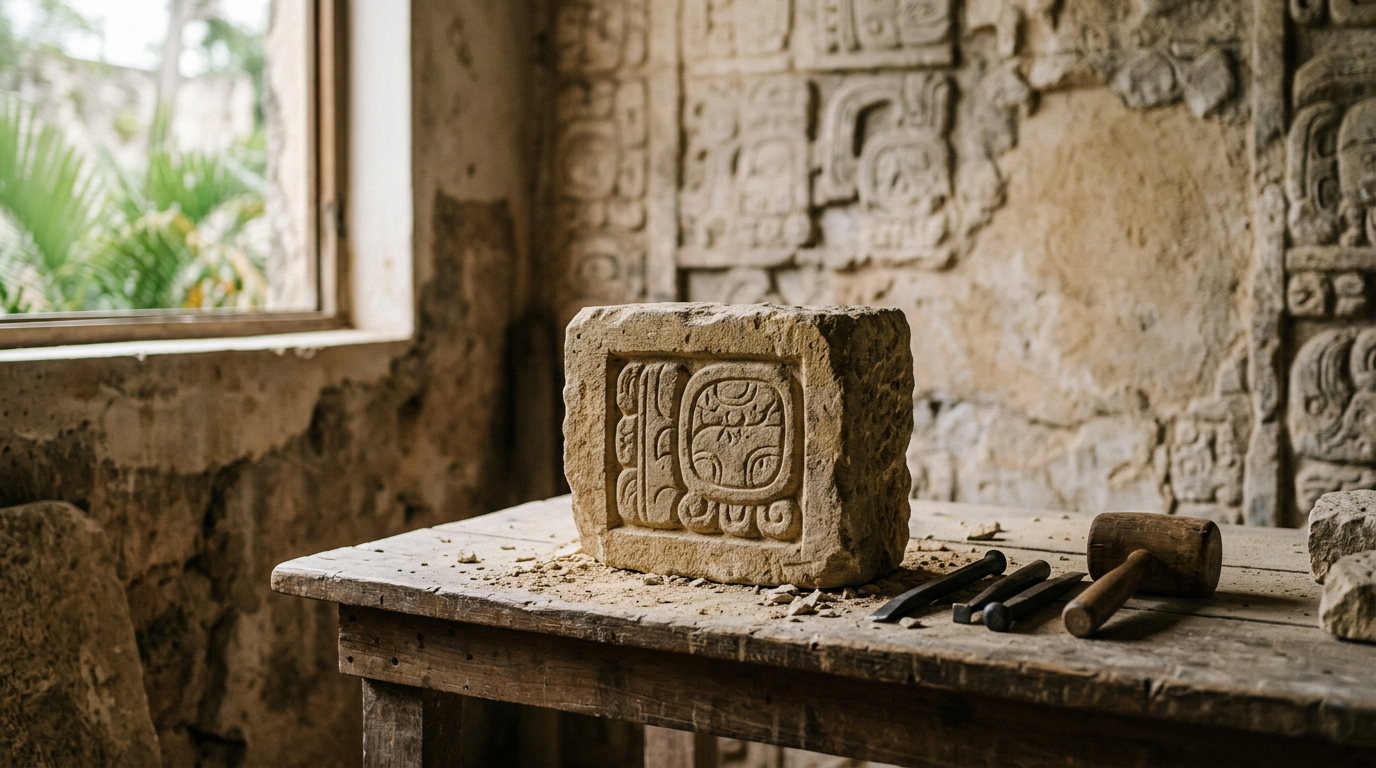
Archaeologists use the term differently, often referring to the complex, pictorial writing systems of ancient civilisations. In this context, a glyph is often a unit of meaning that functions like a puzzle piece. For example, Mayan glyphs could represent an entire word or a single syllable depending on their arrangement within a block.
Unlike a standard alphabet, which breaks language down into phonetic components, a glyph-heavy system often maintains a more direct, visual link to the object or idea it represents. This makes the word a bridge between art and data.
Origin and Evolution
Glyph in Context
- The calligrapher added a decorative flourish to the final glyph of the manuscript to signal the end of the chapter.
- Software developers must ensure that every glyph in the character set renders correctly across different operating systems.
- Hieroglyphics are perhaps the most famous example of a writing system where every glyph is a miniature work of art.
- Mathematician Robert Recorde introduced the equals sign as a functional glyph because no two things could be more equal than a pair of parallel lines.
Usage and Nuance
Synonyms: Character, symbol, sign, icon, pictograph. Antonyms: Blank, void, non-character.
It is easy to confuse glyph with character. Think of a character as the identity (like a person) and the glyph as the outfit they are wearing. The character is the unit of information, whereas the glyph is the specific visual expression of that information.
Practical Usage Tips
- Use glyph when discussing the technical or visual aspects of writing, such as font design or symbols that are not part of a standard alphabet.
- Refer to ancient carvings specifically as petroglyphs (on stone) or hieroglyphs (sacred carvings) to be more precise.
- In digital workspaces, use the glyphs panel in design software to find hidden characters like ligatures or fractions that do not appear on a standard keyboard.
What is the difference between a glyph and an icon?
An icon is a pictorial representation of an action or object, like a trash can for delete. A glyph is specifically a unit within a writing system or a font set, meant to be read as part of a structured language or code.
Are all letters glyphs?
Yes, every letter you see on a screen or page is a glyph. However, not all glyphs are letters. Punctuation marks, mathematical symbols, and even the tiny icons in a wingdings font are all classified as glyphs.
Why is it called a hieroglyph?
The term comes from the Greek hieros (sacred) and gluphē (carving). The Greeks believed Egyptian carvings were used primarily for religious and sacred texts, hence the name for those specific pictorial glyphs.
Key Takeaways
- A glyph is the visual representation of a character.
- The term applies to both ancient stone carvings and modern digital typography.
- According to researchers at the Unicode Consortium, thousands of new glyphs are standardised every year to ensure global digital compatibility.
- Using the word glyph distinguishes you as someone who understands the intersection of design, history, and linguistics.
Example Sentences
"The ancient Mayan temple walls were covered in intricate glyphs, meticulously carved into the stone."
"Graphic designers often spend hours perfecting each individual glyph within a new typeface to ensure visual harmony."
"Some early computer systems struggled to display complex glyphs correctly, often substituting them with generic squares."
"Archaeologists meticulously studied each unique glyph to decipher the meaning of the ancient script."
"The printer struggled with the unusual font, failing to render several of the special character glyphs accurately."
Frequently Asked Questions
Sources & References
 Merriam-Webster DictionaryProvides the definition, etymology, and historical usage of the word 'glyph', noting its Greek origin and architectural roots.merriam-webster.com
 WikipediaExplains the concept of a glyph in typography as the specific shape of a character in a font, differentiating it from the abstract character itself.en.wikipedia.org
 BritannicaDiscusses hieroglyphics as a famous example of a writing system where glyphs function as units of meaning, often representing words or syllables.britannica.com