
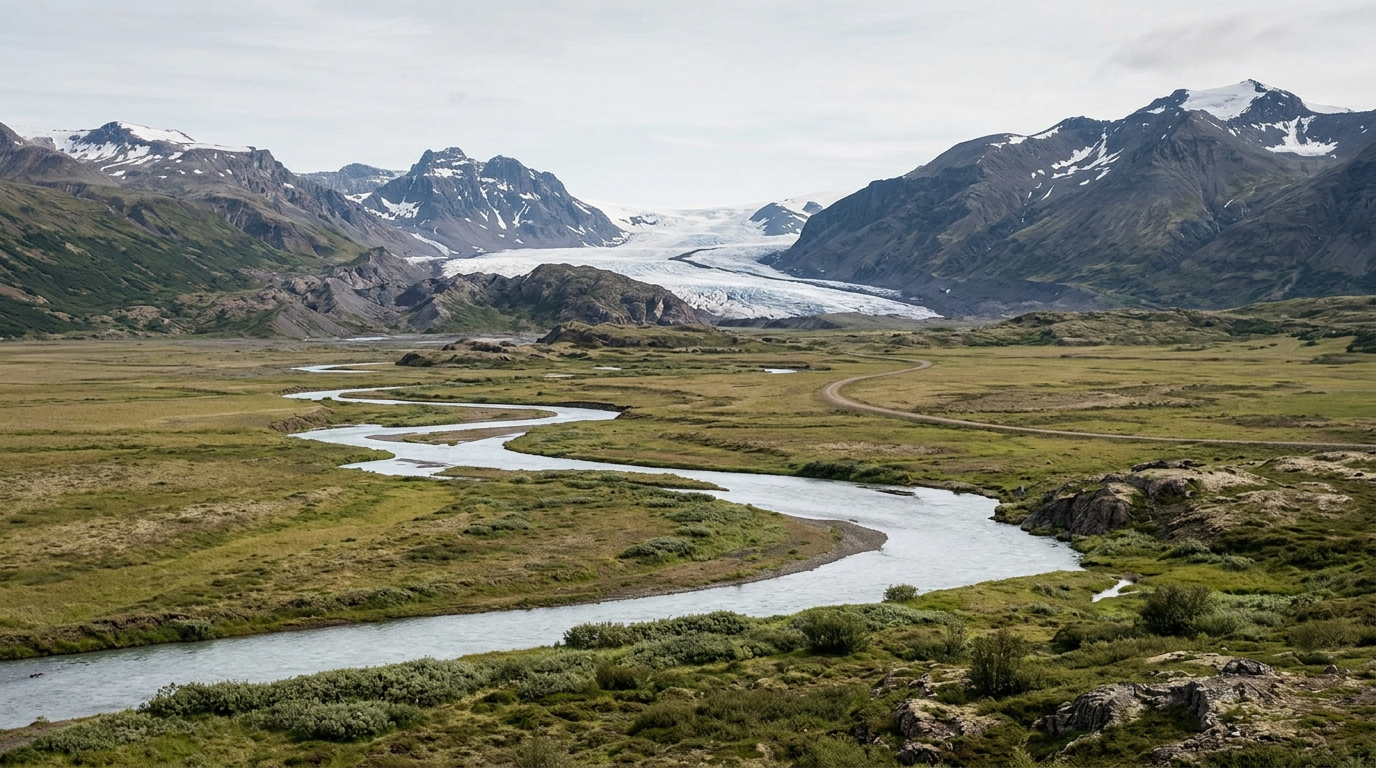
Quick Answer
An interglacial is a warmer spell between major ice ages. What's fascinating is that our current mild climate, which allowed human civilisation to flourish, is actually a temporary pause from Earth's colder tendencies over the last couple of million years. It suggests we've evolved during an unusually pleasant phase in our planet's history.
In a hurry? TL;DR
- 1Interglacials are warm periods between ice ages, not the end of ice ages.
- 2Human civilization's development occurred during the unusually warm Holocene interglacial.
- 3Current interglacials still have polar ice, unlike true greenhouse Earth states.
- 4Milankovitch cycles trigger interglacial onset by altering sunlight and melting ice.
- 5Interglacials are geologically rapid shifts, offering temporary warmth.
- 6Understanding interglacials highlights the temporary nature of current climate stability.
Why It Matters
The idea of an interglacial is surprising because our current warm spell, where most of human history unfolded, is just a temporary pause between vast ice ages.
An interglacial is a geological interval of warmer global average temperature that separates consecutive glacial periods within an ice age. It represents a temporary reprieve from planetary deep-freeze, functioning as a climatic heartbeat between the advance and retreat of massive ice sheets.
The Quick Reference
Word: Interglacial Pronunciation: IN-ter-GLAY-shuhl (/ˌɪntərˈɡleɪʃəl/) Part of Speech: Noun or Adjective Definition: A geological period of warmer conditions between glacial stages.
Why It Matters
Understanding the interglacial concept reveals that our entire recorded human history has occurred during a brief, lucky window of warmth that is the exception, not the rule, for Earth’s recent geological past.
The Fragile Warmth
We currently live in the Holocene, an interglacial period that began roughly 11,700 years ago. While we treat our current climate as the baseline for normalcy, it is actually a fleeting anomaly. According to researchers at the British Antarctic Survey, these warm spikes usually last about 10,000 to 30,000 years, appearing as sharp peaks in a jagged line of otherwise plummeting temperatures.
The distinction between a world that is ice-free and a world in an interglacial is vital. During a true greenhouse state, like the Eocene Epoch 50 million years ago, there were no polar ice caps at all. In contrast, an interglacial like ours still maintains permanent ice at the poles and in Greenland. It is a period of managed cold, rather than total heat.
The transition into an interglacial is triggered by Milankovitch cycles, which are subtle wobbles in the Earth’s orbit and tilt. These changes alter how much sunlight hits the northern hemisphere, initiating a feedback loop that melts glaciers and releases carbon dioxide from the oceans. Unlike other geological shifts that take millions of years, the onset of an interglacial can happen with surprising speed in geological terms.
Etymology
Examples of Usage
- The invention of agriculture was only possible because the Earth entered a stable interglacial period.
- Paleoclimatologists study air bubbles trapped in Antarctic ice to understand the chemical makeup of previous interglacial atmospheres.
- Some scientists argue that human activity has delayed the end of our current interglacial, effectively cancelling the next scheduled ice age.
Related Terms
- Synonyms: Climatic optimum, thermal interval, temperate stage.
- Antonyms: Glacial period, stadial, ice age.
Practical Usage Tips
Use interglacial when you want to provide a sense of deep time or perspective on climate change. It is more precise than calling our era post-glacial, as the latter implies the ice is gone forever. If you are discussing long-term sustainability or the history of the species, referring to the Holocene as an interglacial highlights the precarious nature of our environment.
Are we still in an ice age?
Yes. Because Earth still has permanent ice sheets in Antarctica and Greenland, we are technically in the Quaternary Ice Age. We are simply enjoying an interglacial break.
How long do interglacials last?
On average, they last about 10,000 to 15,000 years. However, orbital variations can stretch some interglacials to 50,000 years.
What is the difference between an interglacial and an interstadial?
An interstadial is a much shorter, less intense period of warming that occurs within a glacial period, lasting only centuries or a few millennia, whereas an interglacial represents a major shift in global climate.
Key Takeaways
- Earth is currently in an interglacial called the Holocene.
- These periods are caused by cyclical changes in Earth’s orbit and orientation toward the sun.
- Interglacials are defined by the presence of some polar ice, distinguishing them from true greenhouse periods.
- Most of human civilisation has been built during the relative stability of the current interglacial.
Example Sentences
"The Holocene Epoch, in which we currently live, is a relatively short interglacial period."
"During an interglacial, global temperatures rise, and ice sheets recede significantly."
"Scientists study past interglacial periods to understand how Earth's climate system responds to warming."
"Evidence from ice cores reveals a clear pattern of glacial and interglacial cycles over millions of years."
"The transition from a glacial to an interglacial phase can be quite abrupt in geological terms."
Frequently Asked Questions
Sources & References
 WikipediaStates that the Holocene is the current interglacial period, which began approximately 11,700 years ago.en.wikipedia.org
 BritannicaDescribes the Eemian interglacial period, mentioning higher global temperatures than today and the presence of hippopotamuses in the River Thames.britannica.com
 Merriam-WebsterProvides the definition, pronunciation, and etymology of the word 'interglacial', noting its formation from 'inter' and 'glacial'.merriam-webster.com