
Quick Answer
Chronometric means measuring time with extreme accuracy, like a stopwatch, rather than how long things feel. It matters because this precise measurement is crucial for things like GPS systems, scientific experiments, and understanding historical timelines. It shows the sharp contrast between clockwork reality and our fluid personal experience of time.
In a hurry? TL;DR
- 1Chronometric means precise, scientific time measurement, distinct from subjective human perception of time's passage.
- 2Focus on exact intervals and accuracy, stripping away personal feelings of duration for objective data.
- 3The term originates from the historical need for accurate timekeeping in navigation, especially for determining longitude at sea.
- 4Marine chronometers were revolutionary, maintaining precise time despite harsh shipboard conditions to prevent navigational errors.
- 5Chronometric applies beyond clocks to fields like archaeology (dating artifacts) and physics (measuring extreme phenomena).
- 6Understanding chronometric helps differentiate objective universal time from our brain's often unreliable experience of duration.
Why It Matters
It's fascinating how this concept highlights the stark difference between how we subjectively feel time passing and the objective, precise way it can be scientifically measured.
Chronometric refers to the strictly scientific or mechanical measurement of time, distinguishing precision-based tracking from the subjective way humans actually experience the passing hours.
- Scientific precision: It focuses on exact intervals rather than personal perception.
- Horological roots: The term is deeply tied to the development of the marine chronometer.
- Beyond clocks: It applies to archaeology, navigation, and deep-space physics.
Why It Matters: Understanding the chronometric allows you to distinguish between the objective tick of the universe and the elastic, unreliable way your brain processes duration.
Chronometric: Definition and Pronunciation
Part of Speech: Adjective Pronunciation: KRON-uh-MET-rik (/ˌkrɒnəˈmɛtrɪk/) Definition: Relating to the measurement of time, especially by precise instruments.
The Science of the Strict Interval
While chronological refers to the order in which events occur, chronometric refers to the exactness of the measurement itself. To look at the world through a chronometric lens is to strip away the feeling of a long summer afternoon or a fast-paced work week, replacing them with the cold, unyielding data of atomic vibrations or mechanical gears.
The word fills a specific gap in the lexicon. We use temporal for general time-related issues and chronic for things that persist, but we reserve chronometric for when the accuracy of the instrument is the point of the conversation.
The Marine Revolution
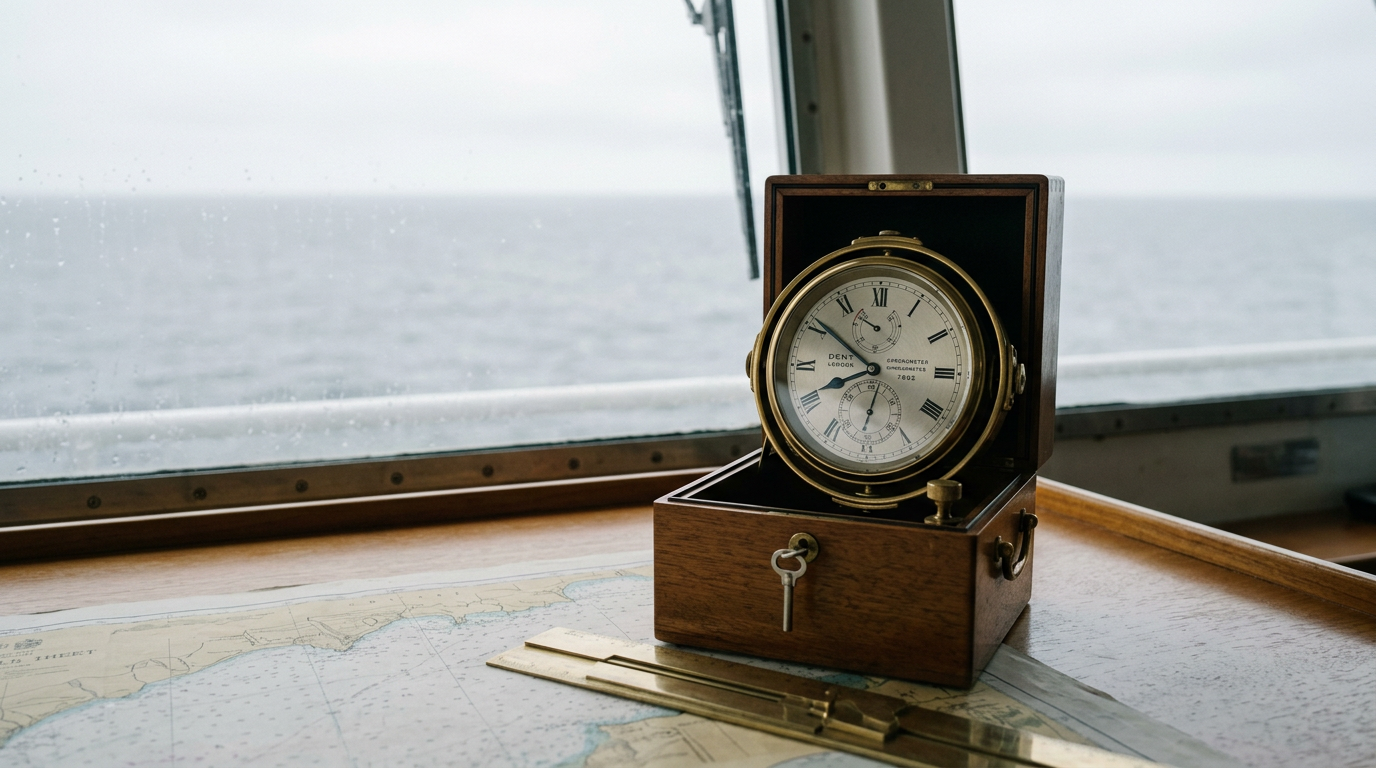
The necessity for chronometric precision wasn't born from a desire to be on time for meetings, but from the desperate need to not get lost at sea. Unlike latitude, which can be determined by the stars, longitude requires knowing the exact time at a fixed reference point compared to your current location.
John Harrison’s eighteenth-century marine chronometer was the first device capable of maintaining chronometric integrity despite the rocking, humidity, and temperature shifts of a long voyage. Before this breakthrough, ships frequently crashed into coastlines because their clocks were literally losing their rhythm.
Examples in Context
- Precision: The laboratory required a chronometric standard so high that even the slightest gravitational shift could skew the results.
- Archaeology: Scientists used chronometric dating techniques, such as radiocarbon analysis, to pin the artifact to a specific decade.
- Literature: The author contrasted the protagonist's frantic mental state with the steady, indifferent chronometric beat of the grandfather clock.
- Exploration: Deep-sea divers rely on chronometric watches to ensure their decompression stops are timed to the exact second.
Synonyms and Antonyms
Synonyms: Horological, temporal, measured, rhythmic. Antonyms: Imprecise, subjective, erratic, unmeasured.
Practical Usage Tips
Use chronometric when you want to sound technical about the passage of time. If you are discussing the history of a civilization, use chronological. If you are discussing the precision of a Swiss watch or the exact timing required for a chemical reaction, use chronometric.
It is also an excellent word for describing something that feels mechanical or robotic, such as a runner who maintains a chronometric pace regardless of the terrain.
What is the difference between chronological and chronometric?
Chronological refers to the sequence or order of events, such as a timeline. Chronometric refers to the measurement of the duration or the precise time those events took place.
How is chronometric used in archaeology?
In archaeology, chronometric dating (also known as absolute dating) provides a specific calendar year or range, unlike relative dating which only tells you if something is older or younger than something else.
What is a chronometric instrument?
Any device designed to measure time with high accuracy, from a basic stopwatch to a sophisticated caesium atomic clock, is considered a chronometric instrument.
Key Takeaways
- Accuracy over order: It focuses on precise measurement rather than sequence.
- Navigational history: The term gained prominence through the quest to solve the longitude problem.
- Technical flavour: It is the preferred term in physics, archaeology, and horology.
Example Sentences
"The lab's new atomic clock provides an unparalleled chronometric standard for scientific research."
"Early navigators relied on accurate chronometric instruments to determine their longitude at sea."
"Archaeologists use carbon dating, a chronometric technique, to establish the age of ancient artefacts."
"The chronometric precision required for satellite synchronisation is truly astounding."
"Without a highly refined chronometric device, it would be impossible to conduct these experiments effectively."
Frequently Asked Questions
Sources & References
 Merriam-WebsterProvides the definition, pronunciation, and part of speech for the word 'chronometric'.merriam-webster.com
 WikipediaDetails John Harrison's contributions to chronometric precision through his invention of the marine chronometer.en.wikipedia.org
- 3Online Etymology DictionaryTraces the etymology of 'chronometric' to its Greek roots, 'chronos' and 'metron'.etymonline.com
- WikipediaExplains the historical development and significance of the chronometer, especially in marine navigation, and its role in determining longitude.en.wikipedia.org