
Quick Answer
Funereal describes something that feels like a funeral – dark, solemn, and deeply mournful. It's a striking word because it captures a particular atmosphere, a slow, dignified gloom that can be found in music, a brooding sky, or even a somber painting, evoking a sense of profound sadness and gravity.
In a hurry? TL;DR
- 1Use 'funereal' to describe a solemn, mournful, or deathly atmosphere, not just literal funerals.
- 2The term implies a specific slow, dignified, and heavy gloom, distinct from general sadness.
- 3Apply 'funereal' to pacing, music, lighting, or environments that evoke a sense of ceremony and loss.
- 4It captures a unique intersection of silence, ceremony, and oppressive weight, often applied to weather or art.
- 5Consider 'funereal' for descriptions requiring a sense of slow, gloomy dignity and solemnity.
- 6'Funereal' can describe an environment's mood regardless of actual grief occurring within it.
Why It Matters
The word funereal uniquely captures a solemn, dignified gloom beyond mere sadness, even describing the pace of pallbearers.
The word funereal describes anything that shares the dark, solemn, or mournful atmosphere of a funeral. It is used to label moods, music, and environments that feel heavy with the weight of death or profound sadness.
- TL;DR: Funereal captures an atmosphere of mourning or deathly stillness.
- It moves beyond literal funerals to describe pacing, lighting, or emotional weight.
- It implies a specific kind of slow, gloomy dignity.
- The term is often used in art criticism to describe oppressive or somber works.
Why It Matters: Understanding funereal allows you to describe a specific type of darkness that is not just scary or sad, but formally solemn.
The Definition of Funereal
Funereal (fyoo-NEER-ee-uhl /fjuˈnɪəriəl/) is an adjective used to describe things that are appropriate for or suggestive of a funeral. While it can describe literal mourning rituals, it is more often used metaphorically to pinpoint a slow, gloomy, or oppressive quality in art, nature, or social settings.
The Anatomy of the Word
- Part of Speech: Adjective
- Pronunciation: fyoo-NEER-ee-uhl (/fjuˈnɪəriəl/)
- Meaning: Suited to or suggestive of a funeral; mournful, somber, or dismal.
The Weight of the Word
To call something funereal is to say it feels like a slow walk behind a casket. It is a word defined by tempo and tone. Unlike the word sad, which is broad, or macabre, which suggests a fascination with the gruesome, funereal implies a stately, heavy gloom.
The word fills a specific gap in the English language. We have many words for darkness, but few that capture the specific intersection of silence and ceremony. According to linguistic analysis, the term is frequently applied to the weather—specifically those grey, windless days where the sky seems to press down on the earth.
Unlike the word morose, which describes a person’s temperament, funereal describes the environment itself. A room can be funereal if the curtains are drawn and the air is stagnant, regardless of whether anyone inside is actually grieving.
Examples of Usage
- The restaurant had a funereal atmosphere, with dim lighting and a complete lack of background music.
- After the shock defeat, the mood in the locker room was predictably funereal.
- The cellist played the sonata at a funereal pace, stretching every note until it felt like a dirge.
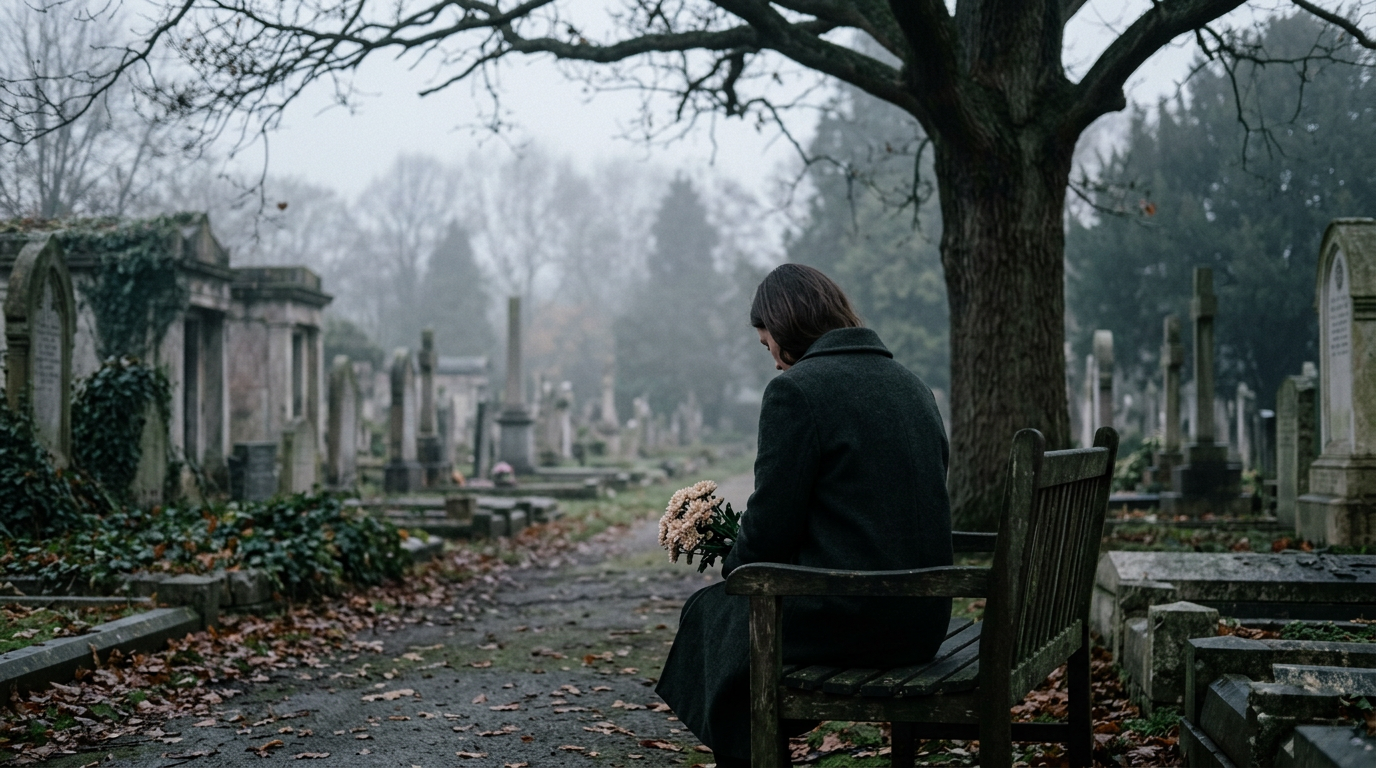
- He walked through the fog-heavy graveyard, feeling the funereal chill of the damp stone.
Synonyms and Antonyms
Synonyms
- Somber: Serious or dark in tone.
- Sepulchral: Suggestive of a tomb.
- Lugubrious: Looking or sounding dismal.
- Elegiac: Having a mournful, poetic quality.
Antonyms
- Festive: Cheerful and celebratory.
- Vivacious: Full of life and energy.
- Convivial: Friendly and lively.
Interesting Connections
The word is a staple in architectural criticism. Critics often use it to describe Brutalist buildings that feel like monolithic tombs. In contrast to more whimsical styles, these structures are said to have a funereal permanence.
In the world of fashion, the funereal aesthetic has been explored by designers like Alexander McQueen, who used Victorian mourning veils and heavy black lace to evoke a sense of beautiful, structured grief.
What is the difference between funereal and funeral?
Funeral is a noun referring to the ceremony itself, while funereal is an adjective describing anything that feels like that ceremony. You attend a funeral, but you describe a slow song as funereal.
Can funereal be used in a positive way?
Rarely. While it can describe a dignified or serious setting, it almost always carries a connotation of heaviness, gloom, or lack of joy.
Is funereal the same as morbid?
No. Morbid implies an unhealthy interest in death or unpleasant subjects. Funereal describes the atmosphere or appearance of deathly solemnity without necessarily implying a psychological obsession.
Key Takeaways
- Use funereal to describe a slow, heavy, or mournful atmosphere.
- The word implies ceremony and dignity, not just simple sadness.
- It is most effective when describing pacing, lighting, or communal moods.
- It shares its Latin roots with words like funary and funerealism.
Related concepts to explore:
- The history of memento mori in art.
- Why we find certain landscapes haunting.
- The etymology of the word dirge.
Example Sentences
"The grey, overcast sky cast a funereal pall over the entire landscape."
"His low, monotonic voice delivered the news with a funereal solemnity that chilled everyone present."
"The artist's latest exhibition featured large canvases in muted tones, creating a rather funereal atmosphere."
"The procession moved at a funereal pace, each step heavy with collective sorrow."
"Despite the bright summer day, the old, neglected house had a distinctly funereal air about it."
