
Quick Answer
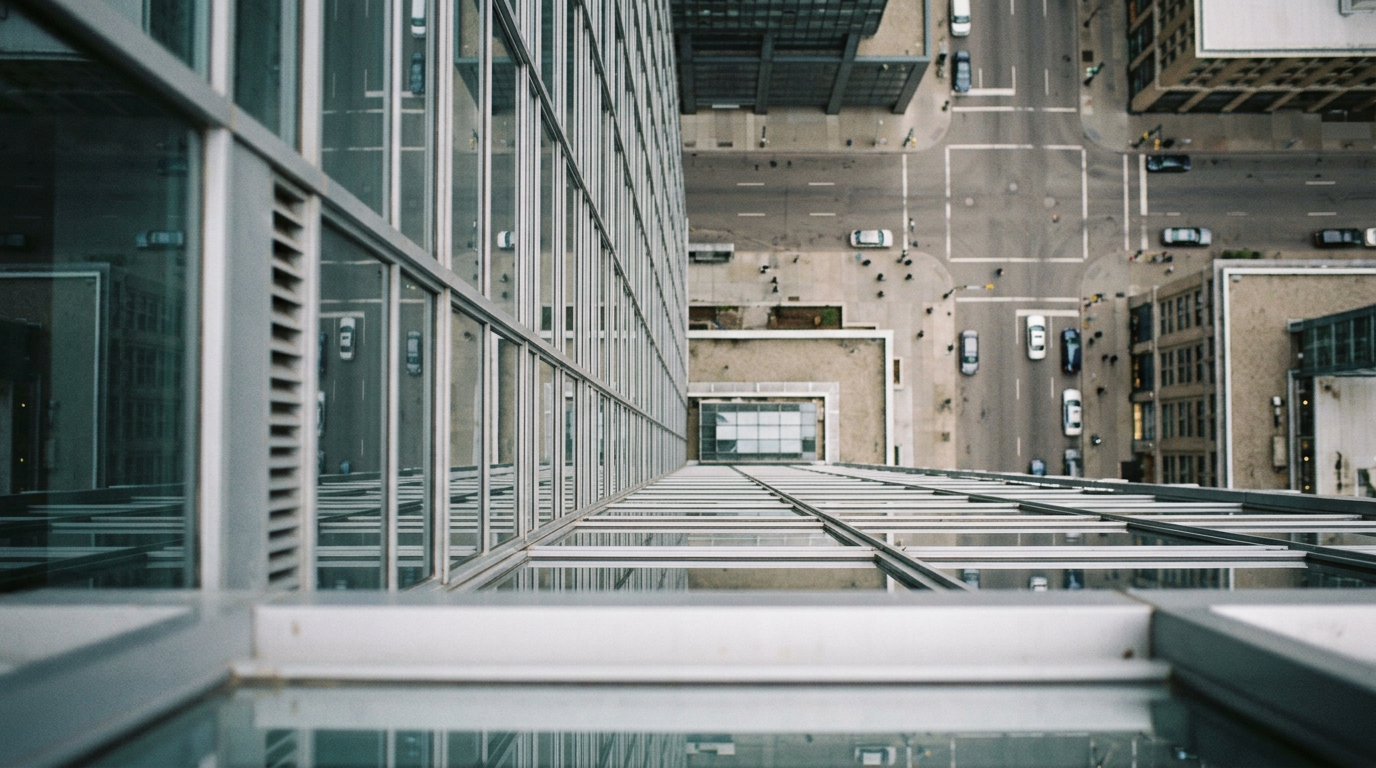
Vertiginous describes a feeling of dizziness or unsteadiness, often due to extreme height. This word is fascinating because it vividly captures both the physical sensation of looking down from a great height and the metaphorical feeling of being overwhelmed by the sheer scale or pace of modern life, leaving you feeling quite disoriented.
In a hurry? TL;DR
- 1Use 'vertiginous' to describe situations causing a spinning or unstable feeling, often due to height, steepness, or overwhelming scale.
- 2Beyond physical heights, apply 'vertiginous' metaphorically to rapid change, vast data, or large historical/social shifts.
- 3Recognize 'vertiginous' describes an environmental quality causing instability, unlike the personal state of 'dizzy'.
- 4Consider 'vertiginous' implies a loss of control and sensory conflict, more than just 'steep' or 'sheer'.
- 5The word's root 'vertere' (to turn) highlights its connection to spinning and whirling sensations.
- 6Examples include describing historical timelines, rapid economic shifts, or precarious physical landscapes.
Why It Matters
This word is fascinating because it describes the disorienting feeling you get from both physical heights and overwhelming information, highlighting how our brains react to scale.
Vertiginous describes a sensation of spinning or instability caused by extreme height, steepness, or an overwhelming scale of information. It is the linguistic equivalent of looking down from a skyscraper and feeling the ground pull at your equilibrium.
The Quick Reference
Part of Speech: Adjective Pronunciation: vur-TIJ-uh-nuhs (/vɜːˈtɪdʒɪnəs/) Meaning: Causing dizziness or a feeling of spinning, usually due to great heights or rapid change.
Why It Matters
This word bridges the gap between physical sensation and abstract thought, allowing us to describe not just high places, but the dizzying speed of modern life and technology.
More Than Just Heights
While most people associate vertiginous with the edge of a cliff or a glass-bottomed walkway, its most potent use is metaphorical. It describes the psychological instability we feel when confronted with vast numbers, deep time, or rapid social shifts.
The word fills a specific gap that dizzy cannot. To be dizzy is a personal state; to be vertiginous is a quality of the environment itself. A mountain is vertiginous regardless of whether you are standing on it.
According to researchers at the University of Reading, our sense of balance is a complex integration of visual and vestibular inputs. When these inputs conflict, such as when looking down a steep drop, we experience vertigo. Vertiginous captures that exact moment of sensory friction.
Compared to synonyms like steep or sheer, vertiginous implies a loss of control. A wall is steep, but a fall is vertiginous. It suggests a world that has suddenly tilted on its axis, leaving the observer grasping for a handrail.
Examples in Context
Historical Scale: The timeline of human civilization is vertiginous: we are closer in time to the internet than the Romans were to the invention of the wheel.
Economic Shift: The company experienced a vertiginous rise in valuation, doubling its market cap in a single afternoon of trading.
Physical Space: The hikers paused at the edge of the vertiginous ridge, looking down into the mist-shrouded valley thousands of feet below.
Synonyms and Antonyms
Synonyms: Giddy, precipitous, revolving, steep, sheer. Antonyms: Level, flat, stable, grounded.
Related Concepts
If you find the scale of the universe vertiginous, you might also be interested in the concept of Chronocentrism, the tendency to view your own time as the most important. Similarly, the feeling of insignificance in the face of nature is often tied to the Sublime, a pillar of Romantic philosophy. To better describe the physical sensation of such heights, one might look into Proprioception, our internal sense of self-movement and body position.
Is vertiginous the same as dizzy?
No. Dizzy is how you feel; vertiginous is a quality of the thing making you feel that way. You feel dizzy because you are looking at a vertiginous drop.
Can it be used for positive things?
Yes. A vertiginous romance or a vertiginous success implies something moving so fast and so high that it takes your breath away, even if the experience is exhilarating.
How is it different from precipitous?
Precipitous focuses on the physical steepness or the suddenness of an event. Vertiginous focuses on the spinning, disorienting effect that the steepness has on the observer.
Key Takeaways
- Use it to describe things that cause a literal or metaphorical sense of spinning.
- It implies a scale so large or a slope so steep that it defies easy comprehension.
- It is most effective when describing rapid changes in status, wealth, or historical eras.
- Unlike dizzy, it describes the cause rather than just the symptom.
Example Sentences
"The skyscraper's observation deck offered a truly vertiginous view of the city below."
"Staring up at the sheer rock face, the climber felt a sudden, vertiginous sensation."
"The new employee found the sheer volume of data in the spreadsheet vertiginous and overwhelming."
"She experienced a vertiginous drop in the stock market, wiping out years of savings."
"The architect designed a bridge with a vertiginous arch that seemed to scrape the clouds."
Frequently Asked Questions
Sources & References
 Merriam-WebsterThis source provides the definition, pronunciation, and examples of 'vertiginous' in context.merriam-webster.com
- 2Online Etymology DictionaryThis source details the etymology of 'vertiginous', tracing its origins back to Latin 'vertigo' and 'vertere'.etymonline.com
- 3Collins DictionaryThis source offers definitions, synonyms, and example sentences for 'vertiginous', including its use to describe dizzying heights or rapid change.collinsdictionary.com