
Quick Answer
Gibbous means bulging or rounded, like the moon when it's more than half illuminated but not quite full. This describes a shape that's "almost there," hinting at a fullness or curve that's still developing. It's a wonderfully specific term for that pregnant pause in natural cycles or even for describing physical forms.
In a hurry? TL;DR
- 1Use 'gibbous' to describe the moon when it's more than half lit but not full, indicating a transitional phase.
- 2Apply 'gibbous' to any outward-swelling or bulging shape, extending beyond celestial descriptions.
- 3Recognize 'gibbous' as an adjective meaning convex, protuberant, or having a curved bulge.
- 4Understand its astronomical significance: waxing gibbous is visible at sunset, waning gibbous in the morning.
- 5Employ 'gibbous' for physical descriptions like a hunched back or bulging architecture for precision.
- 6Its etymology links to 'hump' or 'swelling,' emphasizing weight and protrusion.
Why It Matters
Gibbous is a surprisingly versatile word for describing anything bulging outwards, from the moon to a hunchback.
Gibbous refers to a shape that is rounded or bulging outward, specifically used to describe the moon when it is more than half illuminated but not yet full. It sits in the transitional space between a half-circle and a complete sphere.
The Essentials
- Part of Speech: Adjective
- Pronunciation: GIB-uhs (/ˈɡɪb.əs/)
- Meaning: Convex, protuberant, or having the illuminated part greater than a semicircle and less than a circle.
Why It Matters
Understanding this word allows you to describe specific celestial phases and physical curvatures with astronomical precision rather than vague approximations.
The Geometry of the Bulge
Gibbous is most famously an astronomical term, yet its utility extends to any surface that swells outward. In lunar cycles, the gibbous phase occurs twice: once as the moon waxes toward fullness and again as it wanes toward the third quarter. It represents a period of building tension or fading light, existing in the awkward, pregnant pause before or after perfection.
Unlike the slender elegance of a crescent or the binary clarity of a half-moon, the gibbous moon is hefty and bright. According to NASA, a waxing gibbous moon rises in the afternoon and is high in the sky at sunset, making it one of the most visible phases for casual observers. It provides enough ambient light to cast shadows, yet lacks the romantic symmetry of a full moon.
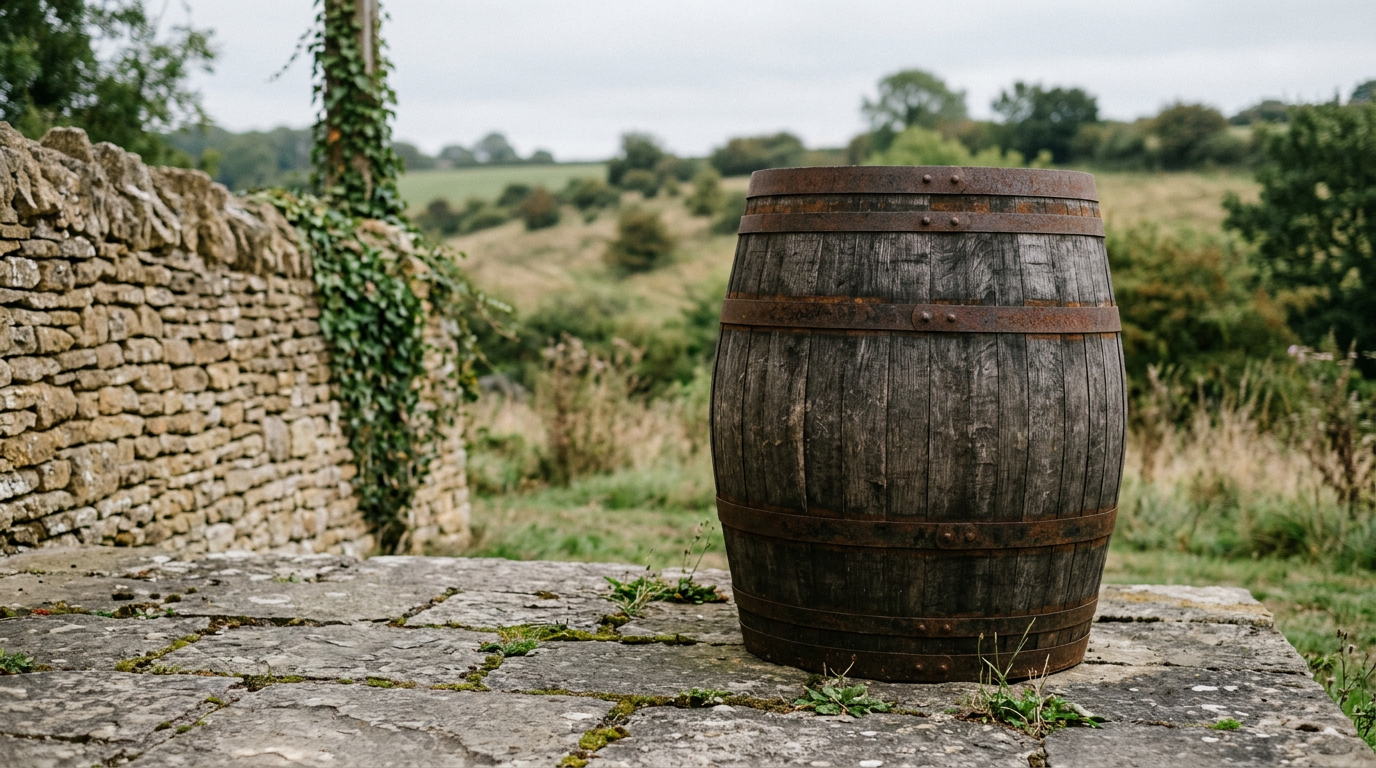
In a non-celestial context, the word describes physical anatomy or architecture. A hunched back or a protruding forehead might be described as gibbous in older medical texts. It carries a sense of weight and protrusion that words like rounded or curved fail to capture. While a ball is spherical, a heap of grain or a swelling sail is gibbous.
The History of the Hump
Examples in Context
- The waning gibbous moon lingered in the morning sky like a pale, lopsided ghost.
- The architect designed the roof with a gibbous curve that mimicked the rolling hills of the surrounding countryside.
- He stared at the gibbous profile of the ancient vase, noting how the clay seemed to strain against its own weight.
- During the waxing gibbous phase, the garden was bathed in enough silver light to navigate the paths without a torch.
Synonyms and Antonyms
- Synonyms: Protuberant, convex, bulging, swelling, pulvinate.
- Antonyms: Concave, hollow, crescent, indented, depressed.
What is the difference between a waxing and waning gibbous?
A waxing gibbous is growing toward a full moon, while a waning gibbous is shrinking toward a third quarter. The distinction is in the direction of the shadow.
Can you use gibbous to describe people?
Technically yes, though it is usually reserved for medical or archaic descriptions of physical humps. In modern English, it is almost exclusively used for the moon or specific architectural swells.
Is the g in gibbous hard or soft?
It uses a hard g, as in goat or gift, not a soft g like giant.
Key Takeaways
- Precise Phase: Use it to describe the moon when it is between half and full.
- Physical Form: Use it for any surface that bulges or swells outward.
- Latin Roots: It comes from the word for hump, emphasizing a sense of heaviness.
- Night Light: A gibbous moon is often bright enough to dominate the night sky even without being full.
Example Sentences
"The waxing gibbous moon cast long, eerie shadows across the sleeping village."
"The craftsman carefully carved a gibbous curve into the wooden sculpture, giving it a pleasing, rounded form."
"After the storm, the old sail was torn and lay in a gibbous heap on the deck."
"Astronomers closely observe the gibbous phases of distant planets to deduce their surface features."
"His stomach had become rather gibbous after a month of indulging in rich puddings and pies."
Frequently Asked Questions
Sources & References
 Merriam-WebsterThis source provides the definition, pronunciation, and part of speech for 'gibbous', and includes its primary astronomical usage for the moon.merriam-webster.com
- 2Online Etymology DictionaryThis source details the etymological origin of 'gibbous' from Late Latin 'gibbosus' and 'gibbus', meaning hunchbacked or hump.etymonline.com
- 3Collins DictionaryThis source offers definitions of 'gibbous', including its use to describe the moon, and provides example sentences demonstrating its usage in context.collinsdictionary.com