
Quick Answer
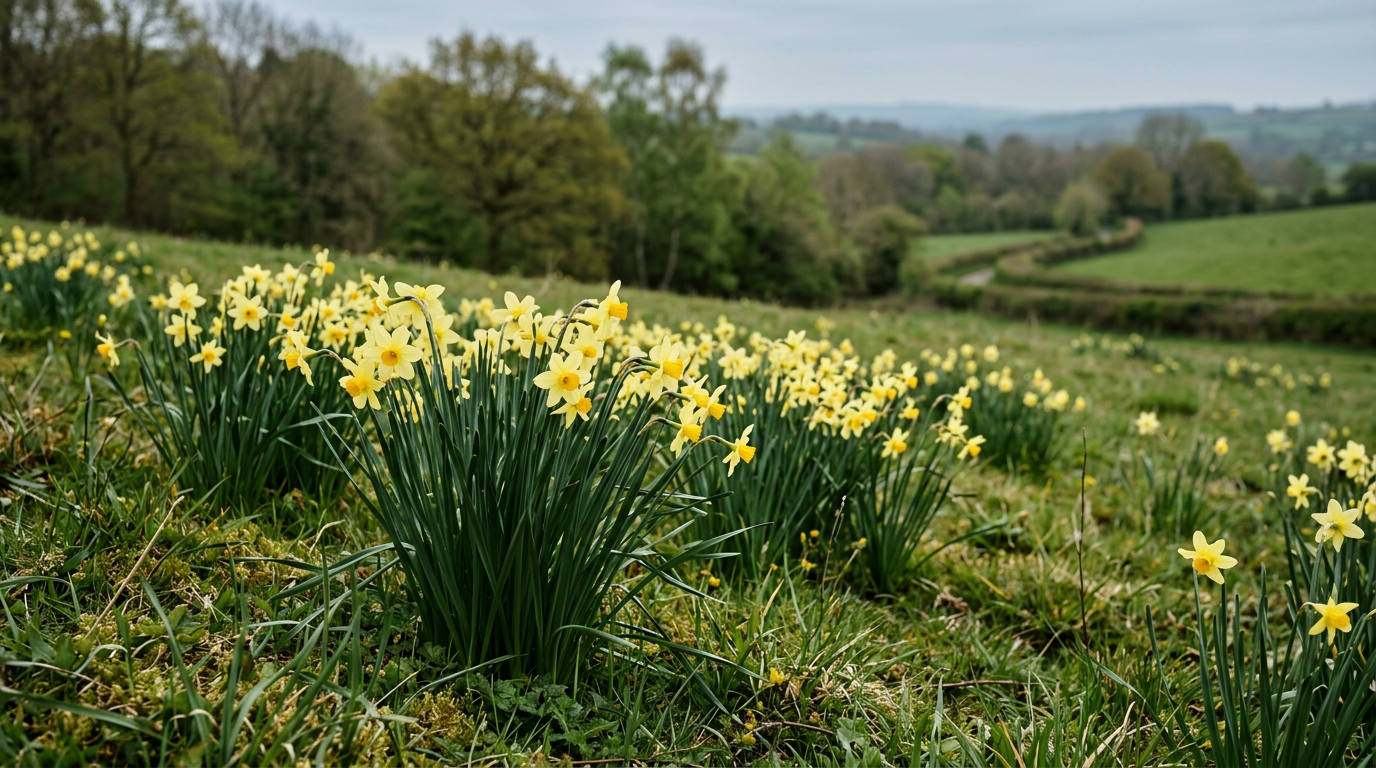
Jonquil refers to a sweet-smelling yellow narcissus flower with narrow leaves, or the pale yellow colour associated with it. It’s a delightful detail because jonquils are known for their powerful fragrance, capable of perfuming an entire space. Distinguishing them from common daffodils adds a touch of botanical sophistication to spring imagery.
In a hurry? TL;DR
- 1Jonquil is a specific, fragrant yellow narcissus species with distinct tubular leaves, not just any daffodil.
- 2Its potent, honeyed perfume is highly valued in the fragrance industry, perfuming entire rooms.
- 3True jonquils have hollow, cylindrical leaves resembling rushes, unlike flat, sword-like daffodil leaves.
- 4The color 'jonquil' describes a pale, luminous yellow with a hint of green, popular in decor and fashion.
- 5Historically, gifting jonquils symbolized a desire for returned affection, a hopeful plea for reciprocal love.
- 6Using 'jonquil' in descriptions adds olfactory and specific color details, enhancing sensory richness.
Why It Matters
Jonquils offer a surprisingly potent and distinct fragrance, unlike more common daffodils, making them a fascinatingly specific bloom for gardeners and perfumers alike.
A jonquil is a specific species of fragrant yellow flower within the narcissus family, often distinguished by its dark green, tube-like leaves and intense perfume. It also refers to a pale, luminous shade of yellow reminiscent of these petals.
- Part of Speech: Noun
- Pronunciation: JON-kwil (/ˈdʒɒŋ.kwɪl/)
- Definition: A bulbous flowering plant with clustered yellow or white blooms; a vivid light yellow colour.
Why It Matters: Understanding the distinction between a jonquil and a standard daffodil prevents botanical blunders and adds a specific, sensory texture to your descriptions of spring.
The Specificity of the Bloom
While many use the terms daffodil, narcissus, and jonquil interchangeably, the jonquil occupies a specific niche in the gardener’s lexicon. All jonquils are narcissi, but not all narcissi are jonquils. Unlike the common trumpet-shaped daffodil that dominates English meadows, the true jonquil (Narcissus jonquilla) is a Mediterranean native known for its potency.
The defining characteristic is the scent. In the fragrance industry, jonquil absolute is a highly prized essence. According to perfumers at International Flavours & Fragrances, the scent is heavier and more honeyed than other spring bulbs, often described as having narcotic, floral undertones. While a field of daffodils smells like fresh earth and rain, a single jonquil can perfume an entire room.
Visually, the distinction lies in the foliage. Standard daffodils have flat, sword-like leaves. In contrast, jonquils possess hollow, cylindrical leaves that look more like thick chives or rushes. This physical trait is exactly how the plant earned its name.
Jonquil in Culture and Colour
Beyond the garden, jonquil describes a specific chromatic experience. It is not the aggressive neon of a highlighter or the buttery density of cream. It is a sharp, light yellow with a hint of green. In the 1920s and 30s, jonquil was a popular descriptor for silk gowns and interior paints, offering a sophisticated alternative to basic lemon.
In the Victorian Language of Flowers, sending a jonquil carried a specific message: I desire a return of affection. Unlike the red rose, which signaled established passion, the jonquil was the flower of the hopeful suitor, representing a plea for reciprocal love.
Examples in Context
- The drawing room was decorated in shades of jonquil and ivory, making the morning sunlight feel permanent.
- She leaned down to catch the heavy, sweet scent of the jonquils lining the stone path.
- The botanist pointed out the rounded, reed-like leaves that marked the plant as a true jonquil rather than a common daffodil.
Similar Terms and Nuances
- Synonyms: Narcissus, rush-leaved daffodil, pale gold.
- Related Concepts: Vernal, botany, absolute (in perfumery).
- Distinctions: Unlike the related Paperwhite, which can have a polarizing, musky scent, the jonquil is almost universally praised for its sweetness.
Is every yellow daffodil a jonquil?
No. Most yellow spring flowers are cultivars of Narcissus pseudonarcissus. A true jonquil must have rounded, hollow leaves and multiple flowers per stem.
How do you use jonquil as a colour?
It is best used to describe light-reflecting materials like silk, glass, or morning sky. It implies a brightness that is slightly delicate.
Where do jonquils grow best?
Unlike their hardier cousins, they prefer the warmer climates of Southern Europe and the American South, where they are often called onion-leaf daffodils.
Key Takeaways
- Botanical Precision: It refers to Narcissus jonquilla, distinguished by reed-like leaves.
- Sensory Impact: The word implies a fragrance far more powerful than a standard wildflower.
- Etymological Link: The name comes from the Latin for rush, describing its unique foliage.
- Artistic Utility: As a colour, it provides a more elegant, specific alternative to yellow.
Example Sentences
"The sweet, heady perfume of the jonquil filled the air as I walked past the garden bed."
"She chose a beautiful jonquil yellow for the accent wall in her living room, bringing a touch of spring indoors."
"Unlike the common daffodil, the jonquil often bears multiple, smaller flowers on a single stem."
"Perfumers highly value jonquil absolute for its rich, honeyed fragrance, a favourite in spring scents."
"His tie was a bright jonquil colour, perfectly complementing his navy suit."
Frequently Asked Questions
Sources & References
 Merriam-WebsterThis source provides the definition, pronunciation, and examples of 'jonquil' as both a flower and a color.merriam-webster.com
- 2Online Etymology DictionaryThis source details the etymology of 'jonquil,' tracing its origin through Latin 'juncus' (reed) and Spanish 'junquillo' to its English adoption.etymonline.com
- 3Collins DictionaryThis source offers multiple definitions of 'jonquil' and includes example sentences illustrating its usage as both a plant and a specific shade of yellow.collinsdictionary.com