
Quick Answer
Kibitz means to offer unasked-for advice or commentary. It's that annoying person who hovers, telling you how to do something they're not involved in. What's fascinating is how often people do it with an air of authority, yet bear no actual responsibility. It’s a surprisingly common way to get on nerves these days, far beyond just card games.
In a hurry? TL;DR
- 1Kibitzing means giving unwanted, meddlesome advice from the sidelines of an activity.
- 2The term originates from Yiddish and German, likening the chatter to a bird's persistent cry.
- 3Unlike coaching, kibitzing is often critical and unsolicited, not genuinely helpful.
- 4Kibitzers act with assumed expertise but lack actual responsibility for the outcome.
- 5Modern kibitzing extends beyond games to presentations, cooking, and even social media.
- 6Recognize kibitzing to differentiate helpful feedback from annoying social intrusion.
Why It Matters
The concept of kibitzing is interesting because it pinpoints that specific kind of annoying backseat-driving commentary that we've all encountered.
Kibitzing is the act of offering unwanted advice or unsolicited commentary, typically from the sidelines of a game, task, or conversation. It describes a specific type of social intrusion where a bystander provides opinions that nobody asked for.
Why It Matters Understanding the nuance of kibitzing helps distinguish between constructive feedback and the social friction caused by someone who won't stop talking over your shoulder.
Quick Reference
Part of Speech: Verb Pronunciation: KIB-its (/ˈkɪb.ɪts/) Definition: To look on and offer unwanted, meddlesome advice to others.
The Art of the Unwanted Opinion
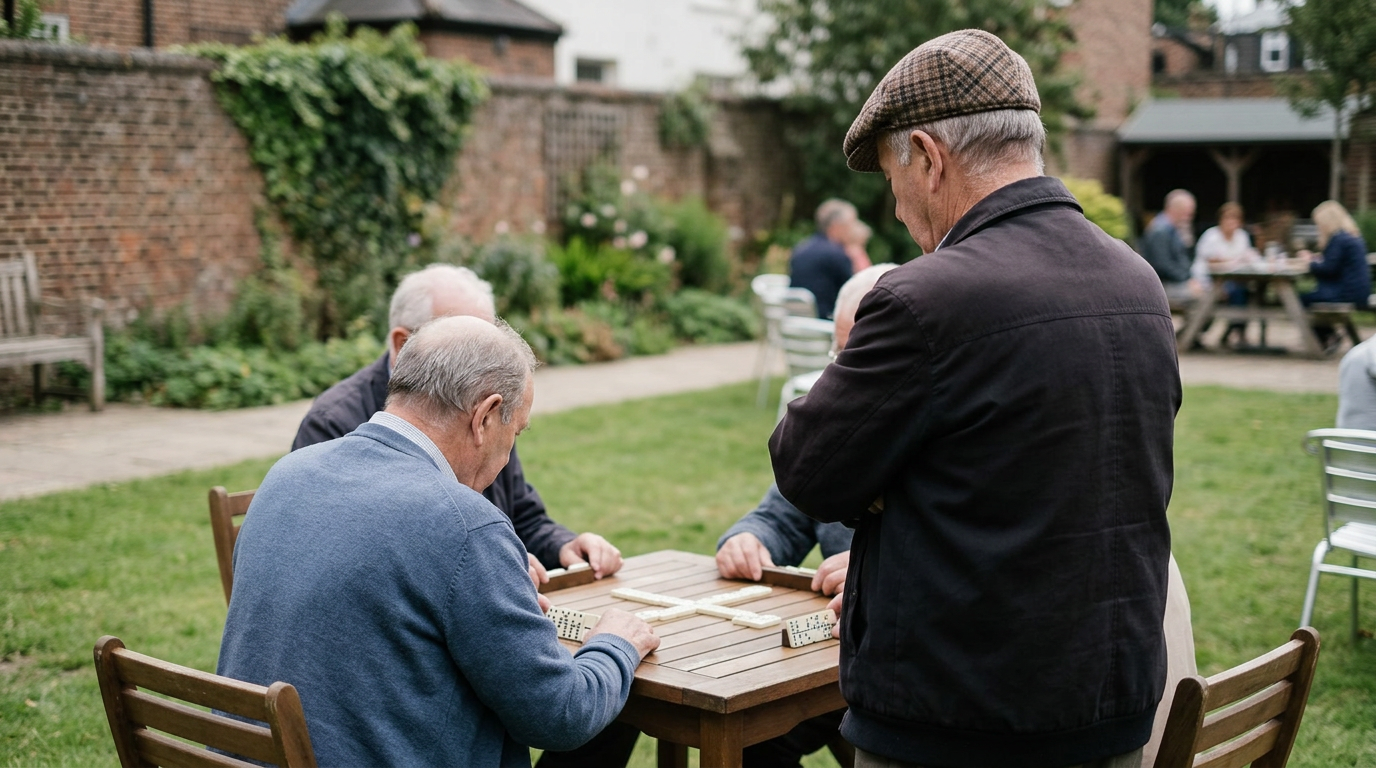
To kibitz is to occupy a middle ground between observing and participating. While a spectator simply watches, a kibitzer provides a running commentary, often critiquing moves or suggesting strategies.
The term gained prominence in the high-stakes environments of bridge and chess. In these contexts, a kibitzer is the person standing behind the players, whispering what they should have done differently. Unlike an official referee or a mentor, the kibitzer has no skin in the game.
Modern usage has expanded far beyond the card table. You might kibitz during a colleague's presentation, while a friend is cooking dinner, or even through digital channels like social media comments. It captures a specific brand of social annoyance: the person who thinks their perspective is necessary for a process they aren't actually part of.
Etymology and History
Examples in Context
- If you are going to kibitz every time I try to parallel park, you can get out and walk.
- The project lead asked the visitors to stop kibitzing so the engineers could focus on the code.
- He spent the entire evening kibitzing at the poker table until the players finally asked him to leave.
Synonyms and Antonyms
Synonyms: Back-seat driving, meddling, interfering, nitpicking, chirping. Antonyms: Ignoring, abstaining, participating, minding one's business.
Practical Usage Tips
Use kibitz when the advice is genuinely unasked for. If someone asks for your opinion, you are providing feedback. If you volunteer it while they are struggling with a jigsaw puzzle, you are kibitzing.
It is also useful as a self-deprecating tool. Saying, I don't mean to kibitz, but... is a way to acknowledge you are overstepping before you actually do it. It softens the blow of the unsolicited advice.
Is kibitzing always negative?
Usually, yes. It implies that the advice is intrusive. However, in some casual social circles, kibitzing is seen as a form of banter or engagement rather than a serious breach of etiquette.
What is the difference between a kibitzer and a heckler?
A heckler intends to disrupt or insult the person they are watching. A kibitzer usually believes they are being helpful or just cannot help sharing their superior knowledge, even if it is annoying.
Key Takeaways
- Kibitzing requires a spectator role and an uninvited voice.
- The word originates from a German bird known for its loud, shrill cry.
- It is most effectively used to describe meddlesome bystanders in games or technical tasks.
- Unlike coaching, kibitzing is rarely welcome by the person doing the work.
Example Sentences
"Please don't kibitz while I'm trying to concentrate on this puzzle; it's distracting."
"During the football match, the armchair pundit couldn't resist the urge to kibitz loudly from his sofa about the referee's decisions."
"She tends to kibitz every time her husband tries to fix something around the house, offering a constant stream of 'helpful' suggestions."
"The bridge players found it incredibly annoying when the spectator would kibitz after every hand, critiquing their moves."
"I appreciate your concern, but I’d rather you didn't kibitz on my work; I'll ask if I need assistance."
Frequently Asked Questions
Sources & References
 Merriam-WebsterThis source provides the definition, pronunciation, and example sentences for 'kibitz', supporting its meaning and common usage.merriam-webster.com
- 2Online Etymology DictionaryThis source details the etymology of 'kibitz', tracing its origins through Yiddish to German and its original meaning related to a bird, confirming its historical linguistic path.etymonline.com
- 3Collins DictionaryThis source offers the definition of 'kibitz', including its usage in a sentence and identifying it as an informal verb, thus supporting its modern application.collinsdictionary.com