
Quick Answer
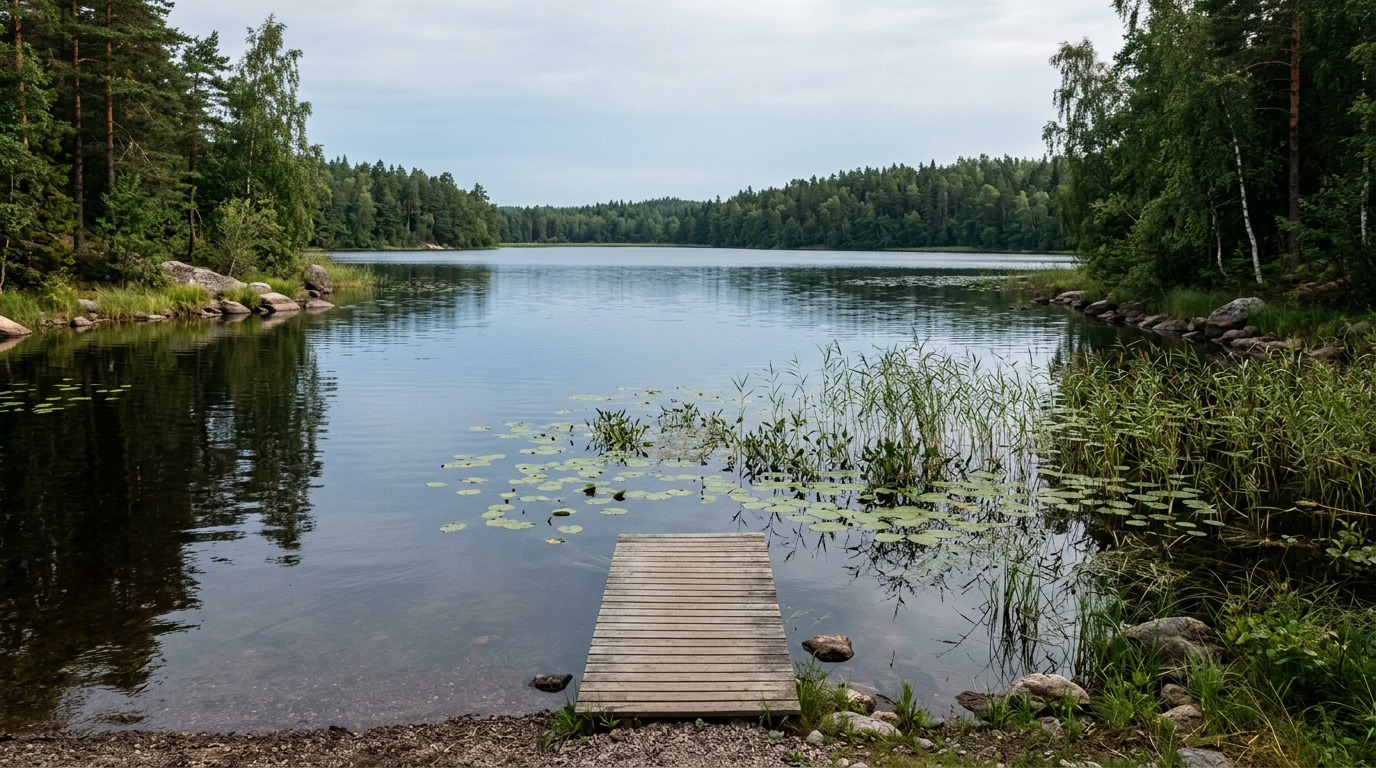
Lacustrine means relating to lakes. It's used to describe things found in or formed by lakes, like lacustrine deposits or lacustrine ecosystems. This specific term is handy because lakes have their own distinct environments, different from the sea or rivers, and 'lacustrine' lets us pinpoint those unique watery worlds.
In a hurry? TL;DR
- 1Lacustrine describes anything related to, formed in, or living in lakes, offering precision beyond 'aquatic'.
- 2Lacustrine environments are characterized by deposition and stillness, contrasting with erosive river processes.
- 3Lacustrine deposits in geology provide detailed historical records of past climates and environments.
- 4Lacustrine ecosystems are distinct from riverine ones, featuring unique species adapted to stratified lake conditions.
- 5The term originated from Latin 'lacus' (lake) and emerged with the study of inland waters (limnology).
- 6Use 'lacustrine' to accurately describe lake-specific features, deposits, or life, differentiating from marine or fluvial settings.
Why It Matters
Understanding the term lacustrine reveals how geologists and ecologists precisely describe the unique, settled environments of lakes and the rich histories preserved within them.
Lacustrine refers to anything relating to, formed in, or growing in lakes. It is the limnological equivalent of marine, used to describe the specific biology, geology, and atmosphere of inland bodies of still water.
- Meaning: Relating to, formed by, or inhabiting a lake.
- Pronunciation: luh-KUS-tryn (/ləˈkʌs.traɪn/)
- Part of Speech: Adjective
- Origins: Latin lacus (lake)
Why It Matters
While we often default to watery or aquatic, lacustrine provides a necessary precision for environments that are distinct from the salt-heavy oceans or the moving currents of rivers.
The Specificity of Still Water
To call a landscape lacustrine is to evoke a very specific type of stillness. Unlike fluvial processes, which are defined by the aggressive erosion of rivers, lacustrine processes are defined by deposition. Over millennia, lakes act as nature’s filing cabinets, collecting layers of silt, clay, and organic matter that settle at the bottom.
Geologists value lacustrine deposits because they provide a high-resolution timeline of the earth’s past. Because the water is relatively still, the layers of sediment remain undisturbed, trapping pollen, fossils, and chemical signatures that reveal what the climate looked like thousands of years ago.
The word also serves a vital function in ecology. A lacustrine ecosystem is fundamentally different from a riverine one. The species that thrive in a deep, sun-dappled lake have adapted to thermal stratification—the way water forms distinct temperature layers—which rarely occurs in turbulent moving water. Using this term signals an understanding of these delicate, closed-loop systems.
The Etymological Path
Examples of Usage
- The civilisations of the ancient Valley of Mexico were largely lacustrine, built upon a sophisticated system of chinampas and dikes within Lake Texcoco.
- Scientists analysed the lacustrine clay to determine the exact year the region shifted from forest to grassland.
- There is a specific, muffled quality to lacustrine air that you never find on the coast.
Synonyms and Antonyms
- Synonyms: Limnic, pond-dwelling, inland-water.
- Antonyms: Fluvial (river-related), Marine (ocean-related), Terrestrial (land-related).
Connections and Context
The word belongs to a family of topographical adjectives that help define the world with surgical accuracy. Just as sylvan describes the woods and boreal describes the north, lacustrine elevates a description from a simple location to a specific environmental state.
According to researchers at the University of Minnesota, lacustrine sediments are among the best indicators of historical mercury levels in the atmosphere, as the lake beds act as a permanent trap for airborne particles.
What is a lacustrine plain?
This is a landform created when a lake eventually drains or dries up, leaving behind a flat area covered in nutrient-rich sediment. The Black Swamp region in Ohio is a classic example of a former lacustrine environment.
Is lacustrine the same as limnic?
They are nearly identical, though limnic is often used more specifically in biology and chemistry to describe the water itself, whereas lacustrine is more common in geology and geography to describe landforms and deposits.
Key Takeaways
- Use it to describe things formed by or living in lakes.
- It implies a sense of stillness and deposition rather than movement.
- It is the preferred term for geologists studying ancient lake beds.
Example Sentences
"The fossilised fish found in the excavation site indicated a rich lacustrine environment existed millions of years ago."
"Our research team is studying the unique lacustrine flora that thrives in the nutrient-rich waters of the Scottish Highlands."
"Geological surveys revealed ancient lacustrine deposits, suggesting the area was once covered by a vast inland body of water."
"The specialised adaptations of these freshwater molluscs are typical of a lacustrine species."
"Much of the landscape's features are a result of historical lacustrine processes, involving slow sedimentation rather than erosion."
Frequently Asked Questions
Sources & References
 Merriam-WebsterThis source provides the definition, pronunciation, part of speech, and usage examples for 'lacustrine'.merriam-webster.com
- 2Collins DictionaryThis source offers the definition, synonyms, and examples of 'lacustrine' in context.collinsdictionary.com
- 3Online Etymology DictionaryThis source details the etymology of 'lacustrine', tracing its origins back to Latin 'lacus' and its entry into English.etymonline.com