
Quick Answer
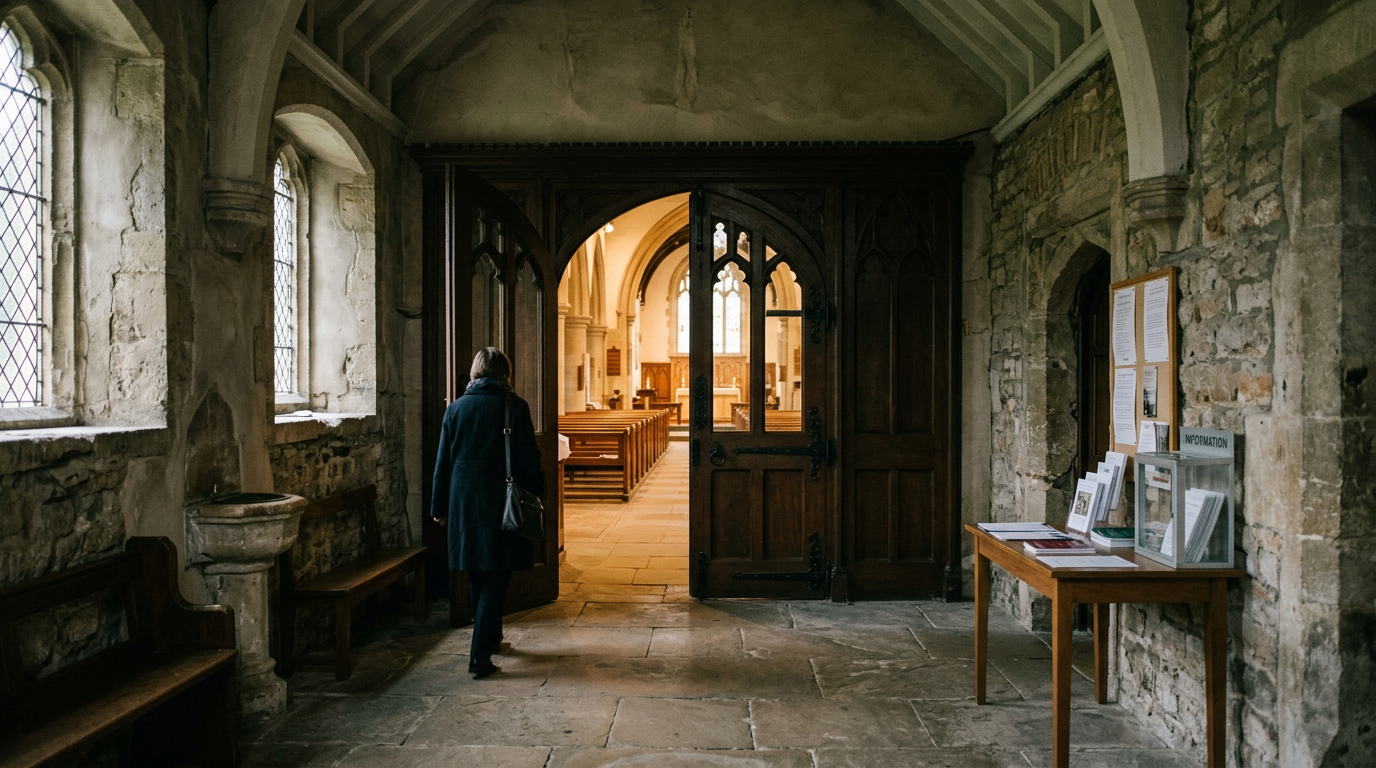
A narthex is the entrance hall of a church, right inside the main doors. It's more than just a lobby; historically, it was a transitional space for those not yet fully admitted to worship, allowing a gentle entry from the secular world into the sacred.
In a hurry? TL;DR
- 1A narthex is a church vestibule acting as a transitional space between outside and the main sanctuary.
- 2Historically, it was for uninitiated or penitent individuals, serving as a buffer from the secular world.
- 3Modern narthexes can function as social gathering spots or assembly areas for processions.
- 4Its design encourages a pause, allowing for a gradual shift in sensory experience and focus.
- 5The narthex's presence signifies an intentional entry into sacred space, distinct from a simple foyer.
- 6Some denominations have reduced or eliminated narthexes, reflecting a shift towards inclusivity.
Why It Matters
The narthex is an interesting church architectural feature that historically separated the uninitiated from the congregation, acting as a deliberate transition space.
A narthex is the architectural lobby of a church, serving as a transitional vestibule located between the exterior entrance and the main seating area of the nave.
- The narthex acts as a physical buffer between the secular world outside and the sacred space inside.
- Historically, it was the designated area for those not yet permitted to enter the main congregation, such as catechumens or penitents.
- In modern architecture, it often functions as a social gathering space or a place for wedding processions to assemble.
- It is distinct from a porch or a foyer due to its specific liturgical history and structural integration within the church plan.
Why It Matters: Understanding the narthex reveals how architecture can be used to manage social boundaries and psychological transitions between different states of being.
The Architecture of Transition
NAR-theks (/ˈnɑːθɛks/)
The narthex is not merely a hallway. It is a spatial filter. In early Christian basilicas, this area was the furthest point reachable by those who had not yet been fully initiated into the faith. While the congregation gathered in the nave, the narthex held the observers.
Unlike a secular lobby, which is designed for efficient throughput, a narthex is designed for pause. It allows the eyes to adjust to lower light and the mind to adjust to a lower volume. It is the architectural equivalent of a deep breath before a performance.
In many Byzantine and Romanesque structures, the narthex is divided into two parts: the exonarthex (the outer porch) and the esonarthex (the inner vestibule). This layered approach created a gradual progression of holiness, a concept explored in our look at Liminal Spaces.
According to architectural historians at the University of Notre Dame, the narthex began to shrink or disappear in certain modern denominations as the emphasis shifted from ritual exclusion to radical inclusivity. However, it remains a staple of liturgical design, ensuring that the act of entering a building feels like an intentional event rather than a mere change of location.
Examples in Context
- The wedding party huddled in the narthex, adjusting veils and bouquets while the organist played the opening processional.
- Heavy oak doors separated the drafty narthex from the warm, incense-heavy air of the sanctuary.
- After the service, the congregation spilled into the narthex to share coffee and neighborhood gossip.
- The architect designed a glass-walled narthex to bridge the gap between the medieval stone nave and the modern street.
Related Terms
Synonyms: Vestibule, foyer, porch, antechamber, portico. Antonyms: Sanctuary, nave, chancel, apse.
Usage Tips
Use narthex when you want to be technically precise about ecclesiastical architecture. If you are describing a lobby in a theatre or a government building, stick to vestibule or foyer. The term implies a specific religious or ceremonial function that secular terms lack.
What is the difference between a narthex and a vestibule?
A vestibule is a general term for any small room leading into a larger one. A narthex is specifically a vestibule in a church, usually located at the western end of the building.
Who was allowed in the narthex historically?
In the early church, the narthex was for people who were not full members of the congregation, including those undergoing religious instruction or those performing public penance for sins.
Is every church lobby a narthex?
Strictly speaking, yes, though the term is most common in Catholic, Orthodox, and Anglican traditions. In many modern evangelical churches, this space is simply called the lobby or the gathering area.
Key Takeaways
- The narthex is a transitional space between the outside world and the church interior.
- It served historical functions of social and religious segregation.
- It remains a vital psychological threshold for worshippers today.
- The term distinguishes religious architecture from secular entryway design.
Example Sentences
"Upon entering the great cathedral, we paused in the narthex to admire the intricate mosaics before proceeding into the nave."
"The catechumens traditionally stood in the narthex, listening to the liturgy but not yet permitted to join the fully initiated in communion."
"During the wedding, the bridal party gathered quietly in the narthex, awaiting their cue to walk down the aisle."
"The narthex in many ancient churches provided a crucial transitional space, separating the secular world from the sacred interior."
"Visitors often congregate in the narthex after a service, enjoying a cup of tea and a chat before departing."
