
Quick Answer
Pluvial means relating to rain, but it’s more than just a descriptor for weather. It helps us understand the long-term effects of rainfall, from shaping landscapes over millennia to causing flooding in urban areas. This term is crucial for geologists and city planners alike.
In a hurry? TL;DR
- 1Use 'pluvial' for descriptions of rain that imply significant impact or duration, beyond a simple shower.
- 2'Pluvial' refers to phenomena directly caused by rain, especially prolonged or heavy rainfall events.
- 3In geology, 'pluvial' describes periods of significantly increased rainfall that shaped landscapes.
- 4Pluvial flooding occurs when heavy rainfall overwhelms drainage, distinct from river overflows, crucial for urban planning.
- 5The term 'pluvial' adds a sense of weight, history, and natural force to descriptions of rain.
- 6Employ 'pluvial' in literature to evoke a powerful, pervasive atmosphere of rainfall, not just passing wetness.
Why It Matters
The word "pluvial" is interesting because it suggests the profound, long-term geological and atmospheric impact of rain, rather than just a brief shower.
Pluvial refers to anything relating to or caused by rain, typically used to describe weather patterns, geological eras, or the specific atmosphere of a downpour.
- Direct meaning: Relating to rain or characterized by abundant rainfall.
- Quick summary: A more elegant, scientific alternative to rainy that suggests weight and history.
- Context: Often used in geology to describe periods of heavy precipitation or in literature to evoke the mood of a storm.
Pluvial: Quick Reference
- Part of Speech: Adjective
- Pronunciation: PLOO-vee-uhl (/ˈpluː.vi.əl/)
- Meaning: Pertaining to or caused by the action of rain.
Why It Matters: Using pluvial instead of rainy elevates a description from a simple weather report to a precise observation of environmental impact.
The Weight of the Rainfall
Pluvial is not merely a synonym for wet. While rainy describes a temporary state of the sky, pluvial implies a relationship with the earth itself. In scientific circles, a pluvial period refers to a geological timeframe marked by significantly increased rainfall, often lasting thousands of years. These periods are the hidden architects of our landscapes, carving riverbeds and filling ancient lakes that have long since vanished.
The word bridges the gap between the mundane and the monumental. You might describe a pluvial afternoon spent indoors, but a hydrologist uses the term to calculate the risk of flash flooding. According to researchers at the University of Bristol, pluvial flooding occurs when extreme rainfall creates a flood independent of an overflowing river body. This distinction is vital for modern urban planning, as concrete jungles struggle to absorb sudden, heavy deposits of water.
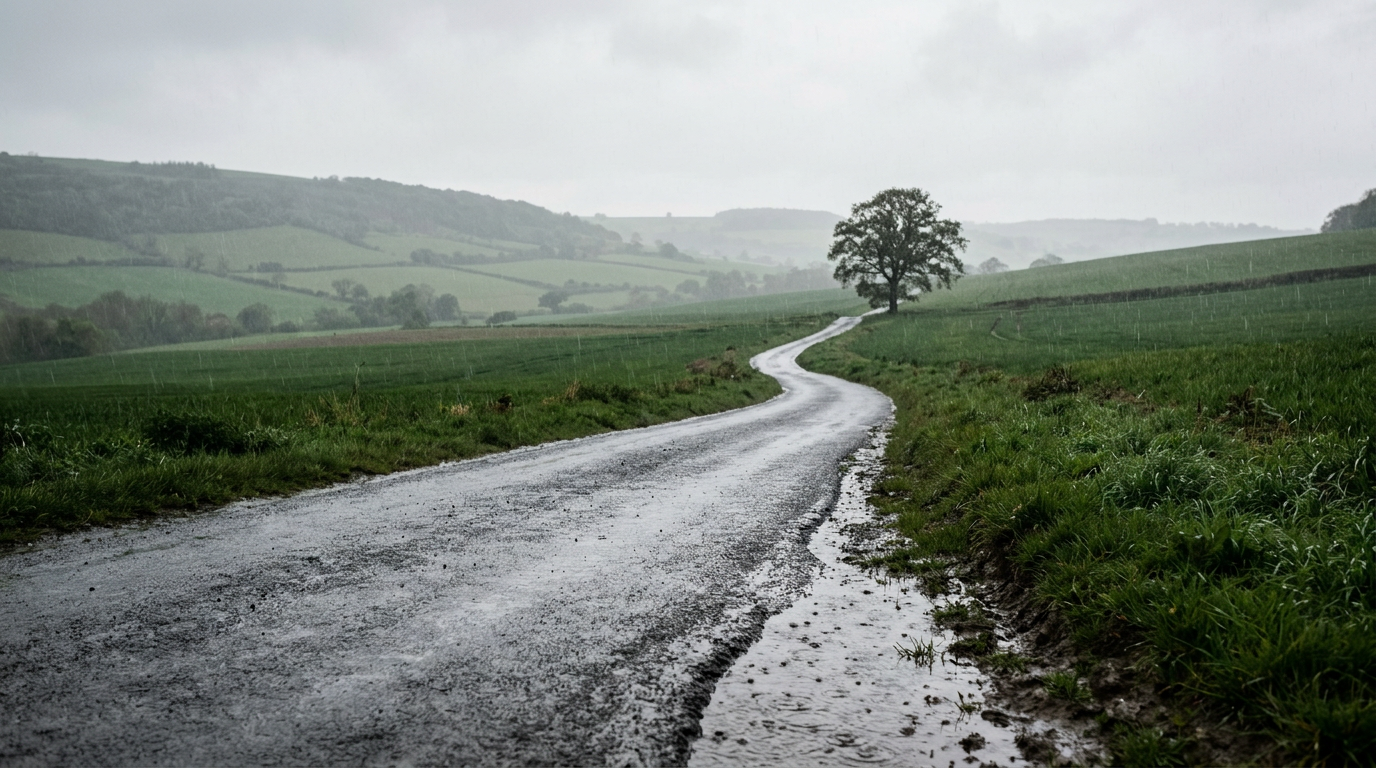
In literature, the term carries a rhythmic, almost heavy quality. It evokes the smell of petrichor and the visual distortion of a landscape viewed through a thick curtain of water. It is a word for people who find beauty in the grey, shifting the focus from the inconvenience of the weather to the majesty of the hydrologic cycle.
Examples in Context
- Geological History: The Great Basin of the western United States was home to massive pluvial lakes during the Pleistocene epoch.
- Atmospheric Description: The poets writing in the Pacific Northwest often lean into pluvial imagery to capture the region’s persistent mist.
- Urban Engineering: Modern architects must design drainage systems that can handle a sudden pluvial event without overwhelming the city sewers.
- Personal Narrative: She preferred the pluvial quiet of a London Tuesday to the blinding heat of a Mediterranean summer.
Related Terms
- Synonyms: Rainy, showery, alluvial (often confused, but relates to running water/silt), torrential.
- Antonyms: Arid, xeric, parched, drought-stricken.
Usage Tips
- Use pluvial when you want to sound technical or evocative. If you are describing a ruined picnic, rainy is sufficient. If you are describing how the rain has reshaped a garden path over a decade, pluvial is the superior choice.
- Avoid using it to describe people. A person cannot be pluvial, though their mood or their surroundings certainly can be.
What is the difference between pluvial and fluvial?
Fluvial refers specifically to rivers and streams, whereas pluvial refers to rain. A fluvial flood comes from a river bursting its banks; a pluvial flood comes directly from extreme rainfall onto flat ground.
Can pluvial be a noun?
In geology, a pluvial is used as a noun to describe a specific period of abundant rainfall, similar to how one might refer to an ice age.
Is it a common word in daily speech?
It is relatively rare in casual conversation, making it an excellent choice for writing or formal presentations where precision matters.
Key Takeaways
- Precise Meaning: Relates specifically to the action and presence of rain.
- Scientific Utility: Essential for distinguishing between different types of flooding and geological eras.
- Literary Value: Provides a sophisticated alternative to common weather adjectives.
- Historical Depth: Carries a Latin heritage that links modern weather to ancient environmental shifts.
Example Sentences
"The region experienced a pluvial period thousands of years ago, which dramatically altered its landscape."
"Geologists are studying the pluvial lakes that once dotted the arid plains, indicating a much wetter ancient climate."
"During the monsoon season, the countryside transforms under the constant pluvial influence."
"The artist’s latest collection captures the moody, pluvial atmosphere of a long winter's downpour."
"Understanding the pluvial cycles is crucial for predicting future water availability in drought-prone areas."
Frequently Asked Questions
Sources & References
 Merriam-WebsterThis source provides the definition, pronunciation, and etymology of 'pluvial', noting its origin from Latin 'pluvialis'.merriam-webster.com
- 2Collins DictionaryThis source offers definitions and examples of 'pluvial', including its use in scientific contexts like 'pluvial period' or 'pluvial lakes'.collinsdictionary.com
- 3Online Etymology DictionaryThis source details the etymology of 'pluvial', tracing its roots through Latin 'pluvialis' and 'pluvia' to the PIE root '*pleu-'.etymonline.com