
Quick Answer
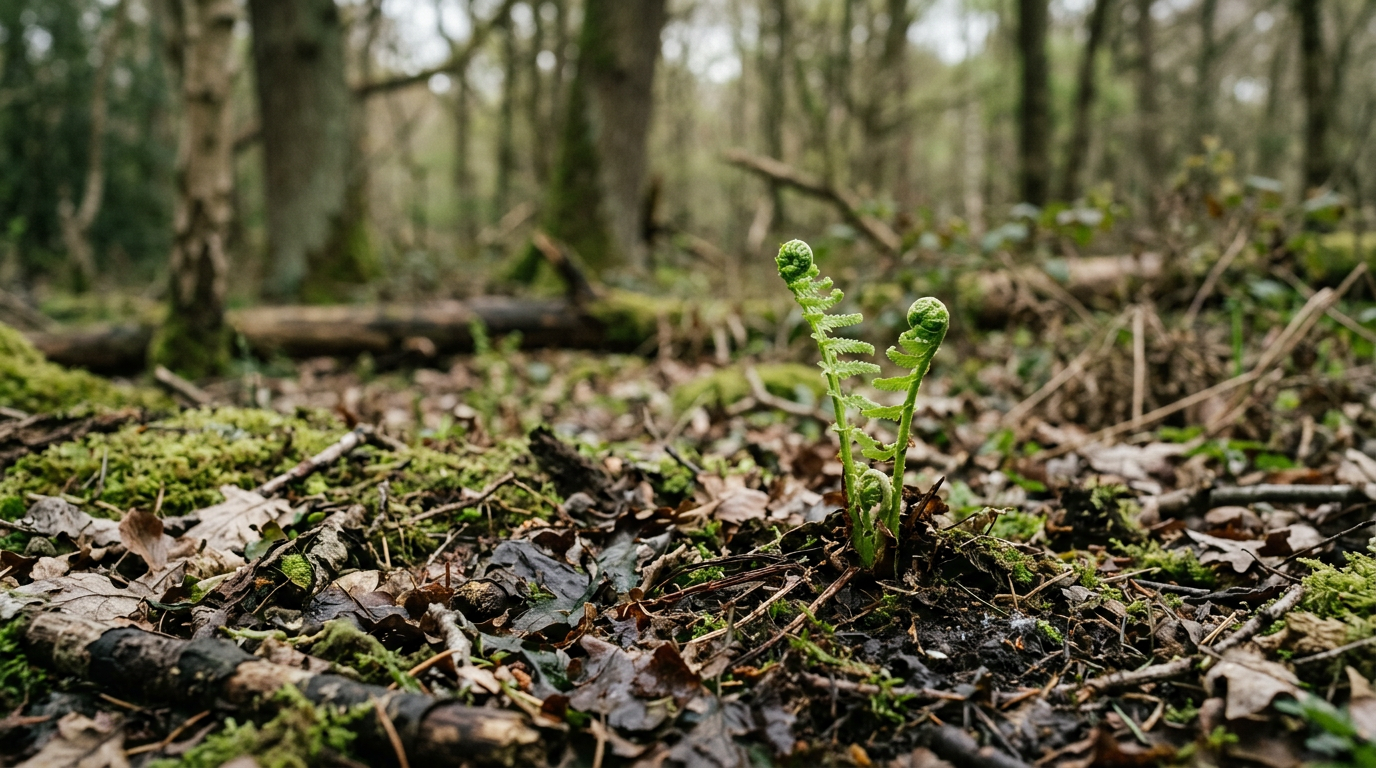
Rejuvenescence is that wonderful feeling of becoming young and full of life again, not just fixing what's broken but a deep, internal renewal. It’s like a forest blooming after a storm, or waking up truly refreshed, capturing a powerful sense of a complete, revitalising reset.
In a hurry? TL;DR
- 1Rejuvenescence means a holistic renewal of youthfulness and vigor, not just repair.
- 2It emphasizes restoring an internal state of vitality, distinct from external appearance.
- 3This concept applies to biology (cellular aging), architecture (urban renewal), and psychology (personal renewal).
- 4It describes the active process of becoming young again, a reversal of aging markers.
- 5Rejuvenescence is the noun for the state of being rejuvenated, focusing on the 'becoming' aspect.
- 6Understand rejuvenescence to differentiate between simple maintenance and true, energetic restoration.
Why It Matters
Rejuvenescence is interesting because it describes not just getting better, but a genuine return to a former, more vibrant state.
Rejuvenescence is the process or state of becoming young, fresh, or vigorous again. Unlike simple repair, it implies a holistic return to a prior state of bloom or vitality.
The Quick Summary
- Core Meaning: A renewal of youthfulness or a restoration of vigor.
- Distinction: Focuses on the internal state of being rather than just external appearance.
- Usage: Applied to biology, architecture, and personal psychology.
- Cultural Context: Historically linked to the search for the fountain of youth.
Why It Matters
Understanding rejuvenescence allows us to distinguish between mere maintenance and the active restoration of a system's original energy.
Defining Rejuvenescence
ri-joo-vuh-NES-uhns (/rɪˌdʒuːvəˈnɛsəns/)
Part of Speech: Noun Definition: A renewal of youthfulness or vitality; the state of being rejuvenated.
The Return of the Spark
Rejuvenescence is more than a synonym for healing. While recovery suggests a return to baseline after injury, rejuvenescence suggests a reversal of the clock. It is the specific quality of a forest floor after a spring rain or the cognitive clarity that follows a deep, restorative sleep.
The word fills a necessary gap in our vocabulary by describing a state of transition. It is not just the end result, but the active process of shedding the old to make way for the new. Unlike rejuvenation, which acts as a transitive verb, rejuvenescence functions as the noun for the condition itself.
In biological terms, the word appears in studies of cellular regeneration. Researchers at the University of Exeter have used the term when discussing how old cells can be prompted to behave like younger ones using specific chemical compounds. This differs from other forms of cellular repair because it targets the fundamental markers of age rather than just fixing localized damage.
Culturally, the term saw a peak in the late 19th and early 20th centuries. It was frequently used in literature to describe the cyclical nature of empires or the seasonal rebirth of the natural world. It carries a slightly more poetic weight than modern clinical terms, making it ideal for describing a person who has suddenly regained their zest for life.
Putting It Into Context
- The coastal town experienced a sudden rejuvenescence as young artists began moving into the abandoned warehouses.
- After his three-month sabbatical in the mountains, his face carried a visible sense of rejuvenescence.
- Scientists are investigating whether certain proteins can trigger the rejuvenescence of dormant neural pathways.
- The garden's annual rejuvenescence in April remains a marvel of biological timing.
Related Concepts
- Synonyms: Renewal, resurgence, revitalization, regeneration.
- Antonyms: Senescence, decline, decay, atrophy.
- Related Terms: You might also be interested in the concept of Ikigai, the psychology of Flow, or the biology of Neuroplasticity.
What is the difference between rejuvenation and rejuvenescence?
Rejuvenation is typically the act of making something young again, whereas rejuvenescence is the state or process of becoming young again. One is the action, the other is the condition.
Is rejuvenescence used in science?
Yes, it is a formal term in biology and botany to describe the formation of new cells from the protoplasm of old ones, effectively starting a new life cycle.
How do I use it in a sentence without sounding too formal?
Use it when describing a collective feeling or a natural shift, such as the rejuvenescence of a neighborhood or the spirit of a team after a win.
Key Takeaways
- Process-Oriented: It describes the act of becoming, not just the finished state.
- Scientific Roots: Widely used in cellular biology to describe regenerative cycles.
- Multi-Disciplinary: Applies equally to cities, bodies, and ecosystems.
Example Sentences
"The spa treatment promised a deep sense of rejuvenescence, both for the body and the mind."
"After a long winter, the spring brings a wonderful rejuvenescence to the whole countryside."
"Scientists are studying certain organisms that exhibit remarkable powers of rejuvenescence, effectively reversing the aging process at a cellular level."
"The old manor house underwent a complete restoration, resulting in a magnificent rejuvenescence of its former grandeur."
"She felt a true rejuvenescence of spirit after her sabbatical, ready to tackle new challenges with renewed vigour."
Frequently Asked Questions
Sources & References
 Merriam-WebsterThis source provides the definition, pronunciation, and part of speech for 'rejuvenescence'.merriam-webster.com
- 2Collins DictionaryThis source offers the definition and usage examples for 'rejuvenescence'.collinsdictionary.com
- 3WiktionaryThis source provides the etymology, definition, and usage notes for 'rejuvenescence'.en.wiktionary.org