
Quick Answer
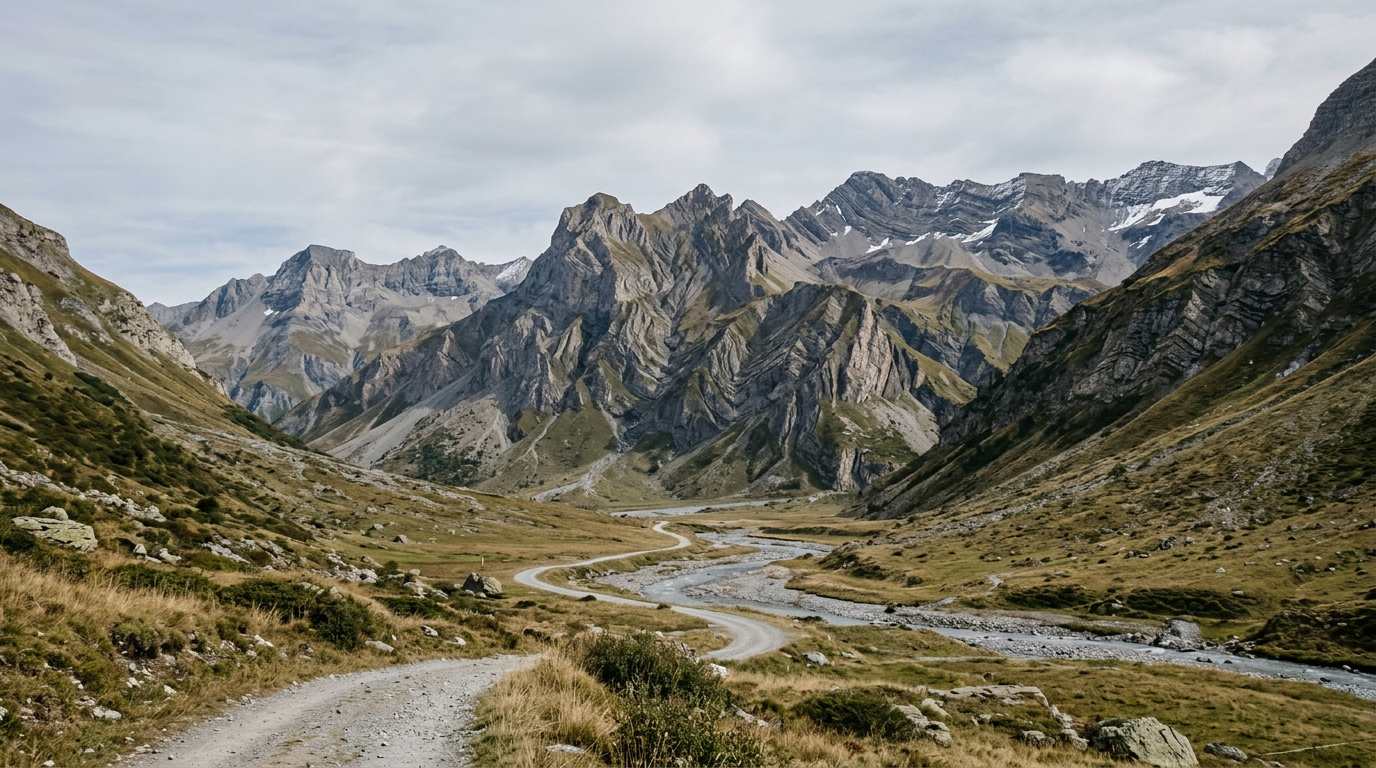
Orogenic refers to the powerful tectonic processes that build mountain ranges through the folding and collision of the Earth’s crust. It is a fascinating reminder that our world is constantly changing, driven by immense subterranean forces. These movements can lift ancient sea floors thousands of metres into the air, transforming deep-ocean beds into the world’s highest peaks. Mountains are not static monuments; they are the visible, jagged scars of our planet’s restless, shifting skin, forever
In a hurry? TL;DR
- 1Use 'orogenic' as an adjective to describe the specific tectonic forces, such as folding and faulting, that lead to the structural formation of mountain ranges.
- 2Distinguish between volcanic mountains and orogenic belts, noting that the latter are formed by the crustal buckling and violent collision of tectonic plates.
- 3Recognize that orogenic cycles represent a continuous process of planetary recycling, where ancient ocean sediments are pushed upward to become high-altitude mountain peaks over time.
- 4Identify orogenic belts as historical 'stitches' in the Earth's crust, which geologists analyze to reconstruct the movement of ancient continents and the assembly of supercontinents.
- 5Understand the Himalayan orogeny as a prime example of high-speed plate collision, where the inability of plates to subduct forced land to crumple into jagged peaks.
- 6Apply the term to describe geological pulses, recognizing that mountain building is an active event rather than a permanent, static feature of the Earth's landscape.
Why It Matters
The term is fascinating because it reveals that the world's most permanent-looking mountain ranges are actually the result of violent, ongoing tectonic collisions that recycle the Earth's surface over millions of years.
Orogenic describes the structural processes and tectonic collisions that result in the formation of mountain ranges. It refers to the specific periods of folding, faulting, and crustal thickening that turn flat terrain into jagged peaks.
The Quick Reference
Part of Speech: Adjective Pronunciation: OR-uh-JEN-ik (/ˌɔrəˈdʒɛnɪk/) Definition: Relating to the forces and events that create mountains through tectonic deformation.
Why It Matters
Understanding the orogenic cycle reveals that the tallest peaks on Earth were once deep-sea sediments, proving that our planet’s surface is in a constant state of violent recycling.
The Architecture of Earth
While we often view mountains as permanent landmarks, the term orogenic reminds us they are active events. In geology, an orogeny is a specific episode of mountain building. Unlike volcanic activity, which builds mountains through the accumulation of lava, orogenic events are characterized by the structural buckling of the Earth's lithosphere.
This word fills a specific gap in our vocabulary by distinguishing between the mountain itself and the colossal forces that created it. According to researchers at the University of Cambridge, these orogenic belts often mark the sites where ancient oceans closed and continents collided, acting as the stitches that hold the Earth's landmasses together.
The most famous modern example is the Himalayan orogeny. Roughly 50 million years ago, the Indian Plate began its high-speed collision with the Eurasian Plate. Because neither plate could subduct easily, the land crumpled upward. Unlike other geological features that erode quickly, orogenic belts preserve a record of these impacts for hundreds of millions of years.
Origins and Evolution
The word carries a sense of birth, suggesting that mountains are not merely rocks but the offspring of planetary friction.
Orogenic in Context
- The Alpide belt is a massive orogenic system stretching from the Mediterranean all the way to Southeast Asia.
- Geologists use orogenic signatures in the rock record to map how supercontinents like Pangea were assembled.
- The region experienced several orogenic pulses that transformed the low-lying plains into a rugged highland.
Related Concepts
Synonyms: Tectonic, montane (loosely), metamorphic. Antonyms: Epeirogenic (large-scale crustal movements without folding), erosional.
Practical Usage Tips
Use orogenic when you want to describe the deep-seated, structural origin of a landscape rather than just its current appearance. It is a more precise term than mountainous because it implies a specific history of collision and pressure.
What is the difference between orogenic and volcanic?
Orogenic mountains are formed by the folding and faulting of existing crust due to plate collisions. Volcanic mountains are formed by the accumulation of molten rock and ash ejected from the Earth's mantle.
Is orogenic still happening today?
Yes. The orogenic process is currently active in the Himalayas and the Andes, where plates continue to push against one another, causing the mountains to grow by millimetres each year.
Can orogenic forces affect climate?
Absolutely. Large orogenic belts can change atmospheric circulation patterns and create rain shadows, significantly altering the climate of entire continents.
Key Takeaways
- Orogenic refers to the birth and formation of mountain ranges through tectonic pressure.
- The word combines the Greek roots for mountain and creation.
- Unlike erosion, which tears landscapes down, orogenic forces build them up through crustal thickening.
- It provides a scientific lens to view mountains as dynamic processes rather than static objects.
Example Sentences
"The Scottish Highlands preserve ancient orogenic belts that formed hundreds of millions of years ago during the Caledonian collision."
"Field geologists analysed the folded metamorphic strata to reconstruct the region's complex orogenic history."
"Intense orogenic activity along the continental margin triggered widespread seismic events and profound crustal thickening."
"The Himalayas represent one of the most dramatic modern examples of ongoing orogenic uplift in the natural world."
"Satellite measurements revealed that the high plateau was sustained by subtle, continuous orogenic pressures beneath the crust."
