
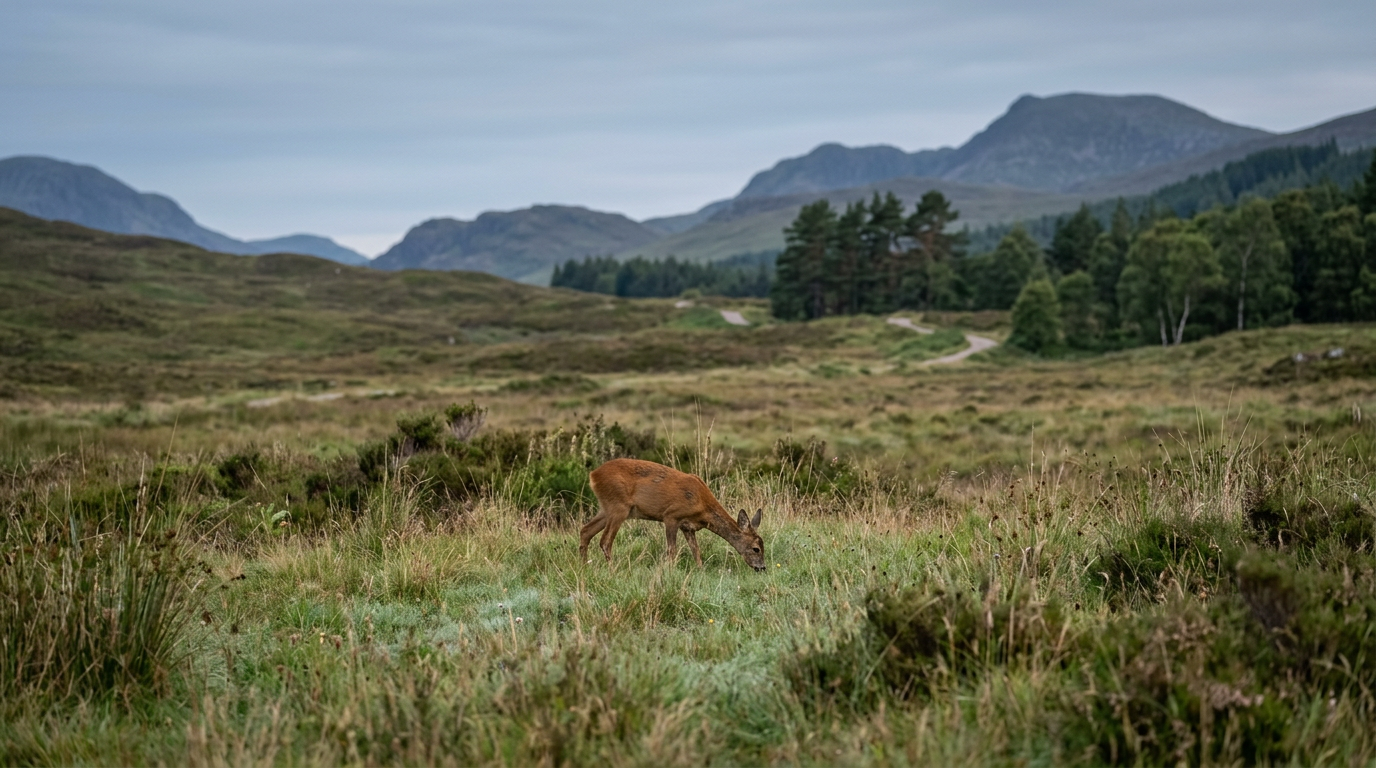
Quick Answer
'Faunal' describes the collective animal life of a particular region or time period. It is the perfect zoological partner to 'floral,' allowing scientists to describe entire ecosystems rather than focusing on single creatures. This term is vital for researchers tracking how environments shift over centuries. By looking at the big picture, they can better understand the delicate balance of nature and how different species rely on each other to survive, providing a window into the rich biological
In a hurry? TL;DR
- 1Use the term 'faunal' to describe collective animal life within a specific region, habitat, or historical period rather than referring to a single individual creature.
- 2Leverage 'faunal' as a precise, spatial descriptor when discussing how groups of animals interact with their environment or change over geological time scales.
- 3Recognize 'faunal' as the zoological equivalent to 'floral,' providing a scientific way to categorize biological systems across different landscapes and geographical boundaries.
- 4Apply the concept of 'faunal succession' to understand how predictable fossil layers allow researchers to accurately date rock formations and track evolutionary history.
- 5Distinguish between 'animal' and 'faunal' by using the latter to address broad ecological trends, such as population shifts or habitat-wide conservation crises.
- 6Understand that the word derives from the Roman goddess Fauna, evolving into a technical term used to catalog nature and track complex ecological patterns.
Why It Matters
Faunal is a useful term because it allows scientists to date rock layers with precision by mapping the collective history of animal life rather than focusing on individual creatures.
Faunal describes anything relating to the animals belonging to a specific region, habitat, or historical period. It is the zoological counterpart to floral, providing a precise way to discuss the collective animal life of an environment.
The Quick Reference
- Part of Speech: Adjective
- Pronunciation: FAW-nuhl (/ˈfɔːnəl/)
- Definition: Relating to the animals of a particular region, habitat, or geological epoch.
Why the Word Matters
Faunal exists to bridge the gap between biology and geography. While animal is a simple noun, faunal allows for a sophisticated description of how those animals interact with their space and time. It is rarely used to describe a single creature; instead, it looks at the big picture of a living system.
The word is most distinctive when used to track ecological change. According to researchers at the University of Oxford, faunal succession—the observation that fossils succeed each other vertically in a specific, reliable order—is what allows geologists to date rock layers with startling accuracy. Unlike botanical remains, which can be patchy, the faunal record provides a clear timeline of how life evolved and migrated across the planet.
The Roots of the Word
Faunal in Context
- The faunal diversity of the Amazon rainforest remains unmatched, despite the rapid pace of deforestation.
- Palaeontologists noted a distinct faunal shift in the fossil record following the sudden drop in global temperatures.
- Urban expansion has led to a significant decline in the native faunal population of the local wetlands.
- The documentary focused on the unique faunal adaptations required to survive the harsh winters of the Siberian tundra.
Comparisons and Contrasts
- Synonyms: Zoological, biotic, animalistic (though animalistic implies behaviour rather than habitat).
- Antonyms: Floral, botanical, inanimate.
Unlike the word animal, which focuses on the biological entity, faunal is inherently spatial. You would describe a lion as an animal, but you would describe the decline of apex predators in the Serengeti as a faunal crisis.
Usage Tips
Use faunal when you want to sound like a naturalist or an ecologist. It is particularly effective when discussing environmental impact or history. If you are talking about the birds and squirrels in your garden, they are animals. If you are talking about how those birds and squirrels represent the specific environment of a suburban London garden, you are discussing a faunal assemblage.
What is the difference between fauna and faunal?
Fauna is a noun referring to the animals themselves. Faunal is the adjective used to describe things related to those animals or their environment.
Is faunal only used in science?
While it originated in biology and geology, it is increasingly used in environmental journalism and travel writing to describe the character of a region’s wildlife.
Can faunal refer to humans?
Technically, humans are part of the animal kingdom, but the word is almost exclusively reserved for non-human wildlife and prehistoric species.
Key Takeaways
- Faunal relates to the collective animal life of a specific time or place.
- It is the linguistic partner to floral.
- The word is rooted in Roman mythology via the goddess Fauna.
- It is a vital term in geology for dating rock layers through faunal succession.
Learn more about the history of Taxonomy, the legacy of Carl Linnaeus, and the definition of Biodiversity.
Example Sentences
"The planning commission required a comprehensive faunal survey of the ancient woodland before development could commence."
"Palaeontologists noted an abrupt faunal transition across the boundary separating the two geological strata."
"The introduction of predatory rats caused an unprecedented collapse in the island's delicate faunal diversity."
"Late Pleistocene cave paintings offer compelling evidence of the faunal assemblages that once shared the landscape with early humans."
"Severe habitat fragmentation remains the single greatest threat to the national park's indigenous faunal communities."
