
Quick Answer
Hyaline describes anything transparent, translucent, or smooth like glass. It is a wonderfully precise word often used to capture the ethereal beauty of biological structures. You might find it describing the slippery, clear cartilage lining your joints or the hollow, light-refracting hairs of a polar bear. It is an evocative term because it bridges the gap between cold, inorganic glass and the delicate, functional materials that make life possible, turning a scientific description into somethin
In a hurry? TL;DR
- 1Use the term 'hyaline' to describe objects that possess a glass-like, polished, or transparent texture, specifically focusing on the material's physical surface rather than just its clarity.
- 2Distinguish hyaline from 'translucent' or 'transparent' by emphasizing its structural, glassy aesthetic, commonly seen in biological tissues like cartilage or natural elements like glacial ice.
- 3Incorporate 'hyaline' into your vocabulary when discussing precise scientific or medical observations, such as describing arterial deposits or the distinct appearance of specific marine life forms.
- 4Recognize the word’s role in nature, where hyaline structures—like the hollow hairs of a polar bear—function by scattering light to create unique optical illusions.
- 5Replace imprecise adjectives like 'see-through' with 'hyaline' to provide more evocative, descriptive language that highlights a substance's fragility, purity, and solid-liquid hybrid appearance.
- 6Leverage the historical context of the word, which connects modern scientific usage back to its ancient Greek roots meaning clear stone or glass, to add depth to your descriptions.
Why It Matters
Learning this word is useful because it gives you a precise way to describe the unique, glassy quality of things like jellyfish, cartilage, and polar bear fur that standard words like clear or transparent simply fail to
Hyaline describes something that is transparent, clear, or glassy in appearance. While words like translucent suggest a milky diffusion, hyaline implies a polished, glass-like quality often found in nature and biology.
Quick Reference
- Part of Speech: Adjective / Noun
- Pronunciation: HY-uh-lin (/ˈhaɪəlɪn/)
- Meaning: Resembling glass in transparency or texture
Why It Matters
Understanding hyaline allows you to describe specific textures that are neither fully opaque nor perfectly invisible, bridging the gap between liquid and solid appearances.
The Glassy Logic of Hyaline
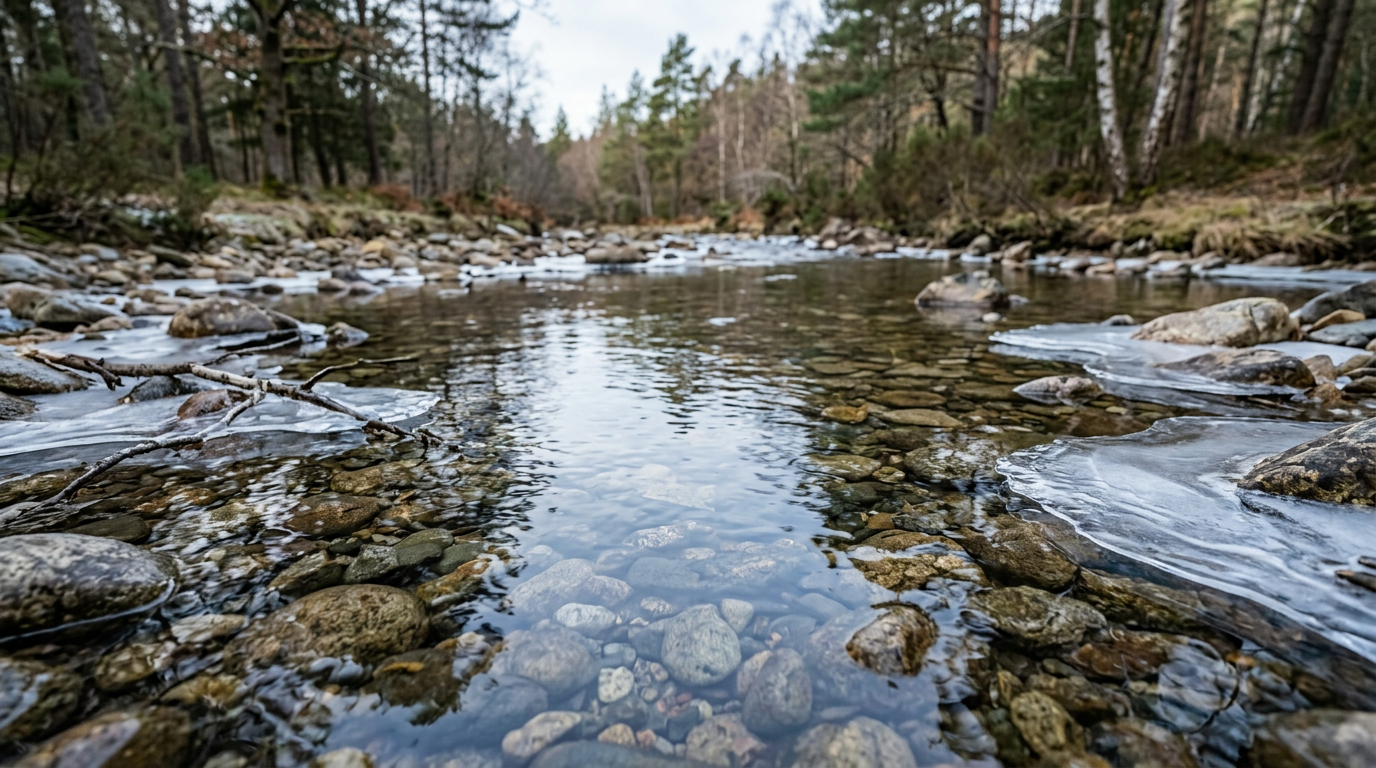
Hyaline is a precision tool for the eyes. In a world of clumsy descriptors like see-through or clear, hyaline provides a specific aesthetic texture. It describes the precise look of a jellyfish bell, the structural cartilage in a human nose, or the shimmering surface of a glacial lake. Unlike transparent, which focuses on the ability to see what is behind an object, hyaline focuses on the substance of the object itself.
The word finds its most frequent home in pathology and marine biology. Doctors look for hyaline membrane disease, and divers spot hyaline medusae. It suggests a certain fragility and purity. However, the most striking physical example is found in the animal kingdom. Polar bear fur is not actually white; the individual hairs are hyaline tubes. These clear, hollow strands reflect and scatter light, creating the optical illusion of snow-white fur while allowing heat to pass through to the black skin beneath.
Compared to diaphanous, which describes light fabrics, or pellucid, which implies a crystalline clarity of thought or water, hyaline remains firmly rooted in the physical and the structural. It is the language of things that look like they were blown from silica but are actually made of protein, ice, or water.
Examples in Context
- The surgeon noted the presence of hyaline deposits, indicating a thickening of the arterial walls.
- Under the microscope, the wings of the cicada appeared as intricate, hyaline veils.
- The morning frost left a hyaline glaze over the cobblestones, turning the street into a dangerous mirror.
- Milton’s Paradise Lost famously describes the glassy sea of heaven as the clear hyaline.
Connections and Contrasts
- Synonyms: Vitreous, limpid, crystalline, translucent.
- Antonyms: Opaque, turbid, cloudy, muddy.
How is hyaline different from vitreous?
Vitreous specifically implies the properties of glass, such as brittleness or shine. Hyaline is broader, focusing on the visual quality of being glassy and clear without necessarily being hard or fragile.
Is hyaline only used in science?
While it is a staple of biology and geology, it has a rich history in classical poetry to describe the sky or the sea. It is a highly versatile literary adjective for anything that possesses a luminous, watery clarity.
Usage Tips
- Use it to describe natural textures: Think of ice, wings, or smooth stones underwater.
- Avoid over-explaining: The word is evocative enough to stand on its own without being paired with clear or glassy.
- Pair it with light: Hyaline objects are defined by how they interact with light, making it a perfect partner for words like shimmer, refract, or glow.
Related Concepts
- The physics of Refraction and how light bends through clear solids.
- The biological function of Connective Tissue in the human frame.
- The poetic use of The Ethereal in Victorian literature.
Key Takeaways
- Hyaline means glass-like or transparent.
- It is commonly used in medical and biological contexts to describe cartilage and membranes.
- The word originates from the Greek term for glass.
- It differs from transparent by focusing on the material’s texture rather than just the ability to see through it.
Example Sentences
"The diver marvelled at the hyaline bell of the jellyfish pulsating gently against the dark expanse of the ocean."
"Under the microscope, the sample of hyaline cartilage appeared smooth, glassy, and devoid of distinct fibres."
"A delicate, hyaline layer of frost coated the morning meadow, glistening as the winter sun broke through the mist."
"The artist captured the river's purity using thin glazes of paint that imparted a nearly hyaline luminescence to the canvas."
"Unlike ordinary plastics, the newly synthesised resin possesses a hyaline clarity comparable to pure quartz."
Frequently Asked Questions
Sources & References
 Merriam-WebsterDefinition, pronunciation, and usage examples of 'hyaline' as both an adjective and a noun.merriam-webster.com
- 2Online Etymology DictionaryEtymology and linguistic history of 'hyaline', detailing its origins in Latin hyalinus and Greek hyalos.etymonline.com
- Merriam-WebsterProvides the definition, pronunciation, grammatical forms, and biological usage examples for the word 'hyaline'.merriam-webster.com
- 4Online Etymology DictionaryDetails the etymology and historical development of 'hyaline' from the Greek word for glass, 'hyalos'.etymonline.com
- 5Collins DictionaryCovers the definition, phonetic transcription, and scientific applications of 'hyaline' in pathology and anatomy.collinsdictionary.com