Quick Summary
This blog post explains five secret rules from pop culture that influence our perceptions. It's useful because understanding these rules can help you recognise how media shapes our thoughts and what we believe to be true. Knowing these hidden influences allows for a more critical view of the stories we consume daily.
In a hurry? TL;DR
- 1Sherpas have evolved highly efficient mitochondria for better energy production at high altitudes.
- 2Adequate sleep is crucial for survival; extreme durations, both short and long, increase mortality risk.
- 3Skipping breakfast negatively impacts cognitive functions like attention and memory, especially in younger individuals.
- 4Historical regulations reveal societal definitions of 'vice', such as Russia classifying beer as food.
- 5Understanding human physiological limits informs our daily habits, from eating patterns to sleep schedules.
- 6Genetics can enable populations to overcome environmental challenges, like the Sherpas' altitude adaptation.
Why It Matters
It's surprising that Sherpas can thrive at high altitudes not just through conditioning, but because their muscle cells have evolved a unique way of processing oxygen.
Human survival often relies on the body’s ability to recalibrate itself against hostile environments, from the oxygen-starved peaks of the Himalayas to the biological toll of sleep deprivation. These adaptations are rarely just matters of willpower; they are hard-coded physiological responses that dictate how we think, move, and survive.
TL;DR
- Sherpas possess unique mitochondrial efficiency that allows them to thrive at high altitudes where others falter.
- Sleep duration acts as a biological ledger, with extremes on either end significantly increasing mortality risk.
- Cognitive performance, especially in youth, is heavily tethered to immediate fuel sources like breakfast.
- Historical regulations often reveal how societies categorise vice, such as Russia’s long-standing view of beer as food.
Why It Matters
Understanding the limits of human adaptation helps us navigate the modern world, proving that our daily habits—from when we eat to how long we sleep—are governed by deep-seated evolutionary and physiological requirements.
The Biological Masterpiece of the High Peaks
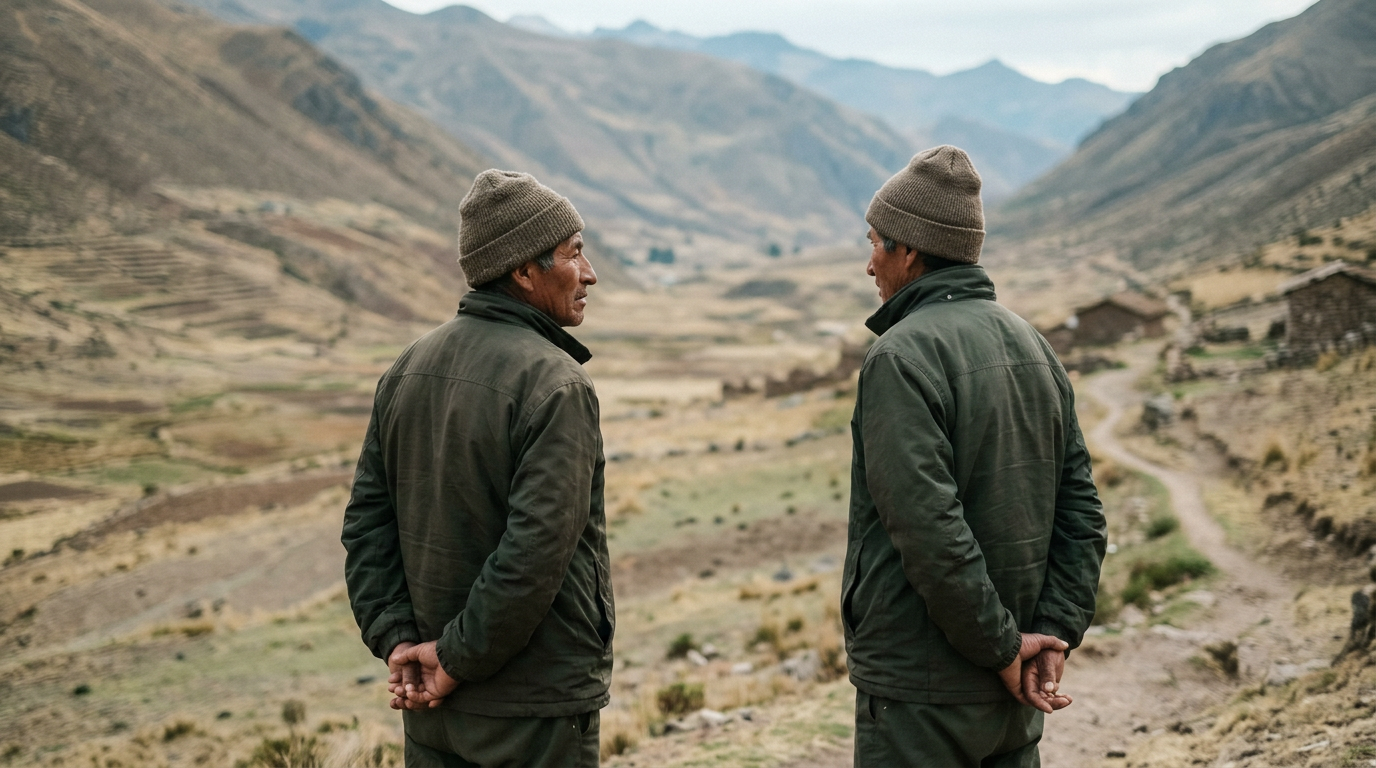
When we talk about mountain climbers, we often focus on grit. But for certain populations, survival is an inherited trait rather than a learned skill. For decades, Western climbers assumed that the local guides in the Himalayas were simply conditioned to the thin air through lifelong exposure. Science has since proven that the reality is far more profound.
Sherpas are not just “used to” high altitude, according to research published in the journal PNAS. Their muscle cells have evolved to turn thin mountain air into energy more efficiently than most people by favouring glucose over fat as a fuel source. This specific metabolic shift allows them to generate more adenosine triphosphate (ATP)—the body’s energy currency—per molecule of oxygen consumed.
In contrast, lowlanders often struggle with thick blood at high altitudes. When a typical human ascends, their body overproduces red blood cells to carry more oxygen. This makes the blood viscous and increases the risk of heart failure. Sherpas, however, maintain thinner blood while extracting more power from every breath. They are a living example of how genetics can bridge the gap between human limitation and environmental hostility.
The Brain’s Immediate Fuel Crisis
While Sherpas deal with external atmospheric pressure, the average person deals with internal nutritional pressure. We often treat breakfast as an optional start to the day, but the neurological cost of skipping it is measurable.
Skipping breakfast has been associated in many studies with poorer attention and memory performance, especially in children and adolescents whose brains are in high-demand developmental stages. When the body has fasted overnight, glucose levels are low. Since the brain relies almost exclusively on glucose for energy, a lack of morning fuel forces it to operate in a deficit.
Research from the University of Leeds suggests that students who regularly eat breakfast achieve higher grades than those who skip it. This isn't just about hunger-related distraction. It is about executive function and the ability to synthesise new information. Much like our look at 5 human truths that make history feel less certain, our personal performance is often more fragile than we care to admit.
The Goldilocks Zone of Human Rest
If nutrition is the fuel, sleep is the maintenance cycle. However, more is not always better. The human body operates on a strict curve of utility when it comes to rest.
Large observational studies consistently find that very short or very long sleep is associated with higher risk of early death. While we are well aware of the dangers of sleep deprivation—impaired judgment, weakened immunity, and cardiovascular strain—excessive sleep (regularly over nine hours) is also linked to issues like chronic inflammation and diabetes.
Epidemiologists at the University of Warwick found that sleeping less than six hours or more than nine was a significant predictor of mortality. It appears the human biological clock has a "Goldilocks zone" of seven to nine hours where repair and metabolic processes are most balanced. Deviating from this window suggests either a body under stress or an underlying health condition that requires excessive recovery time.
Mapping the Limits: From Earth to Mars
Our drive to understand our limits extends beyond our own biology and into the environments we choose to explore. Before we could contemplate human survival on other planets, we had to see them clearly.
In 1971, NASA launched Mariner 9, the first spacecraft to orbit another planet. This mission was a landmark in our transition from observers to mappers. Before Mariner 9, Mars was a blurry, speculative target. The mission arrived during a massive dust storm, but once the air cleared, it revealed the largest volcanoes in the solar system and a canyon that would dwarf the Grand Canyon.
This feat of engineering mirrors the physiological feats of the Sherpas. It represents the human refusal to be limited by what we can see or where we can breathe. We have gone from being creatures bound by atmospheric oxygen to inventors of machines that can survive where oxygen doesn't exist. This transition is a core part of what we discussed in our article on 5 beautiful words for places, possibility and looking up.
Regulation, Social Norms, and Hidden Behaviours
Societal adaptation is often as strange as biological adaptation. We see this in how cultures define what is and isn't dangerous. For centuries, alcohol consumption was woven into the fabric of life in ways that defy modern health standards.
One of the most striking examples comes from recent history. Russia did not legally classify beer as alcohol until 2011. Prior to that, anything under 10% ABV was regulated as a foodstuff. This meant beer could be sold in kiosks alongside soft drinks and snacks, reflecting a cultural perception of "light" alcohol as a nutritional supplement rather than a scheduled drug. This classification only changed as a response to a burgeoning public health crisis, showing how law eventually has to catch up with biological reality.
“Culture often dictates what we perceive as harmless until biology proves otherwise.”
Even our most private physical habits change based on our social environment. A widely cited Seattle study found that men tended to slow their walking speed when strolling with a romantic partner, but did not do so when walking with male friends. This subtle, almost unconscious adaptation of pace illustrates how social bonds influence our most basic motor functions.
Comparing Human Adaptations
| Adaptation Type | Biological/Social Trigger | Primary Outcome | Explore |
|---|---|---|---|
| High Altitude | Sherpa Genetics | Enhanced mitochondrial efficiency | Read about Sherpa evolution → |
| Planetary Mapping | Mariner 9 Mission | First orbital imagery of Mars | Read about Mariner 9 → |
| Social Pacing | Romantic Partners | Slowed walking speed in men | Read the walking study → |
| Cognitive Focus | Breakfast Consumption | Improved memory and attention | Read about morning fuel → |
| Regulatory | Russian Beer Laws | Transition from food to alcohol | Read about the 2011 law → |
| Longevity | Sleep Window | 7-9 hours for lowest mortality risk | Read about sleep studies → |
Key Takeaways
- Efficiency beats capacity: Sherpa lungs and muscles prove that using less oxygen more effectively is better than trying to force more into the system.
- Moderation is a survival trait: Both sleep and nutrition demonstrate that the human body functions best within narrow parameters.
- Context changes everything: From how fast we walk to how we classify beer, our biology is constantly responding to social and legal cues.
- Discovery requires proximity: Mariner 9's orbit was the turning point from theorising about the solar system to actually seeing it as it is.
Related Reading
- 5 human truths that make history feel less certain — Exploring the subjectivity of our shared past.
- 5 beautiful words for places, possibility and looking up — Improving your vocabulary for the great unknown.
- The evolution of Sherpa muscle cells — A deep dive into high-altitude biology.
- Why sleep duration impacts mortality risk — The data behind the 7-9 hour rule.
Frequently Asked Questions
Sources & References
- 1PNASPNAS is a leading interdisciplinary journal that publishes research in the biological, physical, and social sciences. It is the official journal of the National Academy of Sciences, providing a platform for a wide range of scientific discoveries, including those related to human adaptation.pnas.org
- 2National Library of Medicine (NIH.gov)The NIH is the primary agency of the United States government responsible for biomedical and public health research. Their website provides extensive information on various health topics, including the physiological effects of sleep deprivation and the impact of nutrition on cognitive function.nih.gov
- 3World Health OrganizationThe WHO is a specialized agency of the United Nations responsible for international public health. They offer global perspectives and data on health risks, mortality rates, and the impact of lifestyle factors on well-being.who.int
 Cambridge DictionaryCambridge University Press publishes a vast array of academic journals and books across all disciplines related to human behavior, physiology, and societal norms, including historical and cultural perspectives on health and vice.cambridge.org
Learn something new each day
Daily words, facts and quotes delivered to your phone.
