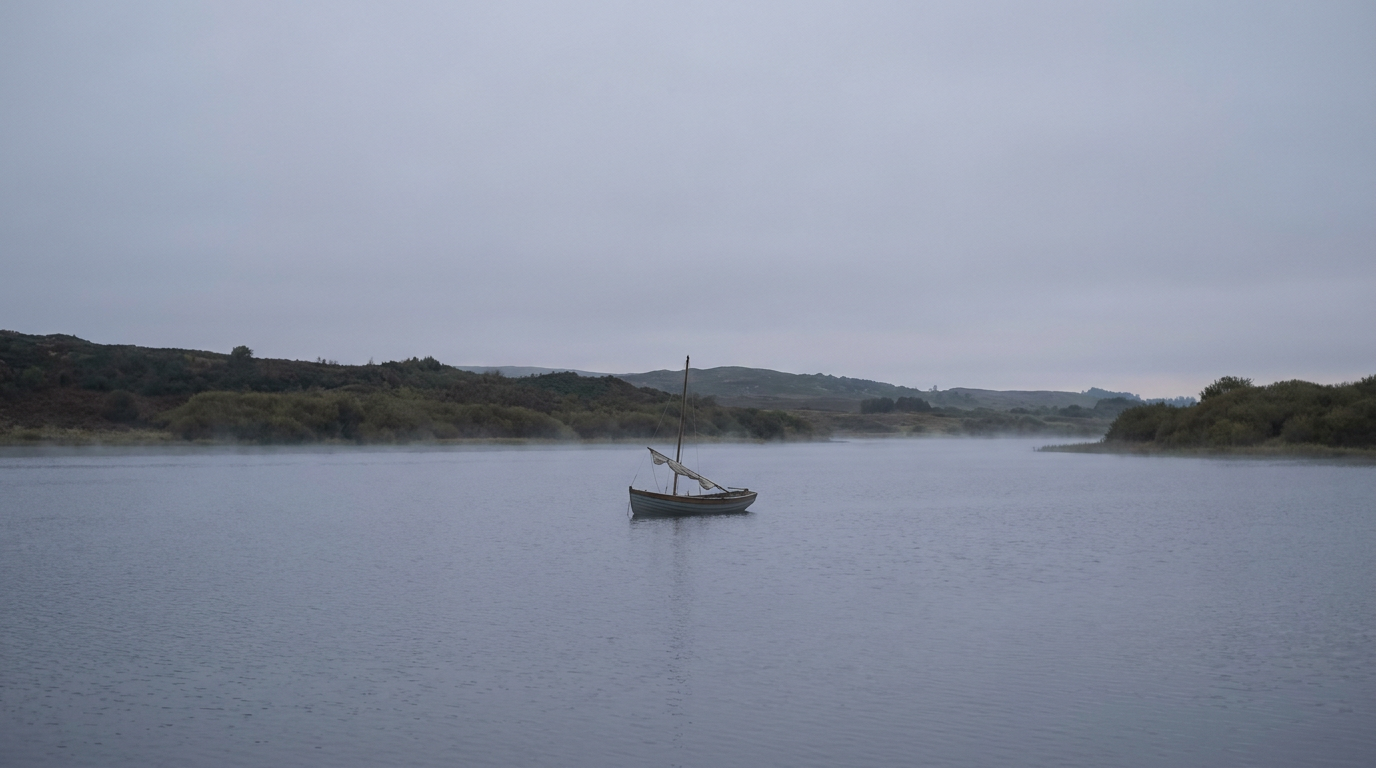
Quick Summary
When you lack a defined destination, every opportunity looks like progress, but it is actually drift. Seneca argued that motion without purpose turns every circumstance into an accident rather than an advantage. Frantic activity generates an illusion of achievement while consuming precious reserves. To benefit from any wind, you must first determine your port; otherwise, catching every passing breeze merely takes you further from where you ought to be.
In a hurry? TL;DR
- 1Speed without bearing is merely accelerated drift.
- 2Seneca's classic dictum highlights how untargeted effort wastes resources.
- 3Opportunism often masquerades as adaptability while destroying focus.
- 4Catching every fresh breeze creates exhaustion rather than genuine headway.
- 5Direction must precede exertion, or external conditions control your fate.
- 6Saying no to tempting winds is the only way to preserve steerage.
We tend to measure our days by displacement rather than destination. A full calendar, a smoking keyboard, and an evening spent slumped in weary satisfaction feel like evidence of a life well lived. We congratulate ourselves on the swelling of our sails, rarely pausing to check whether the vessel is edging closer to harbour or spinning in frantic, decorative circles upon the open sea.
Two thousand years ago, Lucius Annaeus Seneca observed the exact same affliction among the Roman patriciate. Men dashed through the Forum, attended three banquets before dusk, cultivated acquaintances they despised, and collapsed into bed exhausted by tasks that added nothing to their character or peace of mind. They were profoundly busy and utterly lost.
Writing to his friend Lucilius, Seneca diagnosed the error with characteristic brevity: "If one does not know to which port one is sailing, no wind is favourable." It remains one of the sharpest rebukes to our modern obsession with velocity for its own sake.
The Roman Art of Running in Circles
Seneca was not writing as an ivory-tower recluse. As imperial tutor and political adviser to the volatile young Nero, he operated at the chaotic centre of global power. He understood political manoeuvring, high-stakes commerce, and the seduction of endless commitments. When he invoked Seneca's famous nautical warning, he was thinking of cargo captains navigating the unpredictable currents of the Mediterranean.
To an ancient sailor, wind was not inherently benign. A gale that carried one merchant safely into the Bay of Naples would drive another straight onto the rocks of Corsica. The utility of the wind did not reside in the air itself; it depended entirely on the helm, the charts, and the intended port.
Yet Seneca watched his contemporaries treat every gust of fortune as an invitation to set sail. An inheritance dispute, a minor civic honour, or an unexpected invitation would alter their entire course for weeks. In modern life, we execute the same error through incoming notifications, side projects, and reactive commitments. We mistake being tossed about by prevailing currents for navigating.
The Psychology of Aimless Velocity
Aimless motion persists because it offers an immediate psychological reward: it relieves anxiety. Pausing to determine your port requires difficult, often uncomfortable deliberation. It forces you to confront trade-offs, acknowledge finite time, and accept that choosing one path means abandoning twenty others.
Many people dread the quiet stillness required to choose, oscillating between frantic over-commitment and the paralysis of indecision. To avoid that vacuum, we reach for the nearest breeze. We answer emails, reorganise files, attend meetings of dubious utility, and say yes to incoming requests. Each action delivers a miniature jolt of closure, mimicking the sensation of arrival.
This is why modern culture celebrates hustle while ignoring trajectory. Velocity is easy to measure; judgment is not. Anyone can count the hours you sat at your desk or the number of items ticked off a checklist. Measuring whether those actions moved you towards a deliberate, worthy objective requires a standard outside the work itself.
Without that standard, every gust of external demand dictates your heading. You become a passenger on your own vessel, congratulating yourself on your high knot-count while the shoreline recedes into fog.
The Cost of the Shifting Breeze
There is a second, more insidious consequence to navigating without a fixed port: the gradual attrition of your navigational capacity. Ships that wander aimlessly do not simply fail to arrive; they take on water, their timber rots, and their crews grow mutinous from fatigue.
When you adjust your sails to every opportunistic breeze, you incur heavy switching costs. An entrepreneur who pivots product strategy with every tweet from a competitor makes no headway. A writer who chases whatever theme trended yesterday never finishes a coherent book. A professional who chases every job title finishes a career with a fragmented résumé and shallow expertise.
Adaptability is frequently praised as an unalloyed virtue in corporate folklore. Yet Seneca would remind us that adaptability without an anchor is merely drift. If your destination changes with the wind, you are not adapting; you are wandering. You burn through fuel and stamina to arrive precisely nowhere.
How to Actually Use This
Restoring direction to an overgrown schedule requires deliberate, unglamorous subtraction. Seneca’s maxim is not an encouragement to draw grand, fifty-year master plans; it is a diagnostic tool for today's commitments.
- Define the Port Before Inspecting the Weather. Before you check your inbox, consult your notifications, or review external demands each morning, write down the single outcome that constitutes progress for the day. If you cannot name the port before you open your sails, close them.
- Run an Effort Audit. Look at your regular commitments over the past fortnight. Divide them into two columns: actions that serviced a predefined objective, and actions that merely reacted to someone else's breeze. Consider running an effort audit to expose the recurring chores that consume your days without delivering you anywhere meaningful.
- Decline Favourable Winds Going the Wrong Way. The most dangerous distractions are not painful failures; they are attractive opportunities that travel twenty degrees off your desired course. When a lucrative offer, an exciting project, or a flattering invitation arrives, ask: Does this wind blow towards my port, or does it merely offer pleasant sailing? If it leads to a coastline you have no business visiting, furl the canvas.
- Accept Dead Calm. There will be days when no progress is possible along your chosen course. The undisciplined sailor panics at calm water and turns sideways to catch any stray puff of air. The Stoic waits. It is far better to drift quietly in place than to sail at top speed toward a reef.
Related Small Talk Reading
- Revisit the original Stoic text and maritime context behind Seneca's famous nautical warning.
- If you struggle to distinguish productive labour from defensive busywork, try running an effort audit across your regular schedule.
- Understand how the fear of commitment produces the paralysis of indecision that keeps our vessels locked in the shallows.
- Track how aimless effort leads to the gradual attrition of your clearest ambitions.
If you fancy starting every morning with a five-minute dose of philosophy, history, and linguistic oddities to keep your compass steady, take a look at today's daily Small Talk.
Frequently Asked Questions
Learn something new each day
Daily words, facts and quotes delivered to your phone.
